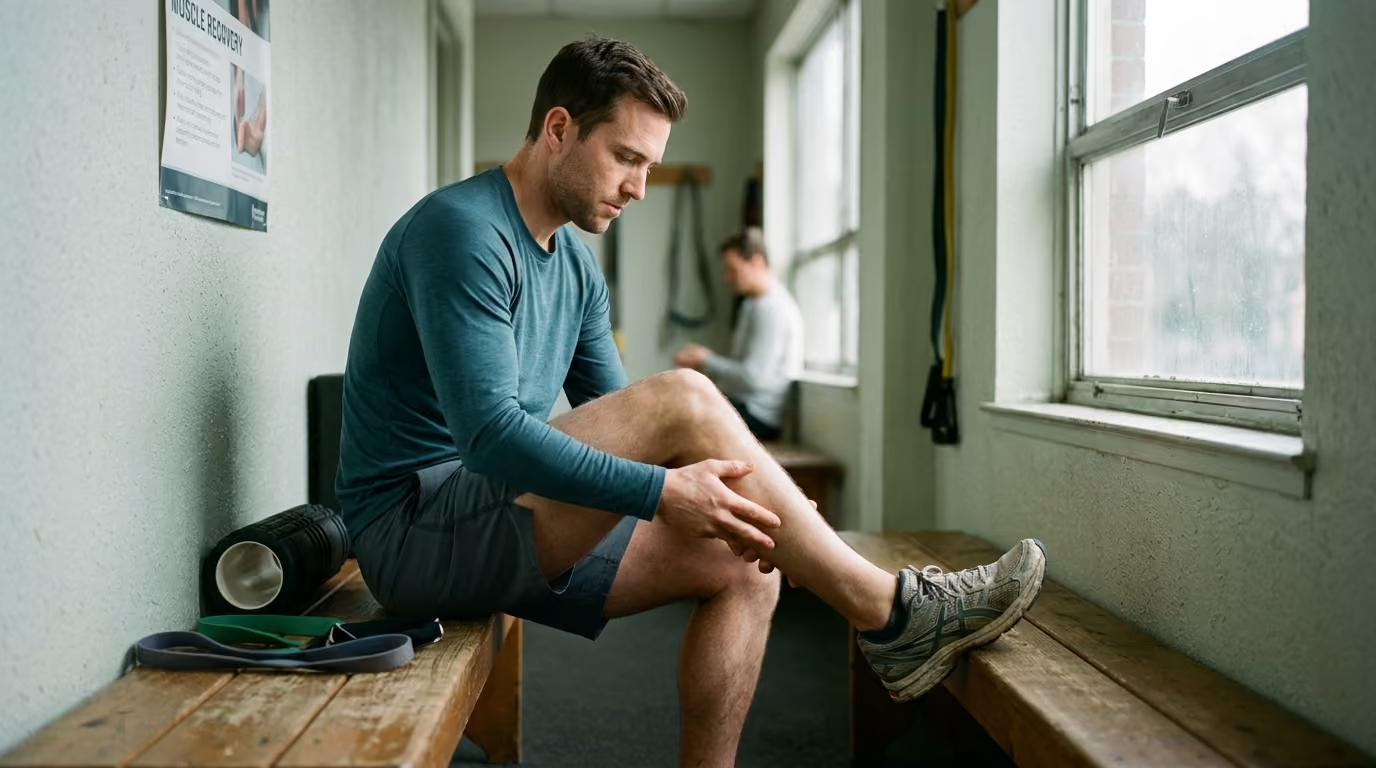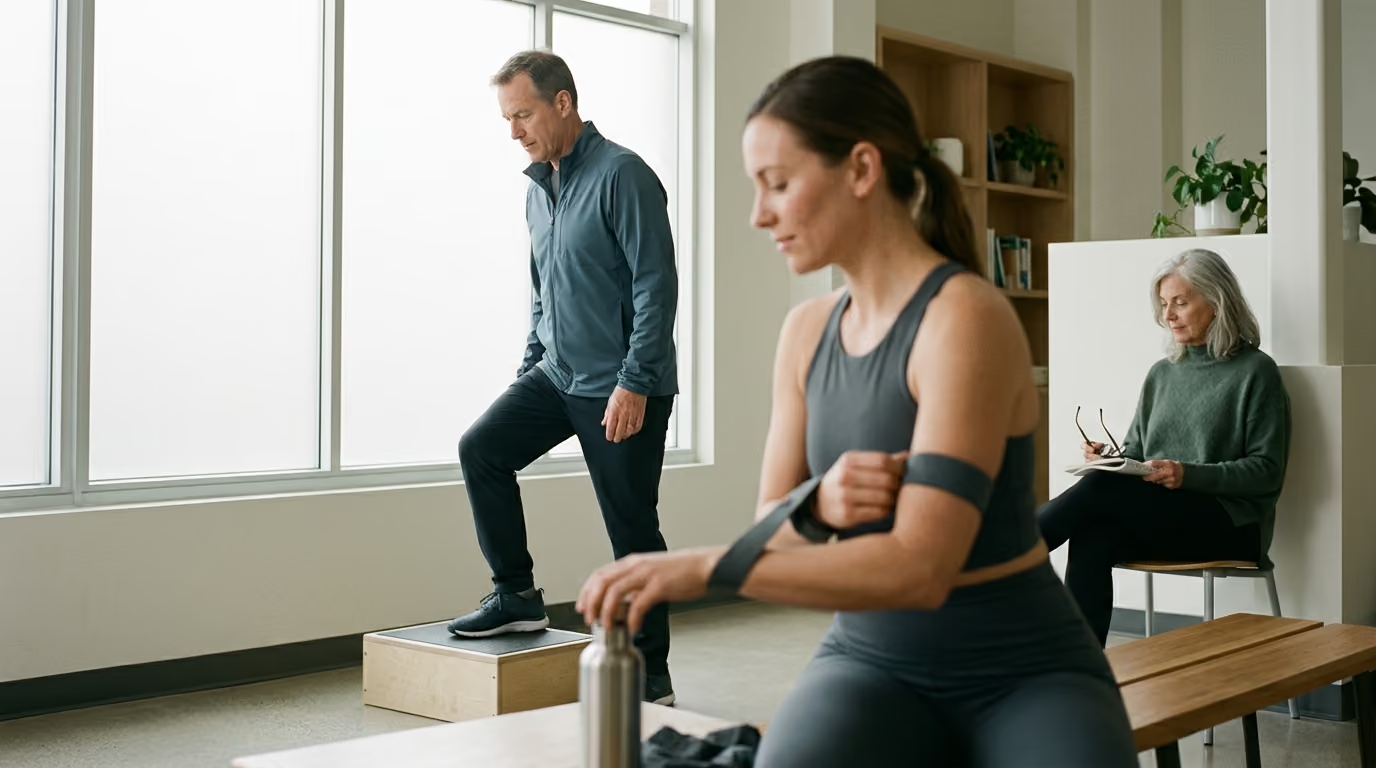

Lifelong physical longevity relies on adapting strength, aerobic capacity, and movement patterns across each decade to sustain functional autonomy.





Longevity-oriented training is not a temporary workout phase or a collection of extreme physical challenges. It is the deliberate, lifelong preservation of reserve capacity across multiple physiological systems. The objective is not simply to accumulate exercise hours or achieve a single aesthetic outcome. Instead, this approach builds and defends the physiological traits that maintain physical autonomy, metabolic resilience, and cognitive clarity across every decade of adulthood.
True physical longevity requires a multicomponent framework. This system balances cardiorespiratory endurance, muscular strength, rapid force production, dynamic balance, and joint tolerance. Because biological tissues and metabolic systems change over time, training priorities must adapt. The following guide provides a comprehensive framework for structuring physical training from your twenties through your eighties and beyond.
Physical capacity does not decline along a single linear path. Different physical systems deteriorate at distinct rates, influenced by genetics, daily movement habits, and chronic disease burden. Understanding these separate rates of decline allows you to direct your training where it delivers the highest protective value.
Cardiorespiratory fitness reflects the combined operational capacity of the pulmonary, cardiovascular, and muscular systems. Decades of clinical epidemiology identify aerobic capacity as an exceptionally strong predictor of long-term health. Meta-analyses published in major medical journals demonstrate that every single metabolic equivalent (MET) increase in cardiorespiratory fitness correlates with an 11 to 17 percent decrease in all-cause mortality. Individuals who maintain high aerobic fitness into their middle and later decades experience significantly lower rates of cardiovascular disease, metabolic syndrome, and cognitive decline.
Skeletal muscle tissue serves as both a mechanical organ for locomotion and a primary metabolic sink for glucose disposal. Skeletal muscle mass typically decreases by 3 to 8 percent per decade after age 30. This rate accelerates significantly after age 60, often leading to clinical sarcopenia. Sarcopenia involves the structural loss of muscle fibers, particularly fast-twitch Type II motor units. When muscle mass declines, systemic metabolic regulation suffers, increasing the risk of insulin resistance and chronic inflammation.
Muscular strength and muscular power deteriorate even more rapidly than muscle volume. Longitudinal studies tracking older populations show that while muscle mass may drop by less than 1 percent per year, muscular strength declines by 2.5 to 4 percent annually in adults past age 75. Muscular power, which represents force produced at high velocities, begins its natural decline as early as age 30. Masters track and field athletes demonstrate measurable reductions in sprint and jump performance decades before their maximal lifting capacity drops substantially.
Joint tolerance, connective tissue compliance, and bone mineral density follow their own biological timelines. Tendons and ligaments experience reduced collagen turnover and diminished water content as adulthood progresses. This biological reality makes connective tissues slower to adapt to rapid spikes in volume. Bone mineral density peaks in early adulthood and faces accelerated loss during hormonal transitions, such as menopause in women and gradual androgen decline in men. A successful longevity strategy must protect these slower-adapting tissues while providing sufficient mechanical strain to stimulate bone remodeling and retain muscle architecture. You can review our comprehensive framework for sustainable physical performance and energy to understand how metabolic efficiency pairs with structural training.
High-stress professional environments present unique challenges for long-term physical development. Executive schedules, cross-time-zone travel, and high-stakes decision-making place heavy demands on the autonomic nervous system. When severe psychological stress combines with chronic sleep restriction, your systemic recovery budget shrinks dramatically. Attempting to execute an aggressive athletic program under these conditions often leads to overuse injuries, persistent fatigue, and elevated systemic inflammation.
The human body does not separate emotional or workplace strain from physical exercise stress. Both inputs draw from the same systemic recovery reserves. When an executive steps off an overnight flight after a grueling week of board meetings, the musculoskeletal and immune systems are in a compromised state. Demanding maximal lifts or intense interval sprints during these windows increases the probability of tendon irritation or acute muscle strains.
Lifespan-focused programming resolves this conflict through adaptive autoregulation. Rather than forcing a rigid training sheet onto an exhausted body, you adjust daily training variables based on real-time functional readiness. If resting heart rate is elevated, sleep quality is compromised, and mental fatigue is severe, the session shifts toward low-impact zone 2 aerobic work or submaximal technique practice. When energy and sleep are abundant, training intensity can safely rise to deliver a potent neuromuscular stimulus.
Maintaining physical capacity over decades requires recognizing that training is a partner to professional stamina, not a competitor. A consistent, moderate workout performed without injury yields far superior lifelong outcomes than an extreme routine interrupted by chronic breakdowns. Preserving physical vitality ensures sustained cognitive clarity and executive resilience across your entire career span.
A durable human body relies on foundational movement patterns rather than isolated muscle groups. Training these basic patterns ensures that neuromuscular coordination, joint stability, and functional capacity transfer directly into daily life.
The squat pattern preserves the ability to lower and elevate the center of mass against gravity. Bilateral squats build compressive strength in the hips and knees, while unilateral step-ups and split squats challenge pelvic stability. Training deep knee flexion and hip control prevents the loss of basic functional independence, such as standing up from a low seat or navigating stairs without assistance.
The hinge pattern targets the posterior chain, including the gluteal complex, hamstrings, and erector spinae. Hinges train the body to lift objects from the floor using the powerful musculature of the hips rather than overloading the lumbar spine. Mastering the Romanian deadlift or kettlebell deadlift protects lower back integrity and reinforces hip extensor power.
Upper body pushing patterns, such as push-ups and overhead presses, preserve shoulder girdle stability and anterior upper-body strength. Pulling patterns, including horizontal rows and vertical pull-downs, strengthen the rhomboids, latissimus dorsi, and posterior rotator cuff. A balanced ratio of pulling to pushing maintains thoracic spine extension, supports healthy posture, and mitigates the postural distortions associated with prolonged desk work.
Loaded carries challenge systemic work capacity, grip strength, and dynamic trunk stiffness simultaneously. Walking with heavy weights held in bilateral or unilateral positions forces the deep core stabilizers to resist spinal shear and lateral flexion. Research consistently associates grip strength with reduced all-cause mortality and lower cardiovascular risk in aging populations.
Balance is an active neuromuscular skill that requires regular calibration. Training single-leg stances, lateral agility, and rotational control maintains proprioceptive feedback loops within the peripheral nervous system. Practicing deliberate transitions to and from the floor ensures you retain the mobility and power required to recover smoothly from unexpected trips or stumbles.
Your twenties and thirties represent the peak window for developing structural reserves, movement literacy, and maximal work capacity. The physiological investments made during these two decades establish the baseline from which all future age-related declines will occur.
In your twenties, the musculoskeletal system is highly resilient, and recovery kinetics are at their lifetime peak. The primary objective is to develop flawless movement mechanics across all primary barbell, dumbbell, and bodyweight lifts. Focus on progressive overload to maximize bone mineral density and lean muscle mass.
Building a wide aerobic base is equally essential during this period. Developing high mitochondrial density through steady-state aerobic conditioning provides the metabolic machinery needed to support intense training volumes. Avoid the common error of pursuing extreme, high-fatigue workouts at the expense of joint health and movement quality.
The thirties often bring surging occupational stress, travel obligations, and growing family responsibilities. Spontaneous physical activity frequently drops, and sleep duration can become erratic. Because muscle mass and natural power begin their initial downward drift during this decade, maintaining training frequency is essential.
The strategy for your thirties centers on high training efficiency. When professional obligations eliminate the luxury of ninety-minute gym sessions, pivot to concise, full-body resistance workouts that maintain maximal strength. Protect your baseline cardiorespiratory fitness with structured aerobic sessions that fit cleanly into your weekly work calendar.
To maintain functional resilience, integrate brief power movements into every warm-up. Low-amplitude plyometrics, light kettlebell swings, or medicine ball throws preserve fast-twitch motor unit recruitment without taxing your recovery capacity. For executives navigating demanding career phases, reviewing our insights on executive performance and sustainable energy provides clear strategies for balancing high output with physical health.
The fourth and fifth decades of adulthood mark a critical physiological transition. While significant gains in strength and muscle mass remain entirely achievable, the biological cost of poor recovery and uncontrolled training volume becomes much higher.
In your forties, connective tissues experience reduced elasticity and slower microtrauma repair. Aggressive training to muscular failure on heavy compound lifts can cause lingering joint irritation that disrupts consistency. Shift the focus from testing maximal strength to building high-quality volume using submaximal loads.
Working in the 70 to 80 percent intensity zone (roughly 6 to 12 repetitions per set) delivers robust hypertrophy and strength signals without creating severe axial fatigue. Warm-up routines must become deliberate and specific, incorporating joint lubrication, tissue activation, and multi-planar mobility drills.
Aerobic training should lean heavily toward low-impact modalities to spare the knees, hips, and lower back. Incline walking, stationary cycling, rowing, and swimming allow you to build cardiorespiratory capacity without adding joint wear.
During your fifties, biological age-related losses accelerate. Muscle mass can decline by 1 to 2 percent annually if left unaddressed. Bone resorption often outpaces bone formation, particularly for women navigating post-menopause.
Resistance training must remain an absolute non-negotiable anchor during this decade. Multi-joint loading stimulates osteoblast activity, increasing bone mineral density in the femoral neck and lumbar spine. Exercises such as loaded carries, leg presses, step-ups, and supported rows provide the mechanical tension necessary to signal structural adaptation.
Power training should focus on movement speed rather than extreme loads. Concentric intent, the deliberate effort to move a submaximal resistance as fast as possible under strict control, recruits high-threshold motor units safely. Pair this with dedicated single-leg balance and lateral stability drills to protect the neuromuscular pathways that prevent falls. Explore our guidance on healthy aging and executive longevity for deeper clinical perspectives on managing these transitions.
Training past age sixty is about protecting physical autonomy, maintaining metabolic health, and building an enduring buffer against frailty. At this stage, functional performance in daily life is the ultimate measure of program design.
The gap between biological and chronological age becomes strikingly visible in your sixties. While some adults remain capable of demanding endurance and strength challenges, others experience mobility restrictions and chronic joint conditions. The priority is to build sufficient functional reserve to handle daily physical tasks with ease.
Emphasize movements that mimic daily functional challenges. Transitioning from sitting to standing against resistance, pulling cables horizontally, and walking while carrying uneven loads directly support everyday capability. Incorporate multidirectional agility work, such as lateral stepping and controlled backward walking, to preserve dynamic balance and spatial awareness.
Cardiorespiratory training should continue at a steady, sustainable pace. Regular brisk walking, stationary cycling, or swimming maintains endothelial function, supports cerebral blood flow, and preserves mitochondrial health.
In your seventies and eighties, the central mission is preventing catastrophic injuries and maintaining total self-sufficiency. Accidental falls represent a major cause of functional decline and mortality in older adults. Comprehensive balance training, core stability, and lower-limb power serve as the frontline defense against fall-related trauma.
Training should use supported, stable environments when necessary to eliminate unnecessary risk while preserving progressive overload. Cable machines, resistance bands, safety rails, and bodyweight supports allow for challenging muscular efforts without threatening balance.
Do not make the mistake of reducing an older adult's physical routine to passive stretching and gentle walking alone. If medically cleared, the musculoskeletal system requires progressive resistance to maintain muscle fiber recruitment and bone integrity. Dosing exercise appropriately builds the confidence and physical strength needed to engage fully with life.
Training provides the mechanical and metabolic stimulus, but structural adaptations occur entirely during recovery. As biological systems mature, managing recovery variables becomes just as critical as the workouts themselves.
Muscle protein synthesis becomes less sensitive to dietary protein as we age, a phenomenon known as anabolic resistance. Overcoming this resistance requires consuming adequate, high-quality protein evenly distributed across daily meals. Active adults should target 1.4 to 2.0 grams of protein per kilogram of body weight daily, emphasizing protein sources rich in the essential amino acid leucine.
Hormonal shifts throughout adulthood change how our bodies manage tissue repair, fat distribution, and bone density. In women, the drop in estrogen during perimenopause and menopause affects bone turnover, sleep continuity, and lean tissue preservation. In men, gradual declines in testosterone reduce recovery speed and lean mass retention.
Rather than abandoning challenging training during these hormonal transitions, you should adjust your programming thoughtfully. Prioritize heavy, low-repetition resistance training to provide a strong osteogenic stimulus. Pair this with deliberate sleep tracking and active recovery sessions to keep chronic inflammation low. For deep dives into sleep architecture and nervous system recovery, consult our resources on sleep and systemic recovery and nutrition for metabolic longevity.
Sustained professional travel and packed executive calendars often threaten training consistency. Success during high-demand periods depends on abandoning an all-or-nothing mindset and using minimum effective dose strategies.
When traveling across time zones, replace high-intensity interval training with brisk outdoor walking in natural sunlight. Exposure to natural morning light helps reset circadian rhythms, while gentle aerobic movement promotes blood flow and reduces travel-related joint stiffness.
If you can only fit two brief resistance sessions into a demanding workweek, focus entirely on compound movements. A concise thirty-minute session featuring a squat variation, a hinge, a push, a pull, and a brief carry preserves over eighty percent of your strength and muscle adaptations. Consistency across decades is built on mastering these short, effective training sessions during busy weeks.
While the broader benefits of physical activity are indisputable, scientific literature contains important nuances and limitations that deserve careful acknowledgment. Exercise science is often constrained by methodological hurdles, observational study designs, and population selection biases.
A substantial portion of long-term longevity data originates from observational cohort studies. While high cardiorespiratory fitness correlates strongly with reduced all-cause mortality, observational studies cannot prove direct causality. Individuals who maintain high fitness across decades often possess advantageous genetics, higher socioeconomic stability, lower occupational hazards, and better nutritional habits.
High-quality randomized controlled trials extending across multiple decades are practically impossible to conduct in human populations. Consequently, exercise recommendations must combine shorter clinical trials with longitudinal observational data and known physiological principles. What works exceptionally well for a competitive Masters runner may cause severe joint distress for an individual managing osteoarthritis.
Program design should avoid fixating on single laboratory metrics at the expense of comprehensive physical capability. Striving for an exceptional VO2 max score while neglecting muscular strength, joint mobility, and balance leaves critical vulnerabilities unaddressed. A well-rounded physical life requires balancing multiple physical qualities rather than chasing extreme performance in any single domain.
It is never too late to start structured resistance training. Clinical studies consistently demonstrate that previously sedentary adults in their seventies, eighties, and even nineties make significant gains in muscle strength, functional balance, and movement confidence when exposed to progressive resistance exercise. The key is to begin with stable, supported movements, master exercise technique under appropriate guidance, and progress loads gradually according to individual tissue tolerance.
Osteoarthritis does not mean you should avoid exercise. In fact, total inactivity accelerates cartilage degradation and muscle weakness around the affected joint. The goal is to select movement variations and loading ranges that do not provoke sharp pain or joint swelling. Using low-impact aerobic modalities like cycling, performing isometric muscle contractions, using machines for external stability, and training within comfortable ranges of motion allow you to build strength while keeping joint stress manageable.
Balancing aerobic conditioning and heavy strength training requires managing total volume and scheduling workouts thoughtfully. Ideally, separate heavy resistance training and aerobic sessions by at least six to eight hours, or place them on alternating days. When performing both in the same workout, prioritize the quality of your strength work first, then follow with low-intensity zone 2 cardio. Keeping your aerobic work at a conversational pace ensures it supports your cardiovascular health without exhausting your muscular recovery reserves.
Stay connected for research and practical guidance on executive performance, energy, focus, sleep, recovery and longevity. Ideas built for people who want to stay sharp, capable and effective for the long run.


Build habits and systems that support clear thinking, steady energy and long term capacity throughout a demanding career.
explore the Blog