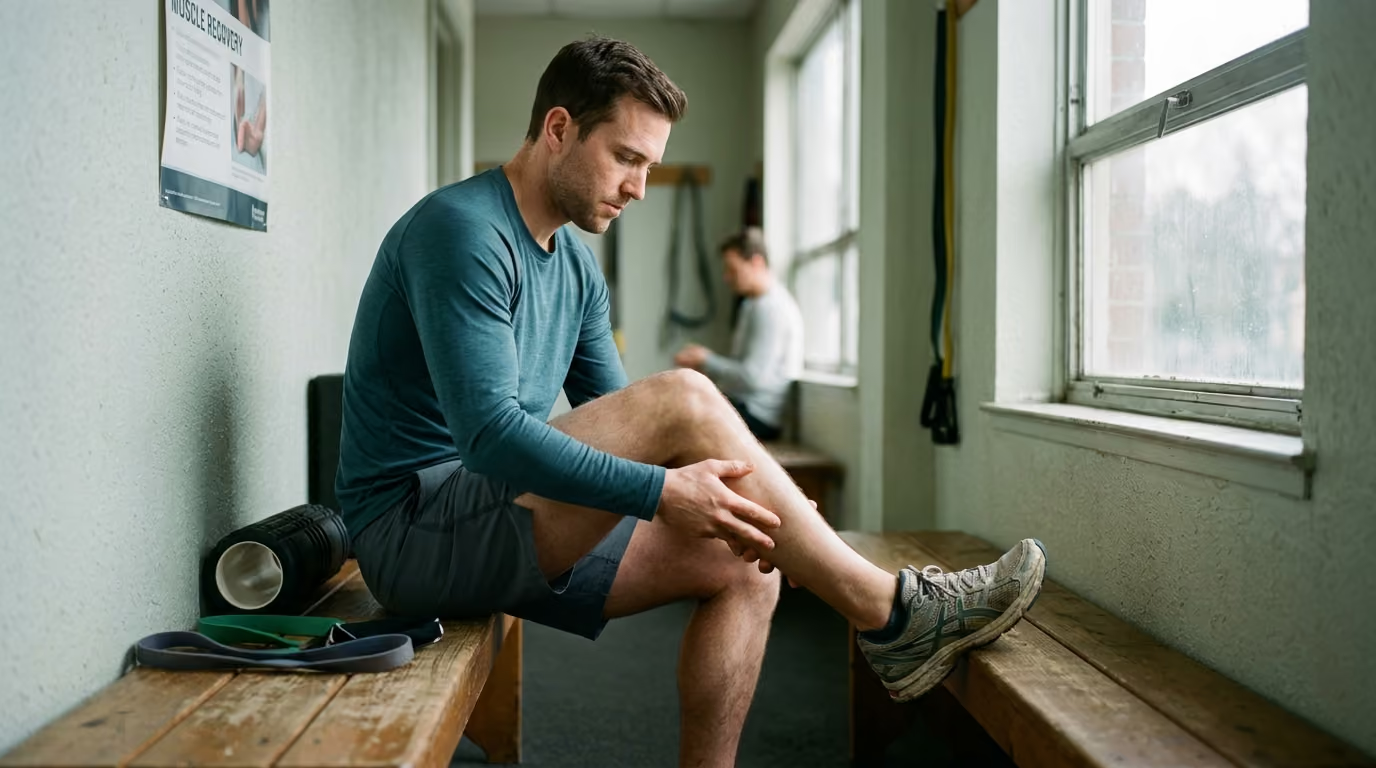

Total body water constitutes roughly fifty to sixty-five percent of mass, requiring strategic fluid management across training, travel, and recovery.





Many professionals search for simple answers to daily fatigue, brain fog, and lagging physical stamina by asking how much water or sodium they should consume each day. The typical guidance found online swings between two unhelpful extremes: force a gallon of plain water daily, or consume high-dose electrolyte powders with every meal. Neither approach reflects human physiology. Fluid and mineral balance is not a universal volume target, but an adaptable regulatory system shaped by body mass, ambient temperature, sweat rates, training volume, and clinical state.
This guide provides a comprehensive, research-backed framework for managing fluid and electrolyte intake across demanding workdays, endurance training, commercial air travel, heat exposure, sauna sessions, and acute illness.
Managing hydration effectively requires understanding when baseline physiology is sufficient and when targeted interventions are necessary. For time-pressed executives, the primary findings include:
Understanding fluid balance requires a precise vocabulary. In clinical literature, euhydration describes a state where total body water sits within an individual's normal homeostatic range. Hypohydration refers to an existing total body water deficit. Dehydration represents the dynamic process of losing fluid, while rehydration is the active process of restoring fluid and electrolyte equilibrium.
Total body water accounts for roughly 50 to 65 percent of an adult's body mass, divided between intracellular fluid and extracellular fluid. Intracellular fluid holds about two-thirds of total body water, where potassium serves as the primary governing cation. Extracellular fluid, which includes blood plasma and interstitial fluid between cells, holds the remaining one-third, governed primarily by sodium and chloride.
The human body regulates these fluid compartments through precise neuroendocrine mechanisms. When plasma volume drops or plasma osmolality rises, central osmoreceptors in the hypothalamus trigger two responses. First, they stimulate the conscious sensation of thirst. Second, they prompt the posterior pituitary gland to release arginine vasopressin, also known as antidiuretic hormone. Vasopressin signals the kidneys to insert aquaporin channels into the collecting ducts, conserving free water and concentrating urine.
Concurrently, the renin-angiotensin-aldosterone system senses drops in renal perfusion pressure and circulating sodium. The adrenal cortex secretes aldosterone, which directs the kidneys to reabsorb sodium and excrete potassium, preserving extracellular volume and maintaining blood pressure. Because of these sensitive regulatory feedback loops, healthy sedentary adults in temperate conditions rarely experience severe cellular dehydration when food and fluid are available.
The National Academies established Adequate Intake values for total water rather than Recommended Dietary Allowances because individual requirements vary widely based on metabolism, climate, and physical activity. Population reference values of 3.7 liters daily for men and 2.7 liters for women represent general median intakes across healthy populations. In cool climates, sedentary to moderately active individuals may require between 1.9 and 3.8 liters daily. In hot climates with strenuous physical labor, daily requirements can expand to 7.6 to 15.2 liters per day. Mechanically forcing a fixed high volume on a sedentary professional ignores this underlying physiology.
Electrolytes carry electrical charges in body fluids, facilitating neuromuscular signaling, cardiac contractions, and cellular transport. For sweat replacement, sodium is the dominant focus. The National Academies set an Adequate Intake for sodium at 1.5 grams per day for young adults, equivalent to 3.8 grams of sodium chloride, with a chronic disease risk reduction threshold set at 2.3 grams per day.
While public health dietary guidance focuses on baseline cardiovascular risk across populations, athletic sweat loss requires independent planning. An individual training hard in the heat can lose several grams of sodium in a single afternoon. Using general dietary sodium caps to guide athletic fueling strategies during multi-hour training blocks creates a mismatch between intake and physiological loss.
Sweat rates vary substantially between individuals. Body size, metabolic work rate, ambient temperature, relative humidity, airflow, clothing, and individual sweat gland density all dictate fluid loss. Sweat sodium concentration varies from under 20 mmol/L to over 60 mmol/L, governed by genetics, state of training, and heat acclimatization. When athletes become heat acclimatized, the sweat glands upregulate aldosterone receptors, allowing the body to reabsorb more sodium before sweat reaches the skin surface. This adaptation produces a more dilute sweat, preserving systemic sodium stores during prolonged heat exposure.
For an executive working in a climate-controlled corporate office, maintaining adequate fluid balance is straightforward. Consuming fluids alongside standard meals, drinking in response to thirst, and keeping water accessible throughout the day satisfies daily baseline demands.
Popular wellness culture often claims that even subtle fluid deficits cause profound cognitive decline and executive dysfunction. The scientific literature shows a more nuanced picture. While severe dehydration impairs working memory, vigilance, and psychomotor speed, these effects are consistently documented at fluid losses exceeding two percent of body mass, often combined with high thermal stress or intense physical exhaustion. In an office setting, mild fluctuations in thirst rarely produce measurable declines in analytical decision-making or strategic focus. You can support your focus and cognition through consistent sleep and structured work blocks rather than obsessive water tracking.
Urine color provides a rough proxy for hydration status, but it has distinct limitations. Dilute, pale-yellow urine generally indicates adequate hydration, but striving for completely clear urine throughout the entire day is counterproductive. Constantly passing clear urine signals that the kidneys are rapidly clearing excess free water, which can deplete water-soluble vitamins and interrupt meetings with frequent bathroom visits.
Furthermore, dietary factors easily distort urine appearance. High-dose B-complex vitamins turn urine bright neon yellow, while certain foods alter pigment independently of plasma osmolality. Relying on thirst, mealtime fluid intake, and normal voiding frequency offers a more reliable everyday strategy.
The belief that moderate coffee or tea consumption causes systemic dehydration is unsupported by clinical trials. While acute doses of caffeine above 300 milligrams can induce a mild, temporary diuretic effect in caffeine-naive individuals, habitual consumers develop tolerance to this mechanism. The water contained within standard brewed coffee, espresso diluted with water, and tea contributes directly to total daily fluid intake.
Caffeine-containing beverages should be accounted for within total daily fluid volume, provided they do not disrupt sleep architecture when consumed late in the day. Understanding how caffeine interacts with your broader sleep and recovery cycle is essential for maintaining sustained daytime performance.
Physical training and hot environments fundamentally alter fluid turnover. When muscles contract during prolonged exercise, approximately 75 to 80 percent of the energy expended is released as heat. To maintain core body temperature within safe physiological limits, the sympathetic nervous system stimulates sweat glands, using evaporative cooling as the primary heat-dissipation mechanism.
Determining fluid replacement needs during sustained athletics requires measuring individual sweat rates. Executives can calculate their sweat rate using a simple body mass equation:
Sweat loss in liters equals pre-exercise body mass minus post-exercise body mass, plus fluid consumed during the session, minus urine produced during the session.
To ensure accuracy, weigh yourself unclothed immediately before and after exercise, drying off excess surface sweat with a towel prior to the second measurement. If an executive loses 1.2 kilograms during an 80-minute threshold run while consuming 400 milliliters of water and passing no urine, their total sweat loss is 1.6 liters. This translates to an hourly sweat rate of 1.2 liters per hour under those specific conditions. Knowing this baseline allows for structured fluid planning in future training blocks.
The American College of Sports Medicine notes that during exercise lasting under 60 minutes in temperate conditions, plain water is entirely sufficient for healthy individuals. Carbohydrate-electrolyte beverages provide no measurable performance or physiological advantage over plain water within that initial hour.
When exercise extends beyond 60 to 90 minutes, especially in warm or humid environments, fluid, sodium, and carbohydrate management become vital. In these longer sessions, sweat fluid losses combine with glycogen depletion. The American College of Sports Medicine recommends starting with a sodium concentration of approximately 0.5 to 0.7 grams of sodium per liter of fluid, which equals 500 to 700 milligrams per liter. This concentration assists in maintaining the osmotic drive to drink, improves intestinal water absorption through sodium-glucose cotransporters, and helps replace a portion of the sodium lost in sweat.
The long-standing benchmark suggesting that body mass losses exceeding two percent inevitably degrade endurance performance serves as a practical target, but it is not a rigid biological threshold. Laboratory trials demonstrate that aerobic performance in the heat declines as fluid deficits increase, because reduced plasma volume strains cardiac output and elevates core body temperature.
However, in field settings with ambient airflow, cool conditions, or shorter events, athletes frequently tolerate fluid losses between two and three percent without performance decay. Developing an athletic strategy within your broader energy, strength, and physical performance routine requires matching fluid replacement to real-world race conditions and individual gastrointestinal tolerance.
Pre-exercise hydration should begin hours before the session starts. Attempting to compensate for poor daily fluid habits by chugging a liter of water ten minutes before a workout simply distends the stomach and stimulates rapid urine production. The goal is to start training in a euhydrated state with normal plasma electrolyte concentrations. Consuming modest fluid volumes alongside standard meals two to four hours before exercise allows the kidneys to excrete any excess volume and stabilizes blood electrolytes.
Post-exercise rehydration depends on the time available before the next demanding physical session. If an executive trains once daily, eating normal, balanced meals containing dietary sodium and drinking water according to thirst will restore fluid and electrolyte balance within 12 to 24 hours. When facing two intense training sessions within an eight-hour window, more structured rehydration is warranted.
In rapid-turnaround scenarios, athletes should consume approximately 125 to 150 percent of the fluid volume lost during the session over the following two to four hours. The additional volume compensates for continued post-exercise sweat and obligatory urinary losses. Ingesting sodium alongside this fluid is essential, as consuming large volumes of plain water without sodium lowers plasma osmolality, triggering the kidneys to excrete the water before tissues can rehydrate.
While consumer marketing emphasizes the dangers of dehydration, clinical literature consistently demonstrates that overdrinking during athletic events presents a far more dangerous acute risk. Exercise-associated hyponatremia is clinically defined as a serum or plasma sodium concentration dropping below 135 mmol/L during or up to 24 hours after prolonged physical exertion.
The primary cause of exercise-associated hyponatremia is the excessive consumption of hypotonic fluids, including plain water and standard sports drinks, at rates that exceed the kidneys' capacity to excrete free water. This mismatch is compounded by non-osmotic secretion of arginine vasopressin, triggered by exercise stress, nausea, pain, or heat, which prevents the kidneys from diluting urine effectively. As excess free water accumulates in the extracellular space, osmotic pressure forces water into the intracellular compartment, causing cellular swelling.
When brain cells swell within the rigid confines of the cranium, the condition becomes life-threatening. Early symptoms of hyponatremia include:
If plasma sodium continues to fall below 130 mmol/L, severe neurological complications emerge, including acute confusion, disorientation, vomiting, pulmonary edema, seizures, coma, and tentorial herniation.
A widespread misconception is that consuming salt tablets or electrolyte powders fully protects against hyponatremia, allowing unlimited fluid consumption. This is false. Commercial sports drinks and electrolyte packets are hypotonic relative to blood plasma, containing far less sodium than normal serum levels. Ingesting large volumes of electrolyte drinks will still lower serum sodium concentration if the fluid intake outpaces sweat and urinary clearance. Sodium intake supports fluid retention and palatability, but it cannot override the hydrostatic consequences of gross overdrinking.
The Wilderness Medical Society Clinical Practice Guidelines identify drinking according to thirst as the single most effective strategy for preventing exercise-associated hyponatremia in endurance athletes. Thirst is an evolutionary feedback mechanism that defends plasma osmolality with remarkable accuracy.
The National Athletic Trainers' Association reinforces this guidance, recommending that athletes replace fluids lost to sweat without ever gaining body mass during exercise. Finishing a marathon, triathlon, or long training session heavier than your starting weight confirms that fluid intake exceeded sweat output, creating a direct risk for dilutional hyponatremia.
Frequent business travel exposes executives to unique environmental conditions, most notably commercial aircraft cabins. A widespread belief among frequent flyers is that cabin air causes rapid, severe full-body dehydration, requiring aggressive water consumption before and during flights.
Controlled environmental evaluations of modern aircraft cabins demonstrate that this belief is exaggerated. Commercial cabins are maintained at low relative humidity, often between 10 and 20 percent, because outside air at cruising altitude contains minimal absolute moisture. However, research measuring respiratory and transcutaneous water loss indicates that an eight-hour flight at near-zero humidity increases total body water loss by only about 100 milliliters compared to a normal indoor environment.
The sensation of intense dehydration reported by travelers is primarily a localized dryness of the oral mucosa, nasal passages, and conjunctiva of the eyes. This localized dryness triggers dry mouth and throat discomfort, which travelers mistake for systemic dehydration.
Forcing excessive fluid intake during long-haul flights does not alleviate mucous membrane dryness. Instead, it expands bladder volume, disrupts rest, and forces frequent trips down narrow aircraft aisles. A practical approach involves drinking moderate amounts of water when thirsty, limiting excessive alcohol, and using saline nasal sprays or lubricating eye drops to manage mucosal comfort.
When travel involves high stress, disruptions in sleep architecture, or intense meeting schedules, managing your broader stress and burnout framework is far more effective for maintaining executive presence than hyper-dosing fluids.
Sauna use represents another acute environmental stressor that alters fluid distribution. Passive heat exposure in dry Finnish saunas or infrared cabins elevates core temperature, inducing peripheral vasodilation, elevating heart rate, and activating sweat glands.
Clinical research examining sedentary adults in standardized sauna protocols, such as four 10-minute sessions at 90 degrees Celsius with short rest intervals, demonstrates an average acute body fluid loss of approximately 0.65 kilograms over an hour. This reduction is entirely fluid loss; it does not reflect metabolic fat oxidation.
Post-sauna rehydration should follow standard physiological principles:
Recreational heat exposure does not require complex or expensive electrolyte formulations. Normal renal conservation mechanisms and balanced daily nutrition fully restore mineral equilibrium following standard sauna bathing.
Fluid management protocols for athletic sweating cannot be applied to clinical gastrointestinal illness. Sweat is a hypotonic fluid containing predominantly water, sodium, and chloride. In contrast, fluid losses from acute gastroenteritis, diarrhea, and persistent vomiting carry substantial concentrations of potassium, bicarbonate, sodium, and chloride, causing rapid extracellular volume contraction and severe acid-base disruptions.
In cases of diarrheal illness, standard athletic sports drinks, commercial fruit juices, and sodas are inappropriate and potentially harmful. These beverages contain high concentrations of simple carbohydrates, frequently between 8 and 12 percent, alongside low sodium concentrations. High osmotic pressure in the intestinal lumen draws free water out of blood vessels and into the gut, worsening osmotic diarrhea and accelerating dehydration.
The World Health Organization established oral rehydration salts as a specific, evidence-based glucose-electrolyte solution designed to treat diarrheal dehydration across all age groups. The physiological efficacy of oral rehydration salts relies on the sodium-glucose cotransporter protein SGLT1 located on the luminal membrane of enterocytes in the small intestine.
This transport protein pairs the absorption of one glucose molecule with two sodium ions. As sodium and glucose cross into the enterocyte and are pumped into the extracellular space, they create a powerful osmotic gradient that pulls water across the intestinal barrier and into systemic circulation, even when normal fluid absorption pathways are impaired by pathogens.
World Health Organization guidelines require mixing oral rehydration salt packets in exactly one liter of clean drinking water to maintain correct osmolarity. Key management rules include:
Executives traveling internationally should carry standardized oral rehydration packets in their travel kit. If an executive experiences high fever, blood in the stool, persistent vomiting preventing all fluid retention, severe dizziness upon standing, or confusion, oral therapy is insufficient and immediate emergency medical care with intravenous fluid support is required.
Pairing proper hydration recovery with evidence-based nutrition and metabolic performance protocols ensures rapid return to full cognitive and physical capacity following acute illness.
Translating hydration science into an executive routine requires matching the intervention to the specific operational environment. The following protocols outline practical steps for standard scenarios.
In standard corporate office environments, your routine should prioritize simplicity and avoid disruptive overdrinking:
When executing endurance sessions lasting longer than 75 minutes in warm conditions, structured fueling protects plasma volume:
Long flights require environmental management rather than extreme water loading:
Thermal exposure protocols require simple fluid restoration without complex supplementation:
Scientific research on fluid and mineral balance contains clear boundaries. While general principles apply across healthy populations, several nuances and clinical exceptions must be understood:
Use this checklist to establish a reliable, evidence-based fluid and electrolyte routine this week:
Stay connected for research and practical guidance on executive performance, energy, focus, sleep, recovery and longevity. Ideas built for people who want to stay sharp, capable and effective for the long run.


Build habits and systems that support clear thinking, steady energy and long term capacity throughout a demanding career.
explore the Blog