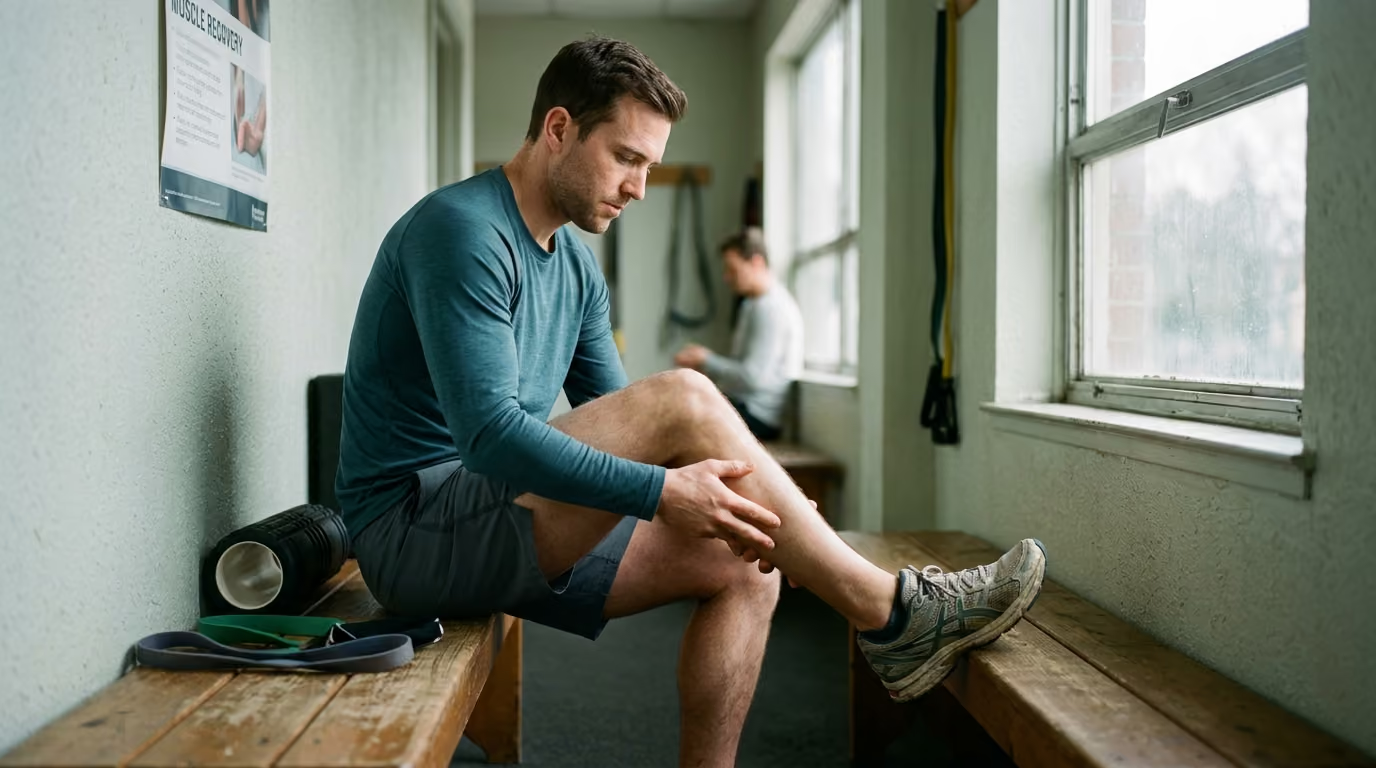

Stepping off the gym floor after intense exertion requires structured cooldown protocols and targeted recovery strategies that support physiological.





Many professionals finish a hard training session and immediately search for the best way to stop next-day muscle soreness, prevent injuries, and speed up recovery. The standard advice often claims that a twenty-minute cooldown, extensive stretching, and specialized gear will erase fatigue and protect against tissue damage.
The scientific reality is far more nuanced. A post-workout cooldown is primarily a physiological and psychological bridge between intense effort and rest. It does not prevent delayed-onset muscle soreness, nor does it guarantee faster tissue repair.
This guide delivers an evidence-based framework for post-workout recovery. You will learn what an active cooldown actually accomplishes, how to distinguish between subjective symptom relief and true biological adaptation, and how to build a routine that fits into a demanding professional schedule.
When you complete a rigorous workout, your body remains in an elevated metabolic and sympathetic state. Core temperature is elevated, circulating catecholamines remain high, and blood distribution favors active skeletal muscle beds.
A cooldown is the deliberate performance of low-intensity exercise immediately following a training bout. The American College of Sports Medicine defines a standard active cooldown as five to ten minutes of low-intensity walking or light cycling.
The primary cardiovascular purpose of this light movement is mitigating post-exercise hypotension and venous pooling. During vigorous movement, contracting skeletal muscles compress veins to help return blood to the heart. When exercise stops abruptly, this muscle pump ceases while blood vessels remain dilated, which can cause blood to pool in the lower limbs.
This sudden pooling reduces venous return to the heart, lowers stroke volume, and can cause a rapid drop in blood pressure. For many individuals, this manifests as light-headedness or dizziness after high-intensity intervals or heavy lifting. Continuing low-intensity movement for a few minutes allows the cardiovascular system to readjust progressively while blood flow normalizes.
A widespread misconception is that an active cooldown rapidly clears lactic acid to prevent next-day stiffness. Lactate is not a waste product that causes delayed soreness, and blood lactate returns to resting levels within an hour after exercise through normal metabolic clearance. Delayed-onset muscle soreness is primarily caused by micro-damage to muscle fibers, local inflammation, and the sensitization of nociceptors following unfamiliar eccentric strain.
Systematic reviews evaluate active cooldowns as largely ineffective for improving most objective markers of biological recovery. An active transition does not reliably accelerate muscle glycogen restoration, reduce markers of muscle damage, or speed the recovery of neuromuscular strength. It simply provides a safe, gradual reduction in physiological intensity.
To build an effective post-workout structure, you can reference our broader energy and physical performance resources to align training volume with your physiological capacity.
To make informed decisions about your post-training routine, you must understand what each recovery modality actually delivers. Feeling better after an intervention does not necessarily mean your muscle fibers have rebuilt their contractile proteins or replenished their energy reserves.
Immediate transition methods focus on safety and cardiovascular stabilization. They allow you to shift from heavy physical exertion to a resting state without abrupt autonomic disruption.
Performance recovery refers to interventions that objectively restore your capacity to generate force, sustain power, and train at high outputs.
Symptom management focuses on altering subjective perceptions of pain, muscle tightness, and systemic fatigue.
Mobility work maintains or expands usable joint ranges and prevents movement restrictions following intense loading.
Relaxation techniques are designed to lower cognitive stress and reduce systemic central nervous system arousal.
Long-term adaptation refers to the systemic habits that allow the body to handle higher workloads over months and years.
A recovery routine should never consume more time or energy than the workout itself warrants. Spending twenty minutes stretching after a twenty-minute run is an inefficient use of time.
The structure of your cooldown should reflect the intensity, duration, and physiological demands of your specific training session.
For a thirty-minute maintenance strength workout, minimal post-training work is needed.
A demanding strength session involving heavy squats, deadlifts, or presses requires brief joint relief and cardiovascular stabilization.
Intense cardiovascular intervals create substantial metabolic stress and rapid shifts in blood distribution.
Sustained endurance sessions exceeding seventy-five minutes create significant fluid deficits and glycogen depletion.
When two demanding sessions are separated by fewer than eight hours, time efficiency is critical.
Exercise demands high sympathetic nervous system activity. Your heart rate accelerates, stress hormones rise, and respiratory rate increases to meet cellular oxygen demands.
Ending a strenuous session and immediately rushing into a high-stakes business meeting keeps you locked in this heightened sympathetic state. Incorporating controlled breathing into your post-workout transition helps engage the parasympathetic nervous system, signaling safety to the brain.
Controlled respiration affects the autonomic nervous system through mechanical and baroreflex mechanisms. When you extend your exhalations, intrathoracic pressure changes, stimulating the vagus nerve. This parasympathetic input slows the sinoatrial node, prompting a steady decline in heart rate.
Deep, diaphragmatic breathing also helps regulate carbon dioxide tolerance and downshifts respiratory muscle tone. It provides an immediate sense of mental calm and creates a clear psychological separation between physical training and professional work.
A reliable post-workout breathing routine does not require complex techniques. Follow these steps:
Breathing exercises support psychological calm and cardiovascular downshifting. They do not accelerate muscle protein synthesis, clear tissue micro-trauma, or replenish glycogen stores. Recognizing this distinction prevents unrealistic expectations while providing a valuable tool for mental focus.
Static stretching is widely practiced after exercise, yet its biological effects are commonly misunderstood. Many people stretch to prevent muscle soreness or reduce their risk of future injury.
Extensive scientific literature shows that standalone post-exercise stretching does not significantly reduce delayed-onset muscle soreness. It does not alter structural muscle damage, nor does it speed up the recovery of muscular force generation in the days following a workout.
Stretching retains value when used with clear, realistic objectives. It helps maintain or improve joint range of motion, reduces the subjective feeling of stiffness, and aids relaxation.
The American College of Sports Medicine provides clear guidelines for safe and effective flexibility work:
Dynamic mobility exercises are often superior to prolonged static holds immediately following heavy lifting. Light movement through full ranges of motion restores joint lubrication and neuromuscular control without overstressing fatigued tendons.
Practical examples include:
Limit your post-workout mobility work to two or three targeted movements for joints that feel restricted. Expanding this work into a sprawling thirty-minute routine provides diminishing returns for busy professionals.
The wellness market offers an array of tools designed to speed recovery. High-performing professionals must evaluate these methods based on evidence rather than marketing promises.
Sports massage is highly supported for reducing perceived soreness and subjective fatigue. Systematic reviews show that massage consistently lowers the subjective intensity of delayed-onset muscle soreness.
Massage alters local tissue sensation and provides positive central nervous system input. However, lower pain perception does not mean the underlying muscle tissue has completed its structural repair. Use massage for comfort, stress relief, and perceived recovery rather than as a substitute for rest.
Cold-water immersion involves submerging the body in water cooled to ten to fifteen degrees Celsius for ten to fifteen minutes. Research confirms that cold-water immersion effectively reduces perceived muscle soreness and lowers core temperature after hard exertion.
Cold exposure constricts blood vessels, reduces local edema, and numbs pain receptors. However, regular cold-water immersion immediately following resistance training can blunt long-term muscle growth and strength adaptations. The cold temperature dampens the inflammatory signaling cascades required for muscle hypertrophy.
Reserve cold-water immersion for multi-event athletic competitions, tournament days, or extreme heat scenarios where rapid short-term performance recovery outweighs long-term muscular adaptations.
Foam rolling is widely used to relieve muscle stiffness and improve short-term range of motion. Scientific studies confirm that two to three minutes of foam rolling can temporarily reduce soreness and improve joint movement without reducing muscular power output.
Foam rolling does not break down scar tissue or physically reshape fascia. Instead, it works by stimulating mechanoreceptors and altering pain tolerance through neural pathways. It is a safe, cost-effective method for short-term symptom relief.
Pneumatic compression boots and graduated compression clothing apply mechanical pressure to the limbs to improve venous return and reduce swelling. Research indicates small to moderate benefits for reducing subjective soreness and clearing metabolic byproducts.
Compression garments are practical for long travel days following hard training sessions. However, their physiological impact on next-day strength and power output remains modest.
Percussive therapy devices provide localized vibrational stimulation to muscle bellies, offering temporary relief from tightness and increasing skin blood flow. They are convenient for self-administered relaxation but have not been proven to accelerate deep muscular repair.
Saunas provide meaningful cardiovascular and relaxation benefits when used as a separate recovery session. However, post-workout sauna use creates additional heat stress and fluid loss. If used immediately following hard exercise, you must carefully monitor hydration and electrolyte balance.
To see how these modalities fit into broader lifestyle management, review our sleep and recovery principles to establish clear physiological baselines.
Biological recovery is driven by cellular fuel replenishment, tissue protein synthesis, and fluid balance. Without adequate nutritional inputs, no cooldown or recovery device can restore physical performance.
Resistance training and strenuous endurance exercise induce muscle protein breakdown. To repair this micro-trauma and initiate remodeling, you must supply adequate essential amino acids through dietary protein.
The International Society of Sports Nutrition recommends a daily protein intake of 1.4 to 2.0 grams per kilogram of body weight for active individuals. Distributing this intake evenly across three to five meals throughout the day produces superior muscle protein synthesis compared to consuming the majority of your protein in a single sitting.
A practical post-workout target is approximately 0.25 to 0.40 grams of protein per kilogram of body mass. For most adults, this equates to twenty to forty grams of high-quality, leucine-rich protein within two hours of finishing exercise.
The idea of a rigid thirty-minute anabolic window is an exaggeration. As long as you consume adequate protein across the entire day, your body will successfully repair muscle tissue.
You can find in-depth frameworks for daily meal timing within our metabolic and nutrition strategies resource library.
Muscle glycogen is the primary fuel source for high-intensity training, repeated sprints, and sustained aerobic effort. Replenishing these stores is essential for maintaining training quality across the workweek.
For moderate daily training sessions, consuming balanced meals with adequate carbohydrates throughout the day is sufficient to restore glycogen within twenty-four hours. Aggressive, immediate carbohydrate refeeding is only necessary when you have a second demanding workout scheduled within eight hours.
In rapid-turnaround scenarios, the International Society of Sports Nutrition recommends consuming approximately 1.2 grams of carbohydrate per kilogram of body weight per hour for the first four hours of recovery. Alternatively, combining 0.8 grams of carbohydrate per kilogram with 0.2 to 0.4 grams of protein per kilogram achieves similar glycogen resynthesis rates while supporting muscle repair.
Dehydration impairs cardiovascular efficiency, elevates core body temperature, and degrades cognitive decision-making. Replacing sweat losses after training is critical for professional productivity.
The American College of Sports Medicine advises avoiding body weight losses greater than two percent during exercise. A reliable field strategy involves weighing yourself before and after representative training sessions to calculate your individual sweat rate.
Follow these hydration guidelines:
Executives, founders, and senior operators rarely have the luxury of training in ideal conditions. Demanding work obligations, unexpected crises, and relentless travel schedules frequently collide with structured recovery routines.
I remember landing at Heathrow after a brutal overnight flight from New York. I had a board meeting in three hours. The standard advice of getting eight hours of sleep felt like a cruel joke. That was the exact moment I realized our readers do not need perfect scenarios. They need triage protocols. They need to know what the science says about recovering cognitive function when you only managed three hours of terrible sleep at high altitude.
When your training occurs in the middle of a chaotic work schedule, you must ruthlessly prioritize the highest-yield recovery inputs.
Sleep represents the most powerful performance and recovery tool available. During deep non-rapid eye movement sleep, growth hormone is released, tissue repair accelerates, and metabolic waste is cleared from the brain.
The American College of Sports Medicine recommends eight to ten hours of sleep per night for individuals sustaining heavy physical training loads. Chronic sleep restriction degrades neuromuscular coordination, elevates injury risk, blunts glucose tolerance, and impairs executive cognition.
When high-stress workweeks reduce total sleep time, no combination of cold plunge tubs, massage guns, or supplements will offset the deficit. You must protect sleep opportunity windows by establishing consistent bedtimes, maintaining a dark and cool sleep environment, and managing late-evening caffeine intake.
When travel or deadlines compromise your sleep, modify your recovery and training strategy immediately:
Physical exercise and professional stress draw from the same systemic reserve. A grueling negotiation, difficult board presentation, or prolonged financial review creates real autonomic and neuroendocrine fatigue.
If you layer intense high-volume training on top of acute workplace crisis, total systemic load can exceed your adaptive capacity. During high-stress weeks, treat gentle active recovery, such as thirty minutes of relaxed walking, as your primary physical outlet. This supports circulation and mental clarity without adding to your recovery debt.
Applying these concepts ensures you maintain strict executive performance standards without burning out your physical reserves.
Frequent business travel disrupts routines, limits access to equipment, and exposes you to unfamiliar environments. Adapting your post-workout protocol ensures continuity without unnecessary friction.
When hotel fitness centers lack specialized recovery tools, focus on basic, high-return actions:
On days filled with consecutive meetings, long cooldowns are impractical. Use this micro-transition framework:
This entire sequence requires zero dedicated recovery time outside of your normal movement to the office, ensuring your workday remains uninterrupted.
Exercise and recovery science has advanced significantly, but clear limitations and evidence gaps remain. Recognizing what the science does not support protects you from wasting time and capital on unproven trends.
Wearable fitness devices use heart-rate variability, resting heart rate, and skin temperature to generate daily readiness scores. While these metrics offer helpful trends, they are proxy measurements that can be influenced by dehydration, alcohol, late meals, and psychological stress.
A low readiness score does not mean your muscles are incapable of productive work, nor does a high score guarantee peak performance. Use wearable metrics as secondary reference points, prioritizing your actual warm-up performance, local muscle comfort, and subjective energy levels.
Much of the published literature on massage guns, specialized saunas, and pneumatic compression suffers from small sample sizes, short study durations, and inconsistent methodologies.
Many studies fail to control for the powerful placebo effect associated with expensive recovery gadgets. When an athlete expects a modern tool to work, their subjective perception of soreness often drops regardless of biological tissue changes.
Recovery rates vary widely based on biological age, training history, genetic factors, and total daily energy balance. Two individuals completing the identical lifting session will experience different levels of muscle damage and metabolic fatigue.
Scientific guidelines provide reliable starting points, but you must observe your individual response to training volume, nutrition, and rest intervals over time.
Apply this structured checklist to establish a sustainable, evidence-based post-workout recovery routine this week:
Stay connected for research and practical guidance on executive performance, energy, focus, sleep, recovery and longevity. Ideas built for people who want to stay sharp, capable and effective for the long run.


Build habits and systems that support clear thinking, steady energy and long term capacity throughout a demanding career.
explore the Blog