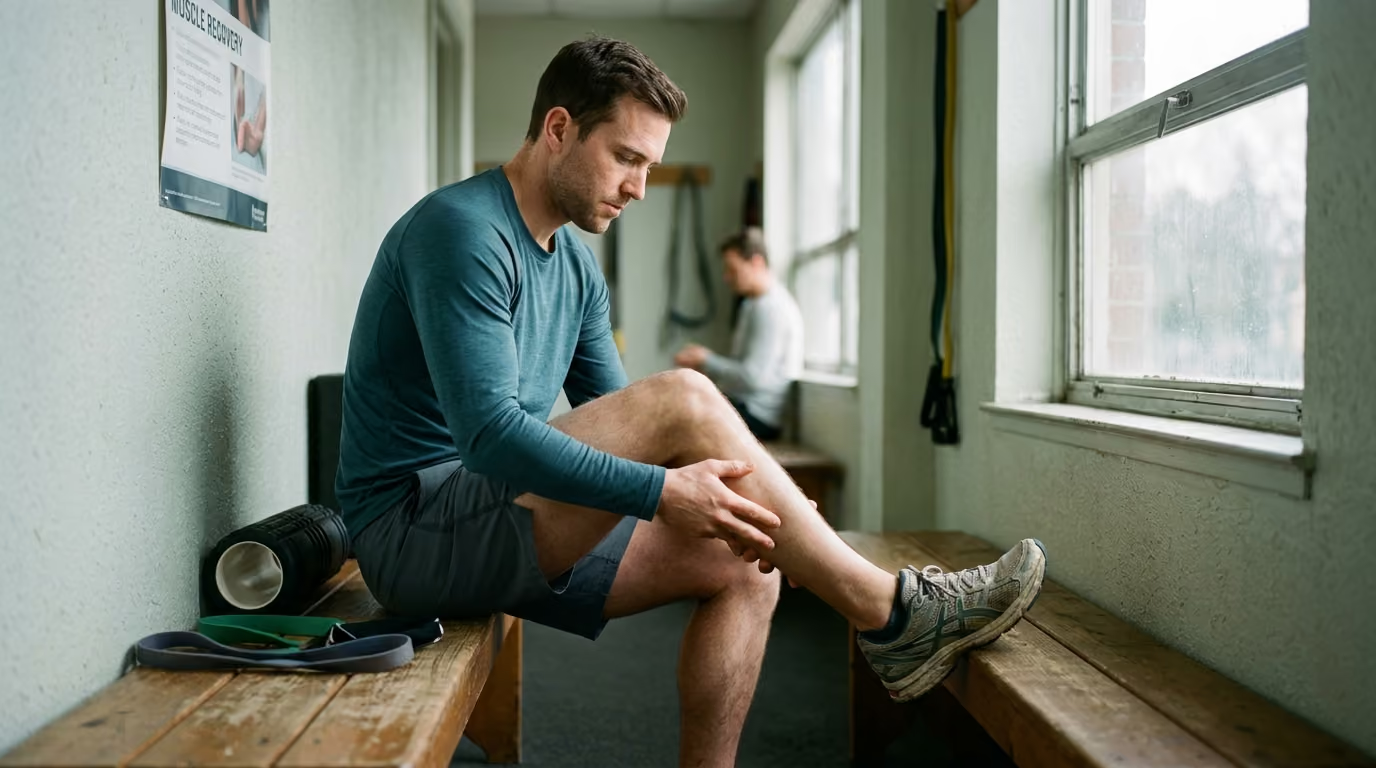

Accurate interpretation of muscle soreness, joint discomfort, and injury warning signs ensures safe training progression and timely clinical evaluation.





Every dedicated professional who trains consistently has typed a familiar query into a search engine late at night: "Is this soreness or an injury?" When physical discomfort surfaces after a demanding training session, determining whether your body is experiencing healthy adaptation, unproductive fatigue, or acute structural damage is critical. Misinterpreting these internal signals leads to two distinct failure modes. The first is training through pathological damage, which turns minor tissue irritation into chronic disability. The second is retreating into total inactivity at the first sign of discomfort, which creates deconditioning and stalls progress.
This guide provides a comprehensive framework to decode physiological feedback from training. By evaluating the timing, location, functional impact, and trajectory of physical sensations, you can make objective decisions about when to proceed, when to modify load, and when to seek medical evaluation.
Delayed-onset muscle soreness represents a physiological response to mechanical tension and structural remodeling. The sensation occurs primarily when muscle fibers undergo unaccustomed loading, particularly during eccentric contractions. An eccentric action occurs when a muscle produces force while lengthening under load. Common examples include the lowering phase of a heavy squat, decelerating during a high-speed sprint, running down a steep incline, or lowering a barbell during a bench press.
The microscopic mechanical disruption of sarcomeres during intense eccentric loading initiates a local inflammatory cascade. Fluid and immune cells migrate to the affected muscle tissue to clear damaged cellular components and initiate repair. This process sensitizes local nociceptors, which are the sensory nerve endings that register pain. Because this biochemical signaling and fluid accumulation take time to develop, soreness does not appear immediately during the workout.
Scientific reviews published in sports medicine literature demonstrate a distinct temporal curve for normal muscle soreness. Discomfort typically begins between 12 and 48 hours following the training bout. The intensity reaches its maximum peak between 24 and 72 hours post-exercise. In healthy individuals, uncomplicated DOMS steadily subsides and resolves within five to seven days.
A critical characteristic of this process is temporary functional impairment. Research confirms that peak strength loss often coincides with the first 48 hours following novel eccentric exercise. Full recovery of force production capacity can take up to five days. This temporary drop in force output occurs because of excitation-contraction coupling failure and physical remodeling within the muscle fibers. Recognizing this temporary deficit prevents athletes from attempting maximal loads when neuromuscular force output is physiologically suppressed.
Fortunately, skeletal muscle exhibits a protective mechanism known as the repeated-bout effect. After a single exposure to an unfamiliar eccentric stimulus, the neuromuscular system adapts rapidly. Muscle fibers reinforce their cellular structures, neural recruitment patterns adjust, and connective tissues strengthen. A study on eccentric loading published in sports science journals demonstrated that a single bout provides a protective adaptation against soreness from subsequent identical sessions for six to nine weeks.
This protective adaptation means that consistent training produces progressively less soreness over time. However, DOMS is neither a reliable marker of workout quality nor a prerequisite for muscular growth. Experiencing severe muscle soreness simply confirms that your tissue encountered an unfamiliar mechanical stimulus, a high volume of eccentric work, or an abrupt increase in workload. Developing a solid foundation in energy, strength and physical performance requires managing mechanical stress intelligently rather than chasing soreness as a goal.
Distinguishing between productive muscular adaptation and pathological tissue damage requires examining how different bodily structures express distress. Sensations vary depending on whether the affected tissue is skeletal muscle, tendon, joint cartilage, bone, or peripheral nerves.
Normal muscle soreness is diffuse and spread broadly across the belly of the worked muscle group. When palpated, the entire muscle feels tender, tight, and temporarily stiff. Light dynamic movement, warm showers, or gentle aerobic activity often temporarily alleviate this stiffness by increasing local blood flow and tissue temperature.
An acute muscle strain presents a completely different clinical picture. Strains occur at an identifiable moment during a dynamic action, such as a sprint, jump, or heavy lift. The athlete often feels a distinct pop, snap, or tearing sensation. Pain from a strain is sharply localized, often pinpointed to a single spot with one finger. Unlike DOMS, acute strains produce immediate weakness, potential ecchymosis or bruising, and an altered movement pattern or limp.
Tendons connect muscle to bone and possess a lower vascular supply than skeletal muscle. They respond to load over a delayed timeline. While acute muscle soreness improves as the body warms up, irritated tendons often present a deceptive pattern. An irritated tendon may feel stiff and painful at the start of a session, feel progressively better as movement continues, and then flare up significantly several hours later or the following morning.
Tendon pain is focal and localizes directly to the tendon structure, such as the Achilles, patellar, or rotator cuff tendons. The critical marker of tendon capacity is the next-morning response. If a tendon feels significantly stiffer or more painful the morning after a workout, the previous day's mechanical volume exceeded its current load tolerance.
Joint structures, including cartilage, labrums, and menisci, do not generate the broad muscular ache associated with DOMS. Distress within a joint presents as deep, localized pain accompanied by mechanical symptoms. These mechanical symptoms include joint catching, locking, clicking accompanied by sharp pain, or a sensation of the joint giving way under load.
True joint irritation frequently produces intra-articular effusion, which is swelling contained within the joint capsule. Swelling within a joint causes visible fullness and a distinct loss of both flexion and extension range of motion. Any joint discomfort that causes compensatory mechanics requires immediate load modification and careful monitoring.
Bone tissue adapts to mechanical strain, but abrupt spikes in volume can outpace bone remodeling. Bone stress injuries develop along a continuum from periosteal irritation to full cortical stress fractures. Pain originating from bone is characteristically deep, constant, and exquisitely tender to direct touch over a specific bony surface. Bone pain typically worsens with impact loading and fails to subside during warm-up sets.
Neurological symptoms stem from mechanical compression or chemical irritation of peripheral nerves. These sensations present as radiating pain, sharp electric shocks, burning sensations, pins and needles, or numbness traveling down a limb. Muscular soreness never produces radiating numbness or sensory loss. Neurological signs require clinical evaluation to determine the site of nerve entrapment.
While most training-induced sensations are benign and manageable with simple load adjustments, certain clinical presentations indicate serious pathology. High-performing professionals must recognize these red flag symptoms immediately to avoid catastrophic complications.
Exertional rhabdomyolysis is a life-threatening medical condition caused by the rapid breakdown of damaged skeletal muscle tissue. When muscle cell membranes rupture, they release intracellular contents into the bloodstream. These contents include electrolytes, the enzyme creatine kinase (CK), and the oxygen-carrying protein myoglobin. Excess myoglobin filters through the kidneys, where it can precipitate, obstruct renal tubules, and cause acute kidney injury or renal failure.
Rhabdomyolysis frequently occurs after extreme, unaccustomed physical exertion, particularly high-repetition protocols performed in hot conditions or when dehydrated. Clinical diagnostic criteria involve severe muscle pain, intense swelling, marked weakness, and serum creatine kinase levels elevated to at least five times the upper limit of normal, often exceeding 1,000 to 5,000 IU/L. A hallmark symptom is dark, tea-colored, or cola-colored urine caused by heavy myoglobinuria. If you experience extreme muscle swelling, severe weakness, and dark urine after a workout, you must seek emergency medical evaluation immediately.
Acute trauma involving complete tendon ruptures, ligament tears, or bone fractures presents with immediate loss of structural integrity. Inability to bear weight on a lower limb, visible structural deformity, or joint instability warrants immediate diagnostic imaging.
Another acute emergency is acute compartment syndrome. Muscles in the limbs are grouped into compartments bounded by inelastic fascial membranes. When severe trauma or extreme exertion causes rapid bleeding or swelling within a compartment, pressure rises dramatically. This elevated pressure compresses capillaries, nerves, and muscle tissue, cutting off blood supply. Symptoms include extreme, disproportionate pain that worsens when the muscle is passively stretched, visible fullness, severe tightness, and progressive sensory loss.
Physical training does not occur within a biological vacuum. For corporate executives, founders, and professionals managing demanding careers, training load is only one component of total systemic stress. The human nervous system processes physiological and psychological stress through shared neuroendocrine pathways.
When high-stakes professional obligations induce psychological stress, the body maintains elevated sympathetic nervous system activity and altered cortisol rhythms. Sustained systemic stress impairs microvascular circulation, alters cytokine signaling, and slows the rate of muscular and connective tissue repair. A training session that produces healthy muscular remodeling during a calm week can provoke tissue breakdown during a demanding travel schedule or intense corporate transaction.
Frequent travel introduces distinct physical challenges that alter tissue tolerance. Prolonged sitting during transcontinental flights causes hip flexor shortening, reduces spinal disc hydration, and impairs lower-limb venous return. Stepping off a long flight and immediately attempting heavy, explosive movements places vulnerable tendons and spinal structures at elevated risk. Hotel gyms often feature unfamiliar equipment with varying resistance curves, which increases the novelty of the mechanical stress.
Sleep deprivation is a profound driver of diminished tissue capacity. Research published in sleep and physiology journals shows that acute sleep restriction reduces muscle protein synthesis and blunts growth hormone release. Sleep loss also heightens pain sensitivity by altering central nervous system pain modulation pathways. Understanding how to manage your sleep and recovery is essential when scheduling demanding training sessions around business travel.
When workplace stress peaks, the intelligent approach involves adjusting your total training volume rather than abandoning exercise altogether. High-intensity intervals and maximal eccentric loading place high demands on central recovery reserves. Substituting these sessions with steady-state aerobic work, controlled tempo lifting, and mobility drills maintains cardiovascular conditioning without exceeding systemic capacity. Learning to identify the early markers of stress and burnout allows you to calibrate training intensity to your actual physiological capacity.
To evaluate physical sensations accurately, use a structured four-dimensional assessment model. By analyzing timing, location, functional integrity, and multi-day trajectory, you can reliably distinguish between benign soreness, productive fatigue, and tissue pathology.
Identify the exact point in time when the sensation emerged. Did the symptom occur suddenly during an explosive acceleration or the final repetition of a heavy set? Sudden onset during movement points toward an acute strain, sprain, or joint subluxation. Did the discomfort emerge gradually 24 to 48 hours after an intense session? Delayed onset is the hallmark of uncomplicated DOMS. Did the symptom present as persistent stiffness the morning after training? This pattern suggests that the previous day's load exceeded tendon or joint capacity.
Map the precise anatomical location and characterize the sensory quality of the pain. Is the sensation a dull, broad ache spread across large muscle bellies? This distribution reflects normal muscular adaptation. Is the sensation a sharp, stabbing, or pinching pain that can be located with a single fingertip? Focal pain over a tendon insertion, joint line, or bony surface indicates localized tissue strain. Does the sensation burn or radiate along a path? Radiating pain indicates peripheral nerve involvement.
Evaluate your objective physical function rather than relying solely on subjective pain intensity. Can you walk with a completely normal, symmetrical gait without limping? Can you descend a flight of stairs under full control without your knee collapsing inward or giving way? Can you perform a bodyweight squat with balanced mechanics and normal range of motion? If your movement mechanics are preserved despite mild discomfort, the issue is likely manageable. If you must alter your movement path, favor one side, or experience sudden muscular inhibition, you are dealing with a more significant issue.
Track the progression of the symptom across multiple days and training exposures. Is the discomfort improving steadily each day following the initial workout? A self-limiting course is typical of DOMS. Is the sensation stable at rest but steadily worsening with each consecutive training session? A worsening trend indicates that cumulative training load exceeds tissue remodeling rates. Symptoms that persist beyond seven days without improvement require professional clinical evaluation.
Before initiating a workout while managing lingering physical sensations, run through this five-question diagnostic screen:
Interpreting training feedback is only valuable if it leads to clear, actionable decisions about workout structure. The goal is to avoid both reckless overtraining and unnecessary complete bed rest. Applying a structured traffic-light decision system enables you to modify movement patterns dynamically while preserving training volume.
Apply this approach when sensations are clearly indicative of normal muscular adaptation:
Apply this approach when sensations suggest localized tissue irritation or excessive fatigue:
Apply this approach when sensations indicate acute structural injury or systemic pathology:
For managing persistent connective tissue conditions, such as patellar or Achilles tendinopathy, total rest is often counterproductive because it reduces tendon load capacity. Sports medicine research supports a structured pain-monitoring model during rehabilitation.
Under this evidence-based model, performing loaded exercises that produce mild discomfort is acceptable provided specific rules are maintained:
If next-morning pain is elevated, the previous day's mechanical volume was excessive and must be reduced in subsequent sessions. Following this structured protocol allows you to build physical resilience and maintain healthy aging and executive longevity without provoking chronic inflammatory cycles.
When managing yellow-light sensations, select from these evidence-informed mechanical modifications to maintain training momentum:
Examining real-world scenarios illustrates how to apply this analytical framework to common training dilemmas.
A 44-year-old executive returns from an international business trip and performs a demanding 10-kilometer run across hilly terrain. Thirty-six hours later, he experiences intense, bilateral quadriceps soreness, marked difficulty walking down stairs, and generalized knee stiffness.
Assessment:
Action Protocol:
A 38-year-old founder performs high-intensity track intervals. During the acceleration phase of the fourth sprint, she experiences a sharp, sudden pain in the mid-belly of her right hamstring, causing her to decelerate immediately.
Assessment:
Action Protocol:
A 48-year-old venture partner training for a marathon notices mild discomfort in his left Achilles tendon during runs. Over three weeks, the in-run pain remains low (2 out of 10), but he notices progressively worsening stiffness every morning when taking his first steps out of bed.
Assessment:
Action Protocol:
A 32-year-old corporate director joins an intense fitness challenge after four months of complete training inactivity. He performs hundreds of unaccustomed pull-ups and push-ups. Two days later, his arms are visibly swollen, he cannot straighten his elbows past 90 degrees, and his urine appears dark brown.
Assessment:
Action Protocol:
A technology executive managing an intensive funding round reports poor sleep quality, low motivation, and high perceived exertion during normal training sessions over a two-week period. His barbell velocity is down 15 percent, but he has no focal joint or muscle pain.
Assessment:
Action Protocol:
While the frameworks presented in this guide offer clear practical direction, maintaining an evidence-based perspective requires acknowledging the limitations of current sports medicine research.
A common pitfall in modern training analytics is the over-interpretation of mathematical load models. The acute-to-chronic workload ratio (ACWR) compares the volume of exercise completed in the current week to the average volume completed over the preceding four weeks. Early research suggested that keeping this ratio between 0.8 and 1.3 minimized injury risk, whereas ratios exceeding 1.5 or 2.0 increased risk significantly.
Subsequent methodological reviews in leading sports epidemiology publications have demonstrated that workload ratios cannot precisely predict individual injuries. The relationship between training load, tissue tolerance, and injury occurrence is non-linear and influenced by numerous confounding factors. These factors include age, previous injury history, tissue genetics, psychological stress, sleep architecture, and movement efficiency. Workload tracking is a useful guide for avoiding sudden spikes in volume, but it should not be treated as a precise mathematical formula.
Furthermore, pain is an inherently subjective neurobiological output rather than a direct readout of tissue damage. Functional magnetic resonance imaging and pain neuroscience research reveal that pain perception is modulated by context, perceived threat, emotional state, and prior experiences. Two individuals with an identical degree of tendon microtrauma can report vastly different pain scores based on their nervous system sensitivity.
Numerical pain scales must always be integrated with objective physical assessments. Evaluating symmetrical gait, force production, joint range of motion, and multi-day symptom trends provides a much safer foundation for training decisions than relying on subjective sensations alone. Reading our Execufuel editorial blog will keep you up to date on how modern performance science continues to refine these load-management concepts.
Demanding professional schedules often disrupt structured training routines. Business travel, late-night dinners, and back-to-back meetings create an environment where fatigue accumulates quickly and training time is constrained. Adapting your training approach during these periods prevents minor physical complaints from developing into persistent injuries.
Prolonged transit imposes distinct physical stresses on the musculoskeletal system:
Hotel fitness facilities rarely feature the calibrated barbells or specialized machines of a dedicated training facility. Attempting to match your home training loads on poorly maintained or unfamiliar equipment increases joint strain.
Apply this practical checklist to maintain training consistency, evaluate bodily feedback accurately, and protect your long-term physical capacity.
Stay connected for research and practical guidance on executive performance, energy, focus, sleep, recovery and longevity. Ideas built for people who want to stay sharp, capable and effective for the long run.


Build habits and systems that support clear thinking, steady energy and long term capacity throughout a demanding career.
explore the Blog