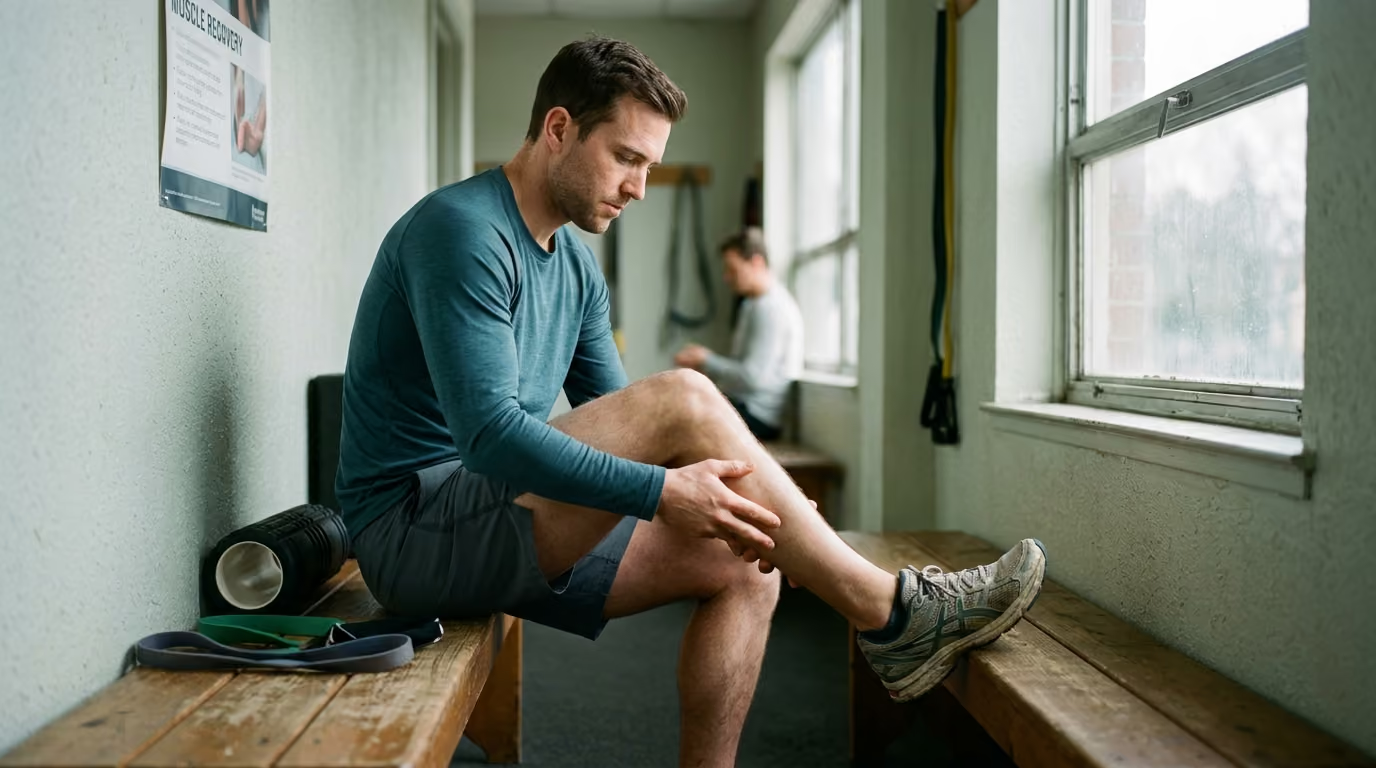

Heavy work travel combined with demanding gym sessions increases physical breakdown and requires strategic load management to keep leaders performing at their peak.





You return to the gym on a Monday morning after a grueling cross-country flight and four days of contentious negotiations. You feel mentally drained, but you decide to stick to your standard lifting numbers or push through a hard interval run. By the third set or the fourth mile, a familiar ache flares in your Achilles tendon or lower back. Within forty-eight hours, an irritating discomfort turns into a persistent issue that disrupts your workouts and your work focus for the next two months.
This scenario plays out constantly among ambitious leaders. When physical training meets executive schedules, injuries rarely stem from a single dramatic accident. Instead, they develop silently through a mismatch between the physical demands placed on the body and the capacity of the tissues to absorb those demands.
True training longevity is not about bubble-wrapping your routine or avoiding strenuous effort. It requires a systematic approach to risk reduction, load management, and tissue tolerance that supports lifelong physical performance.
Every workout imposes a specific load on the human body. To build a durable training system, you must separate external workload from internal response.
External load represents the objective work completed. This includes running mileage, weight lifted, total repetitions, sprint meters, and session duration. Internal load represents how your physiological and psychological systems respond to that work. It reflects heart rate, perceived exertion, muscle damage, biochemical stress, and mental fatigue.
The International Olympic Committee defines training load broadly to include physical training, competition demands, rapid schedule changes, travel, and psychological pressure. Two executives can complete the exact same barbell session, yet experience radically different internal loads.
An executive who slept eight hours and ate balanced meals will experience a manageable training stimulus. An executive running on five hours of fragmented sleep while managing an acquisition will experience a severe physiological stressor from that identical session.
Overuse injuries occur when cumulative demand exceeds the current capacity of a specific biological structure. Demand includes volume, intensity, movement speed, impact forces, technical complexity, and lifestyle stress. Capacity reflects the strength, stiffness, endurance, and recovery resources of your muscles, tendons, ligaments, and bones.
A useful model developed in tendon rehabilitation frames capacity around three elements: the floor, the ceiling, and time. The floor represents your current baseline tolerance. The ceiling represents the highest physical demand required by your sport or routine. Time is the biological requirement for tissue remodeling to bridge the gap between the floor and the ceiling.
When leaders rush this timeline, tissues fail. If you suddenly double your running volume or jump straight into high-load plyometrics after weeks of inactivity, you create a load spike. The IOC consensus notes that load changes should occur in small increments, often referencing weekly volume increases below 10 percent as a conservative guideline. While individual tolerance varies, sudden spikes in volume or intensity remain the single most reliable predictor of soft-tissue irritation.
A major trap for high-performing professionals is the biological mismatch between different bodily systems. Cardiovascular capacity and muscular strength adapt relatively quickly to training stimuli. You can notice significant improvements in aerobic stamina and muscular force output within three to six weeks of consistent training.
Connective tissues adapt on a substantially slower timeline. Tendons, ligaments, cartilage, and bone have lower vascularity and slower cellular turnover than skeletal muscle. As a result, your heart, lungs, and muscles may feel ready for heavier loads or higher mileage weeks before your patellar tendons or plantar fascia can tolerate the impact.
Training longevity requires matching your progression to the slowest-adapting tissue involved in the movement, rather than the fastest.
Scientific literature provides clear guidance on which interventions actively reduce injury risk and which offer minimal protection. Understanding these distinctions prevents wasted time on ineffective modalities.
Structured resistance training is the single most effective tool for preventing physical injury. A landmark systematic review and meta-analysis published in the British Journal of Sports Medicine analyzed physical activity interventions across thousands of participants. The researchers found that strength training reduced sports injuries to less than one-third of baseline levels, cutting overall injury risk by roughly 66 percent.
The same analysis demonstrated that a 10 percent increase in strength-training volume was associated with a reduction in injury risk of more than four percentage points. Furthermore, a 2025 meta-analysis examining contact sports found that structured strength programs reduced injury risk by approximately 30 percent.
Strength training works by increasing the structural density of bones, enhancing the tensile strength of tendons, and improving the force absorption capacity of muscles. Building physical capacity through energy, strength, and physical performance protocols directly widens your margin of safety during all other physical activities.
For decades, static stretching was promoted as the standard method for avoiding injury before exercise. Modern research has largely dismantled this assumption.
Systematic reviews demonstrate that stretching alone produces no statistically significant reduction in acute or overuse injury rates. While flexibility exercises can temporarily increase joint range of motion and provide subjective comfort, they do not increase tissue capacity or force absorption.
Stretching can remain a part of your cool-down for relaxation or joint mobility. However, it should never replace active strengthening, neuromuscular preparation, or progressive loading.
Preparation prior to training should focus on neuromuscular activation rather than passive lengthening. Research shows that multifaceted neuromuscular warm-ups reduce injury incidence significantly, with meta-analyses showing risk reductions of over 30 percent.
Effective warm-up protocols combine light aerobic activation, dynamic mobility, multi-planar movement, balance challenges, and progressive movement rehearsal. These routines prepare the central nervous system, increase muscle temperature, enhance joint lubrication, and reinforce stable motor patterns under fatigue. To be effective, a warm-up must become progressively more specific as the upcoming workout becomes heavier or faster.
Tendinopathy represents one of the most frequent and frustrating overuse issues among active professionals. Systematic reviews of randomized controlled trials demonstrate that active mechanical loading is the primary driver of tendon remodeling. Passive treatments like rest, ice, ultrasound, and massage may alter short-term pain perception, but they do not restore tendon capacity.
Heavy slow resistance, eccentric loading, and controlled isometric contractions have all demonstrated therapeutic success in clinical trials. Heavy slow resistance applies high tensile force at controlled tempos, stimulating collagen synthesis without subjecting the tendon to high-velocity stretch-shortening cycles. Isometric loading, where muscle tension is held without joint movement, can provide an analgesic effect while maintaining motor unit recruitment during flare-ups.
Executive life introduces unique systemic stressors that degrade physical resilience. When evaluating injury risk, physical exercise cannot be analyzed in isolation from professional demands.
The human central nervous system processes physical and psychological stress through shared physiological pathways. High cognitive pressure, high-stakes decisions, and emotional conflict activate the sympathetic nervous system and elevate circulating cortisol.
The International Olympic Committee explicitly recommends factoring psychological stressors into training prescriptions. Chronic psychological strain impairs muscle recovery, alters movement mechanics, increases resting muscle tension, and blunts post-exercise tissue repair.
When you experience an unusually demanding work week, your physical capacity ceiling drops. Maintaining your standard training volume during periods of extreme stress and burnout creates an unmanaged demand-capacity gap that frequently culminates in overuse breakdowns.
Frequent business travel imposes specific mechanical and systemic insults on the body. Prolonged seated flights cause fluid pooling in the lower extremities, reduce spinal disc hydration, and stiffen the hip flexors and thoracic spine.
Crossing time zones disrupts circadian rhythms, which regulate nighttime growth hormone release and cellular tissue repair. Heading straight to a hotel gym to perform heavy deadlifts or maximal treadmill sprints after a long-haul flight combines reduced tissue compliance with impaired neuromuscular coordination.
A classic pattern among busy professionals is the compression of weekly training volume into high-density weekend blocks. Restricted by sixty-hour work weeks, an executive might do little physical activity from Monday through Thursday, then attempt two-hour heavy lifting sessions or twenty-mile cycling rides on Saturday and Sunday.
This sharp divergence between low weekday baseline loading and intense weekend spikes violates the core principle of steady progression. Tendons and bones thrive on consistent, evenly distributed mechanical signals. Long periods of unloading followed by sudden high-magnitude mechanical strain leave tissues vulnerable to microtrauma that cannot resolve before the next cycle.
Building a durable physical foundation requires managing five interacting variables. When these five levers are properly calibrated, you can pursue ambitious strength, conditioning, and athletic goals without chronic breakdowns.
The most vital rule of training longevity is to progress only one major variable at a time. Physical training involves several distinct stressors:
If you decide to increase your running distance, keep your pace steady and avoid adding hill sprints during the same week. If you are adding heavier weights to your squat, reduce your total set volume slightly. Isolating variables allows your connective tissues to adapt systematically and makes it simple to identify the exact cause of any emerging discomfort.
Repeating the exact same movement pattern with heavy loads over years concentrates mechanical stress onto identical anatomical points. Strategic movement variation distributes mechanical stress across different joints, muscle groups, and connective tissues while preserving the underlying physical stimulus.
Variation should be deliberate rather than random. Random training prevents you from building technical skill and makes progressive overload impossible to quantify.
Instead, maintain stable movement categories while varying the specific implementation:
This approach preserves foundational strength qualities while preventing chronic overuse at specific joint interfaces.
Many lifters become paralyzed searching for a single theoretically perfect movement form. Biomechanical research indicates that human skeletal anatomy varies substantially in hip socket depth, femoral neck angles, limb lengths, and spinal morphology.
Longevity requires robust technique rather than rigid adherence to a universal visual ideal. Robust technique meets four practical criteria:
Technical breakdown is primarily a load-management signal. If your lifting form deteriorates during the final repetitions of a set, the issue is excessive volume or insufficient rest, not a lack of willpower.
Muscles, tendons, and bones require different training stimuli to maximize their structural capacity. Muscle tissue responds well to a broad range of resistance protocols that generate mechanical tension and metabolic stress.
Tendons require high-load, slow-velocity movements or controlled isometric holds to stimulate collagen cross-linking and increase tissue stiffness. Bone requires dynamic, multi-directional compressive loading and impact to maintain mineral density.
A balanced long-term program addresses each tissue type directly. Relying exclusively on low-intensity, high-repetition exercise may maintain muscular endurance, but it leaves tendons and bones unprepared for sudden explosive demands or high-force exposures.
Tissue remodeling occurs between training sessions, not during them. Recovery readiness reflects your biological ability to adapt to training stress on any given day.
High-performing leaders must treat sleep and recovery as non-negotiable performance components. The American Academy of Sleep Medicine and Sleep Research Society recommend at least seven hours of nightly sleep for adults. While sleep duration alone does not guarantee injury immunity, chronic sleep restriction impairs glucose metabolism, blunts protein synthesis, and reduces cognitive vigilance during high-speed movements.
Prioritize consistent sleep schedules, structured nutrition with sufficient protein, and dedicated down-regulation periods to support tissue repair.
Managing training risk does not require complicated algorithms or hours of administrative tracking. A simple, repeatable operating system ensures you stay in the adaptive zone without crossing into overuse territory.
A practical load dashboard tracks both external outputs and internal responses across your training week. Monitor these six metrics:
Tracking these markers across time allows you to spot negative trends early. If life stress is high, sleep is low, and next-morning tendon stiffness begins creeping upward, you have clear objective evidence that your training demands need immediate adjustment.
Use this three-tier traffic-light framework to guide daily workout adjustments before you begin training.
When training irritation does emerge, handling the early stages correctly determines whether you lose three days or six months of progress.
Tendinopathies in the Achilles, patellar, rotator cuff, or common extensor tendon of the elbow are common in active executives. The classic mistake is taking complete physical rest for three weeks, waiting for pain to vanish, and then returning immediately to the original workload.
Complete rest reduces the load capacity of the tendon even further. When you return to your sport, the tendon is weaker than when you stopped, leading to immediate recurrence.
Instead of complete rest, implement a graded seven-stage loading continuum:
Throughout this process, monitor your symptoms. A temporary pain rating up to 3 or 4 out of 10 during loading can be acceptable, provided the pain settles quickly and next-morning stiffness returns to baseline within twenty-four hours.
Bone stress injuries, ranging from stress reactions to full stress fractures, require absolute caution. Unlike tendons, bone tissue should not be trained through localized pain.
If you develop pinpoint, focal bone tenderness along the tibia, metatarsals, or femoral neck that worsens with impact, ceases to warm up during exercise, or aches persistently at night, stop all impact loading immediately. Bone stress injuries require definitive clinical imaging and structured medical offloading to prevent serious structural failure.
Lower-back discomfort often arises from prolonged seated postures combined with sudden, unbraced rotational or flexion loads. Building long-term spinal resilience requires moving away from the idea that the spine is fragile. The spine is an adaptable structure designed to bend, twist, and carry load.
Develop spinal capacity by strengthening the entire trunk in multiple planes. Incorporate controlled hip hinging, anti-rotational core holds, suitcase carries, and gradual exposure to spinal flexion under light loads.
Avoid extreme fatigue during heavy compound lifts, maintain steady abdominal bracing mechanics, and distribute your spinal loading evenly across the week. For a broader look at long-term physical capacity, review our longevity and healthspan resources.
Maintaining physical consistency during demanding travel schedules requires flexibility in execution. Rather than abandoning your routine entirely or forcing a high-risk session in a substandard environment, adapt your training to match your operational constraints.
Hotel gyms often lack barbells, heavy plates, or specialized machines. Treat these constraints as an opportunity to build unilateral strength and joint stability while offloading your central nervous system.
When back-to-back board meetings leave you with only twenty-five minutes, avoid rushing through a heavy, high-risk lifting session. Fast, heavy lifting under high mental distraction creates an ideal environment for technical breakdown and acute injury.
Instead, execute a structured, time-compressed circuit:
Perform these movements in a controlled rotation for four rounds. This approach maintains tissue stimulation, elevates metabolic rate, and preserves your training rhythm without imposing dangerous levels of fatigue.
Explore our executive performance insights for more strategies on balancing career demands with physical output.
To maintain an objective, evidence-based performance strategy, you must recognize what current science can and cannot tell us about injury risk.
No training methodology, recovery device, or physical therapy system can eliminate injury risk entirely. Human biology is complex and dynamic. Unforeseen contact, environmental hazards, acute illness, and tissue micro-trauma remain inherent aspects of an active physical life.
The goal of a well-designed program is risk mitigation and resilience enhancement, not the pursuit of zero risk. Striving for zero risk leads to chronic under-training, which ultimately leaves you weaker and less prepared for the physical demands of daily life.
Commercial fitness programs often market proprietary movement screens, mobility assessments, or posture checks that claim to predict your future injury risk. High-quality prospective studies have repeatedly shown that one-off screening scores lack the sensitivity and specificity needed to predict individual injury occurrence accurately.
Injury causation is multifactorial. A single static score cannot account for training volume spikes, sleep quality, psychological stress, tissue history, or match congestion. Instead of relying on static screenings, monitor ongoing workload trends, daily recovery metrics, and movement quality over time.
The common rule of thumb stating you should never increase weekly training volume by more than 10 percent is a helpful starting point, but it is not an absolute law.
For an individual returning from a low training volume, a 10 percent increase may represent an unnecessarily slow progression. Conversely, for an elite athlete operating near their physiological ceiling, a 10 percent jump in high-intensity volume could trigger severe overuse symptoms.
Treat percentage guidelines as general guardrails. Always cross-reference standard progression rules with your individual recovery capacity, movement quality, and tissue symptoms. For additional tools on structured training, consult our executive performance and longevity resources.
Revisit this guide whenever you are preparing to ramp up your training volume, transitioning into a new athletic pursuit, returning from an extended period of travel, or noticing early warning signs of tendon or joint irritation.
Training longevity is built through disciplined load progression, strategic movement variation, and an honest respect for your body's recovery limits.
Stay connected for research and practical guidance on executive performance, energy, focus, sleep, recovery and longevity. Ideas built for people who want to stay sharp, capable and effective for the long run.


Build habits and systems that support clear thinking, steady energy and long term capacity throughout a demanding career.
explore the Blog