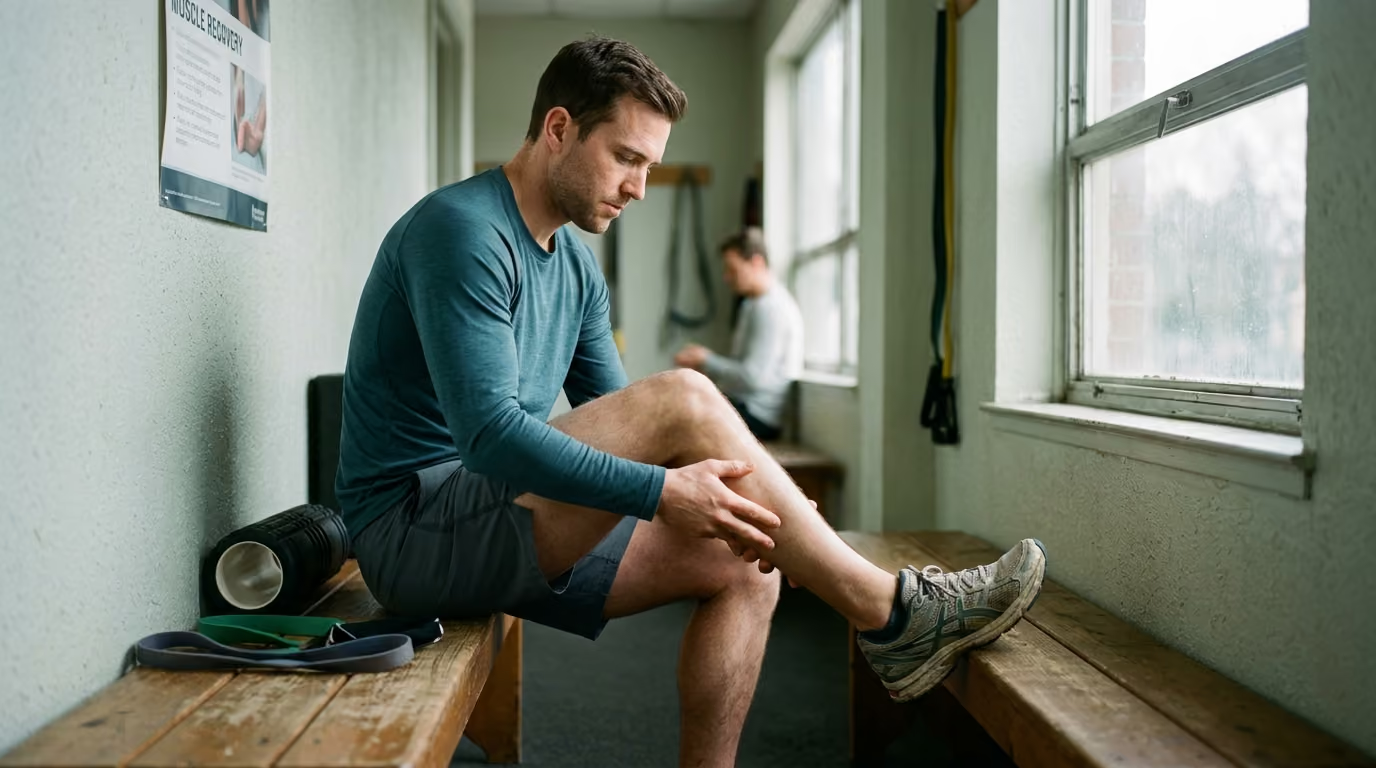

Arbitrary gym numbers rarely reflect workplace endurance, but a structured executive fitness assessment measures the functional energy and strength leaders need.





Many professionals search for ways to measure physical capacity without spending days inside a sports science laboratory. They find themselves exhausted after ordinary travel, struggling to maintain focus during afternoon meetings, or wondering if their gym workouts translate into real stamina.
The standard approach to fitness testing fails working executives. High-performance corporate roles require sustained cognitive clarity, physical endurance during travel, and rapid recovery from unpredictable stress. Traditional fitness tests often rely on arbitrary gym numbers or expensive, time-consuming clinical protocols.
This guide provides a comprehensive assessment methodology designed for demanding schedules. It establishes useful baselines across eight physical domains without turning self-measurement into a second job.
A successful physical assessment provides actionable clarity rather than vanity metrics. It identifies physiological constraints, guides weekly training decisions, and measures the reserve capacity needed to handle demanding professional workloads.
Physical capacity represents the volume of physiological work you can perform and recover from without excessive strain. Cardiorespiratory fitness serves as the biological foundation for this capacity. It reflects the coordinated ability of your heart, lungs, blood vessels, and skeletal muscles to intake, transport, and use oxygen during sustained physical work.
In exercise science, aerobic capacity is quantified through metabolic equivalents, or METs. One MET represents an oxygen consumption rate of approximately 3.5 millilitres of oxygen per kilogram of body mass per minute. This value corresponds roughly to the energy expended while sitting quietly at rest.
The clinical data linking cardiorespiratory capacity to long-term health outcomes is robust. A landmark study published by Mandsager and colleagues in JAMA Network Open evaluated 122,007 patients undergoing treadmill exercise testing. The researchers observed an inverse relationship between cardiorespiratory fitness and all-cause mortality, with no upper limit of benefit. Patients in the highest performance tier exhibited significantly lower mortality risk compared to those in lower performance categories.
A comprehensive meta-analysis by Kodama and colleagues confirmed that each one-MET increase in maximal aerobic capacity is associated with a 13 percent reduction in all-cause mortality risk. The same increase was associated with a 15 percent reduction in cardiovascular event risk. Later systematic reviews have reinforced these findings, reporting an 11 to 17 percent reduction in mortality per MET gained.
The steepest health benefits occur when moving from very low fitness, defined as capacity below 5 METs, into the moderate range of 5 to 7 METs. A capacity of 5 METs equates to walking at four miles per hour on a level surface. A capacity of 8 to 10 METs allows you to jog at an easy pace, climb multiple flights of stairs carrying luggage, or sustain active physical tasks without breathlessness. For working professionals, moving out of the lowest fitness category yields the highest return on physiological investment.
Muscular strength provides a complementary foundation for metabolic health and physical function. Research demonstrates that handgrip strength serves as a reliable marker of overall muscular capability and functional independence. Systematic reviews indicate that higher handgrip strength is associated with an 18 percent decrease in all-cause mortality. Low grip strength correlates with elevated risks of physical disability, cardiovascular complications, and metabolic dysfunction.
Muscular power represents the rate at which force is produced. While strength is the ability to move a given load, power reflects how rapidly you can produce that force. As adults age, power declines twice as fast as maximal strength. Power is critical for rapid balance corrections, stair ascent speed, and quick recovery movements.
Functional capacity ties these isolated components together. It encompasses your ability to stand, walk, lift, carry, rotate, and climb without pain or premature exhaustion. Evaluating these physical traits together provides an accurate picture of your physical reserve.
Understanding these foundations is essential when building energy, strength, and physical performance into your daily routine.
Demanding careers create continuous mental and autonomic stress. Board presentations, transatlantic flights, quarterly reviews, and tight deadlines activate the sympathetic nervous system. When physical capacity is low, mental stress feels heavier because the body lacks the autonomic reserve to buffer it.
During the toughest quarter of my career, I noticed that my ability to handle stress was directly tied to my cardiovascular fitness, not my mindset. I was trying to meditate my way out of a physiological deficit. Once we started looking at the data connecting aerobic capacity to emotional regulation and executive function, everything clicked. Physical capacity is the absolute foundation of mental resilience.
Executive life requires physical reserve rather than isolated athletic specialization. Reserve represents the gap between your daily physical demands and your maximum sustainable output. If walking across a large airport terminal carrying heavy bags requires 80 percent of your maximal aerobic capacity, the task will leave you physically drained and mentally fatigued. If that same task requires only 35 percent of your maximal capacity, you arrive at your destination with clear focus.
Poor physical conditioning compounds cognitive fatigue. When cardiovascular fitness is compromised, heart rate and blood pressure remain elevated longer following standard workplace stressors. This prolonged sympathetic activation impairs sleep architecture, reduces deep sleep phases, and disrupts executive function the following morning.
Physical capacity directly influences your ability to maintain focus and cognitive performance across 12-hour workdays. A structured fitness assessment identifies the specific physical constraints that restrict your executive output.
Safety screening must precede any physical performance testing. Attempting high-intensity exercise without adequate screening introduces unnecessary medical and orthopedic risks.
The American College of Sports Medicine, or ACSM, established an updated preparticipation screening model. This framework removes arbitrary barriers to beginning light-to-moderate physical activity while identifying individuals who require medical clearance. The ACSM algorithm bases clearance decisions on three clear factors:
Asymptomatic adults who already engage in regular physical activity can safely participate in moderate to vigorous fitness testing without prior medical clearance. Sedentary individuals with known medical conditions or symptoms should obtain clinical clearance before undertaking vigorous assessments.
Beyond clinical cardiovascular screening, a structured pre-assessment should evaluate basic orthopedic readiness:
If you are sleep-deprived or recovering from an acute illness, reschedule the assessment. Testing under conditions of acute exhaustion produces inaccurate data and increases injury risk. A baseline assessment should reflect your typical physiological state.
To build an accurate assessment dashboard, evaluate performance across eight distinct domains. Each protocol is selected for high reliability, minimal equipment requirements, and schedule efficiency.
Cardiopulmonary exercise testing using a metabolic cart provides the clinical gold standard for measuring cardiorespiratory capacity. However, submaximal field tests offer practical alternatives that estimate capacity with sufficient accuracy for progress tracking.
The 12-Minute Cooper Walk or Run Test serves as a reliable field protocol:
For individuals who prefer non-impact testing, a standardized submaximal cycling protocol or a steady-state incline treadmill walk provides a repeatable alternative. The critical requirement is strict standardization. Use the same equipment, the same warm-up, the same time of day, and similar nutritional conditions for all subsequent assessments.
Muscular strength testing should assess force production across both upper and lower body movement patterns without requiring dangerous maximal lifts.
Handgrip dynamometry provides an efficient baseline for systemic muscular strength. Stand tall with your elbow flexed at 90 degrees, grip the dynamometer with maximum effort for three seconds, and record the highest score across three trials per hand. A grip strength below 30 kilograms in men or below 20 kilograms in women indicates a meaningful deficit in general muscular capability.
For lower-body strength, a three-to-five repetition maximum trap-bar deadlift or leg press provides a safe estimate of maximal strength. Record the load lifted divided by total body weight to determine relative strength. Relative strength provides a more functional metric for daily tasks than raw absolute load.
Power testing measures your ability to express force rapidly. This quality is essential for athletic performance, fall prevention, and fast movement execution.
The Seated Medicine Ball Chest Pass offers a safe, upper-body power benchmark:
For lower-body power, evaluate vertical countermovement jump height using a digital contact mat or a standardized video app. If jumping is contraindicated due to knee or spinal joint issues, measure the time required to complete five rapid, unassisted sit-to-stand repetitions from a standard chair.
Strength endurance reflects your ability to resist muscular fatigue during repeated contractions. This quality governs your ability to sustain physical work throughout long days.
The 30-Second Chair-Stand Test, standardized by the Centers for Disease Control and Prevention STEADI initiative, measures functional lower-body endurance:
For upper-body muscular endurance, utilize a strict cadence push-up test. Lower your chest until it touches a standard three-inch foam block, maintaining a rigid plank position. Stop the test when technical form breaks down or when you can no longer maintain continuous movement.
The Farmer's Carry test evaluates integrated grip, core, and postural endurance:
Mobility describes your active, usable range of motion under neuromuscular control. Evaluating mobility ensures that strength training and daily physical tasks do not cause mechanical compensations.
Perform the knee-to-wall test to measure ankle dorsiflexion. Place your foot perpendicular to a wall and drive your knee forward over the second toe until it touches the surface. Move your foot backward until your heel begins to lift off the ground. A distance of at least 10 centimeters from the big toe to the wall indicates adequate functional dorsiflexion.
Evaluate thoracic spine rotation in a seated position with a foam block squeezed between your knees to lock the pelvis. Cross your arms over your chest and rotate your shoulders smoothly to the left and right. Symmetrical rotation of at least 45 degrees in both directions is necessary to prevent lumbar spine compensation during rotational movements.
Balance requires sensory integration from visual, vestibular, and somatosensory inputs combined with rapid muscular stabilization.
The CDC STEADI Four-Stage Balance Test evaluates progressive stance stability:
Perform all balance assessments near a sturdy wall or support surface for safety. Stop the test immediately if your elevated foot touches the floor, if your stance foot shifts position, or if you uncross your arms to regain equilibrium.
Autonomic recovery measures how quickly your cardiovascular system returns toward resting baseline following physical stress.
Heart rate recovery provides a direct indicator of parasympathetic reactivation. Record your peak heart rate at the immediate conclusion of your cardiorespiratory assessment. Stand quietly or walk slowly for two minutes, recording your heart rate at exactly one minute and two minutes post-exercise.
Tracking daily resting heart rate and multi-day trends in heart rate variability, or HRV, provides insight into your general recovery status. Use resting metrics to understand physiological trends rather than viewing single-day fluctuations as absolute verdicts on your capability.
Recovery is a foundational component of sustainable performance and stress resilience.
Body composition assessment should focus on functional tissue distribution rather than arbitrary aesthetic goals. Excessive visceral adiposity correlates with chronic systemic inflammation and metabolic disease, while sufficient lean mass supports metabolic rate and physical stamina.
Measure waist circumference horizontally at the midpoint between the lowest rib and the iliac crest using a flexible tape measure. A waist-to-height ratio below 0.50 serves as a reliable marker of healthy visceral fat levels across diverse populations.
Aggregating fitness data into a single score obscures critical weaknesses. A professional might possess an elite aerobic capacity alongside compromised joint mobility and poor balance. A composite score would label this individual as fit, masking clear musculoskeletal risks.
The Traffic-Light Reporting Model categorizes each of the eight domains independently. This approach provides an intuitive dashboard that highlights exact training priorities.
Consider how the dashboard translates testing data into targeted actions across three common executive archetypes.
This professional lifts weights regularly and exhibits impressive muscular strength. However, they become breathless climbing stairs and experience prolonged fatigue following travel.
Action Plan: Reduce maximal lifting volume temporarily. Introduce three weekly 30-minute steady-state Zone 2 aerobic sessions to build the cardiovascular base. Add ankle mobility drills prior to training.
This executive runs 25 miles weekly and possesses excellent cardiovascular stamina. However, they struggle with lower back stiffness, poor posture, and low carrying capacity.
Action Plan: Replace two running sessions with dedicated resistance training focusing on hip hinging, loaded carries, and thoracic mobility. Introduce introductory jump training to restore lower-body power.
This individual works 65 hours weekly, travels frequently, and performs no structured exercise. They report chronic fatigue, brain fog, and low physical stamina.
Action Plan: Begin with basic walking accumulation, targeting 7,000 steps daily. Introduce two brief 20-minute bodyweight and resistance band sessions per week. Focus on the chair-stand and single-leg balance exercises to build basic functional stability.
Structuring your physical training around clear assessment outcomes supports healthy aging and longevity.
Objective data is valuable only when interpreted with scientific rigor. Fitness assessments are subject to measurement errors, physiological confounders, and oversimplified conclusions.
A common error is treating statistical associations between fitness metrics and mortality as direct causal guarantees. While higher cardiorespiratory fitness strongly correlates with reduced mortality risk, fitness levels also reflect genetics, socioeconomic factors, lifetime health habits, and underlying disease burden. Improving a single test score will improve functional reserve, but it must be integrated with balanced nutrition, adequate sleep, and medical management.
Wearable recovery metrics require careful interpretation. Commercial wearables calculate heart rate variability and recovery scores using proprietary algorithms. Review literature on autonomic monitoring indicates that root mean square of successive differences, or RMSSD, is sensitive to several confounding factors:
Do not use a low morning wearable score as a reason to cancel all physical activity. Use wearable metrics as secondary indicators of long-term trends rather than definitive daily instructions.
Testing protocols must also account for learning effects. An individual performing a balance or power test for the first time often scores poorly due to unfamiliarity with the movement pattern. Retesting within two weeks often yields a 10 to 15 percent improvement simply through neuromuscular familiarization. Ensure you understand the mechanics of each protocol before recording your official baseline.
Finally, never ignore physical pain in pursuit of a standardized score. Fitness assessments evaluate physiological capacity, not your willingness to push through joint pathology. If a test causes sharp joint pain, stop immediately and record the movement as limited by discomfort.
Tracking your recovery metrics accurately requires establishing a reliable structure for sleep and recovery.
Executive schedules frequently involve heavy travel schedules, hotel stays, and back-to-back meetings. You do not need gym access to perform a high-quality capacity assessment.
When evaluating aerobic capacity on the road, utilize a standardized three-minute step test:
For strength endurance during travel, perform a maximum-duration wall sit:
For professionals managing chronic joint limitations, modify test variations rather than skipping domains entirely:
These adjustments allow you to maintain an accurate capacity assessment regardless of travel constraints or musculoskeletal history.
Establishing an effective assessment protocol requires a sustainable operational cadence. Testing too frequently creates unnecessary friction, while testing too rarely leaves you without actionable performance feedback.
Follow these sequential steps to establish your baseline capacity:
By following this assessment framework, you establish clear physical benchmarks that support sustained executive performance throughout your career.
Learn more about our methodology on our about page, or discover related performance frameworks on the Execufuel homepage.
Stay connected for research and practical guidance on executive performance, energy, focus, sleep, recovery and longevity. Ideas built for people who want to stay sharp, capable and effective for the long run.


Build habits and systems that support clear thinking, steady energy and long term capacity throughout a demanding career.
explore the Blog