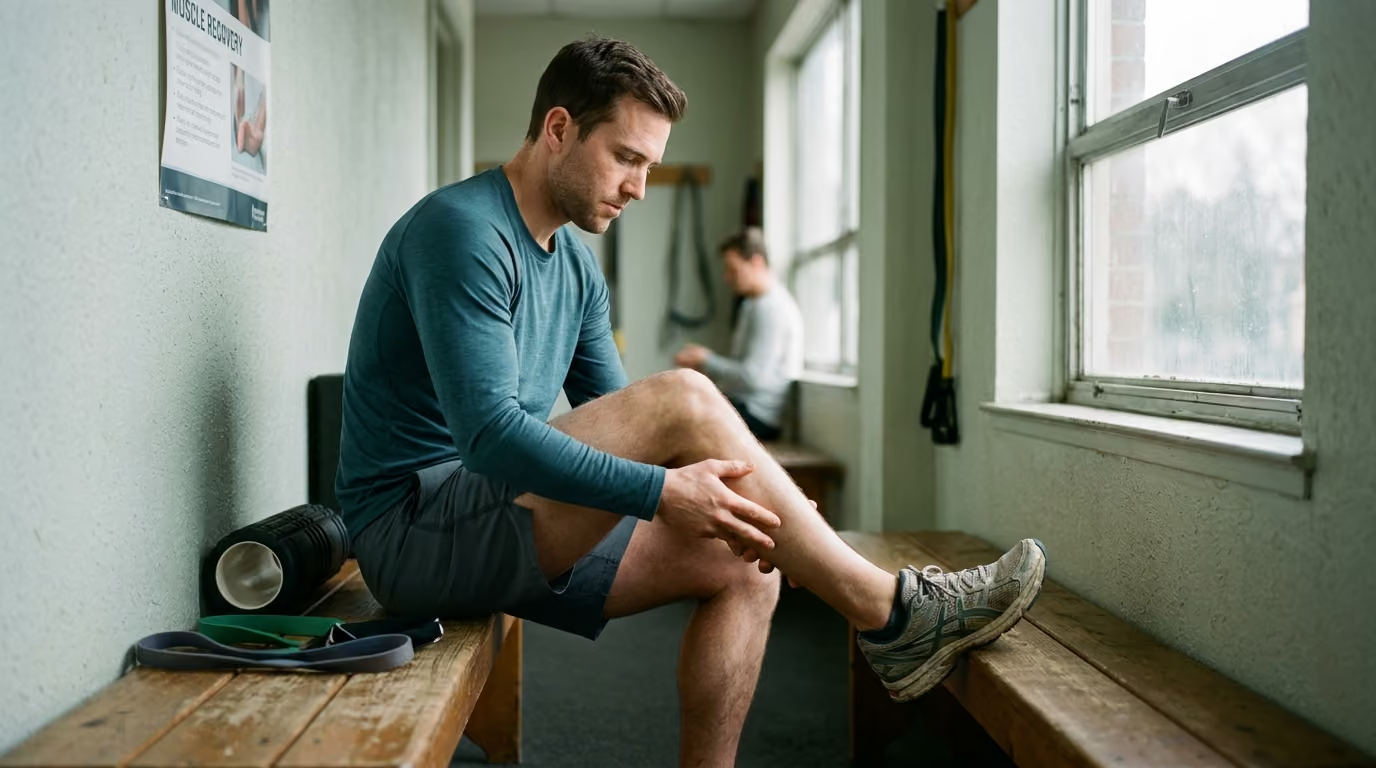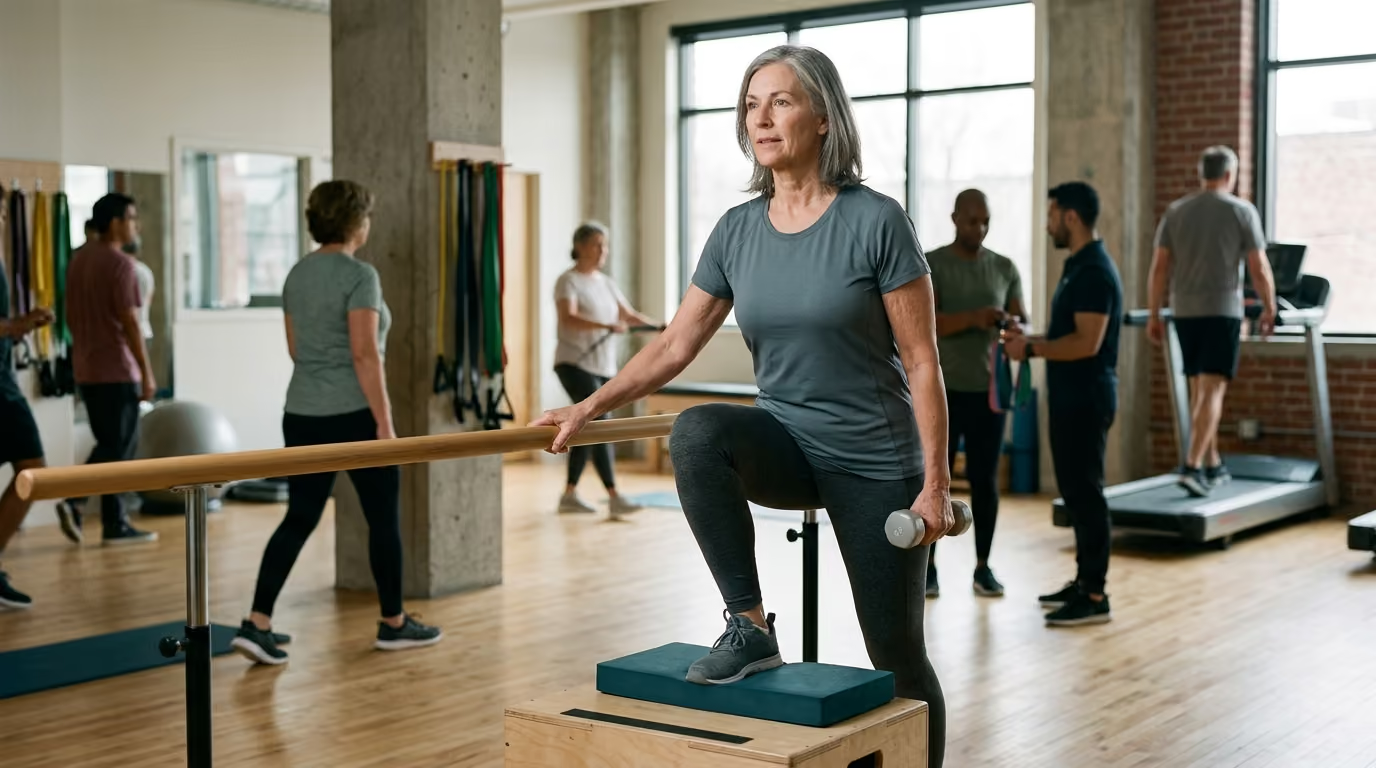

Stronger bones and lasting fracture resistance come from heavy resistance training, progressive impact loading, and targeted nutritional support designed to stimulate osteocytes.





A 48-year-old executive steps off a six-hour cross-country flight, shoulders tight and lower back aching. A routine executive health screening later that month reveals an unexpected finding: early bone mineral loss in the femoral neck and lumbar spine. The standard advice offered is often vague, suggesting more walking and a generic calcium supplement.
That advice is inadequate for sustained physical capacity. Skeletal tissue is dynamic and responsive to mechanical tension, but it requires specific loading parameters to trigger adaptation.
Maintaining skeletal integrity is an active engineering problem. Bone mineral density represents only one part of the equation. True skeletal durability integrates material density, bone geometry, muscular power, balance, and fall resistance.
Building a resilient skeleton demands an intentional training architecture. This guide provides the complete blueprint for structural skeletal health across every stage of professional life.
Bone is living, metabolic tissue that remodels continuously in response to physical forces. Specialized cells called osteocytes act as internal strain sensors embedded within the mineralized bone matrix.
When you lift a barbell or land from a jump, you deform the bone matrix on a microscopic level. This deformation drives fluid through tiny channels known as canaliculi.
This fluid movement creates shear stress across the cell membranes of osteocytes, initiating mechanotransduction. Through this biological process, mechanical forces convert into biochemical signals.
Osteocytes respond by releasing signaling molecules that downregulate sclerostin and recruit osteoblasts to lay down new bone protein matrix. Osteoclasts then resorb old, micro-damaged bone while osteoblasts mineralize the new tissue.
This biological mechanism operates under the mechanostat principle. Bone maintains its current mass when habitual loads fall within a comfortable maintenance zone.
To trigger new bone deposition, the applied strain must exceed a specific threshold. If daily loads remain low, as occurs during bed rest, sedentary office work, or zero-gravity spaceflight, osteoclast activity outpaces osteoblast activity. This imbalance leads to rapid bone loss.
Bone adaptation is governed by three primary physical variables:
These principles expose the limitations of classic interpretations of Wolff's law. Bone does not simply adapt to any general load. It adapts to unaccustomed mechanical strain that features high magnitude, high velocity, or unusual directions.
Furthermore, this adaptation is strictly site-specific. Running subjects the tibia and calcaneus to significant repetitive impact, but it provides minimal osteogenic strain to the lumbar spine, wrists, or proximal femur.
To build comprehensive skeletal resilience, you must target the entire kinetic chain. You can review detailed programming strategies inside our library of in-depth executive performance resources.
Building durable skeletal architecture requires a layered training strategy. Relying on a single exercise modality creates structural vulnerabilities.
Heavy resistance training forms the structural baseline of bone stimulation. Muscular contractions exert massive pulling forces on the periosteum through tendon insertions.
Simultaneously, carrying external loads applies direct axial compression along the long bones and spinal column. This dual stress generates high strain magnitudes that signal structural reinforcement.
Impact training introduces rapid ground reaction forces that travel up through the lower extremities to the pelvis and spine. Jumping, bounding, and reactive hopping create rapid spikes in strain rate.
These high-velocity forces stimulate osteogenesis in ways that slow lifting cannot duplicate. However, impact exposure must be calibrated to individual tissue tolerance and joint health.
Power training bridges the gap between raw muscular strength and dynamic movement. Producing force quickly increases the strain rate inside bone tissue.
A 2025 systematic review and meta-analysis published in the journal Bone demonstrated that moderate-velocity resistance programs often failed to prevent bone loss in older populations. Conversely, high-velocity progressive resistance training improved bone mineral density when fundamental training rules were maintained.
Power training also preserves fast-twitch type II muscle fibers. These motor units are essential for rapidly regaining stability during an unexpected slip or trip.
Fracture risk is a combined function of bone strength and impact trauma. Most non-vertebral fragility fractures occur because of a fall from standing height.
Balance training conditions the vestibular, visual, and somatosensory systems to manage center-of-mass displacements. Improving reactive stepping mechanics directly reduces the likelihood of high-impact ground collisions.
Mechanical strain cannot stimulate bone remodeling without adequate biological raw materials. Osteoblasts require an energy-rich systemic environment, essential amino acids, calcium, and vitamin D to synthesize and mineralize collagen matrices.
Chronic low energy availability, hormonal disruptions, and systemic inflammation blunts mechanotransduction. This systemic deficiency leaves the skeleton vulnerable despite consistent training.
To stimulate skeletal adaptation, resistance training must deliver sufficient mechanical tension. Light loads lifted far from muscular fatigue offer cardiovascular benefits, but they fail to trigger significant osteocyte signaling in healthy adults.
Scientific literature indicates that loads between 70 percent and 85 percent of your one-repetition maximum (1RM) provide the most reliable stimulus for increasing bone mineral density at the hip and lumbar spine.
Your weekly resistance training should prioritize multi-joint compound exercises that transmit force through the central axis of the body. You can find complementary programming in our guide to energy, strength, and physical performance.
Axial loading refers to downward compressive force directed along the vertical axis of the spine and through the hips. Exercises like barbell back squats, overhead presses, and trap bar carries apply direct axial stress. This mechanical vector is the primary trigger for maintaining bone density in the vertebral bodies.
Maintain strict spinal mechanics during all axial exercises. The spine must remain in a neutral alignment throughout the entire repetition.
Avoid spinal flexion under load, which places uneven compressive pressure on the anterior edge of the vertebral bodies. If barbell squats present mobility limitations, use a trap bar, leg press, or safety squat bar to load the lower body safely.
Impact training provides high-rate mechanical loading that complements the high-magnitude forces of heavy lifting. Ground reaction forces during jump landings can reach three to six times your total body weight within milliseconds.
Research from the International Osteoporosis Foundation highlights that jumping protocols using 10 to 50 repetitions per session, performed two to three days per week, can maintain or improve bone density. However, ballistic impact must be applied systematically to protect connective tissue and joints.
Before introducing impact, confirm that you can balance on one leg for 30 seconds, perform 20 continuous calf raises, and execute a controlled bodyweight squat with perfect form.
Begin with low-amplitude movements. Stand barefoot on a flat surface, rise up onto your toes, and drop your heels firmly to the floor for 20 to 30 repetitions.
Progress to small ankle hops in place, clearing the floor by only one to two inches. Focus entirely on a quiet, elastic landing that distributes forces evenly through the ankles, knees, and hips.
Introduce countermovement jumps where you swing your arms, dip your hips, jump vertically, and land softly in a balanced athletic stance. Perform two to three sets of five jumps.
Alternatively, jump onto a low 12-inch box and step down carefully one foot at a time. Never jump down backward off a box, as this creates uncontrolled, high-risk spinal jarring.
Once bilateral vertical jumps are comfortable, introduce lateral and rotational forces. Perform lateral skater hops, jumping sideways from the right foot to land softly on the left foot.
Incorporate jump rope protocols featuring two-foot and alternating-foot patterns. These multi-directional forces apply novel bending moments to the femoral neck and lower leg bones.
Advanced trainees can incorporate low drop-landings. Step off a six-inch step and absorb the ground strike immediately into a stable squat position.
Participating in court sports like tennis, squash, or basketball provides spontaneous, reactive impacts. These activities naturally generate optimal multi-vector skeletal strain.
Skeletal adaptation changes across your lifespan. A program designed to build peak bone mass in a 25-year-old athlete requires adjustments for a 55-year-old executive managing joint degeneration or hormonal shifts.
The primary goal during early adulthood is maximizing peak bone mass. Bone mineral accumulation reaches its lifetime zenith around the late twenties.
Young professionals should build high levels of foundational strength through compound lifts, sprinting, and multi-directional athletic movements. The most significant risk factor in this demographic is relative energy deficiency. High training volumes paired with insufficient caloric intake impair bone accumulation.
During midlife, the biological priority shifts from accumulating new bone mass to preserving accumulated density and maintaining muscle architecture. Heavy resistance training must remain a cornerstone of your weekly schedule.
Maintain structural capacity by incorporating at least two dedicated strength sessions alongside brief power or impact intervals. For deeper insights into long-term vitality, read our definitive resource on healthy aging and executive longevity.
The sharp drop in circulating estrogen during the menopausal transition accelerates osteoclast resorption. Women can lose up to two percent of their bone mass annually during the immediate postmenopausal window.
The International Osteoporosis Foundation notes that approximately 21.2 percent of women over age 50 meet the diagnostic criteria for osteoporosis globally. Progressive axial loading, high-velocity power training, and supervised low-to-moderate impact are essential tools to slow this mineral loss.
However, exercise prescription must be calibrated to individual DXA T-scores, balance capacity, and prior fracture history.
Osteoporosis is frequently underdiagnosed in men. The International Osteoporosis Foundation estimates that approximately 6.3 percent of men over age 50 live with osteoporosis, and one in five men over 50 will sustain an osteoporotic fracture.
Men experience slower, continuous bone loss linked to age-related declines in testosterone and growth hormone. Secondary factors, such as long-term glucocorticoid use, alcohol consumption, and metabolic dysfunction, accelerate this decline.
Training for older men should emphasize high-velocity leg presses, heavy loaded carries, trunk extension work, and dynamic balance drills.
A medical diagnosis of osteopenia or osteoporosis requires adjustments to training mechanics. Low bone mass does not mean you must avoid exercise entirely. Inactivity accelerates mineral loss and muscle atrophy, making fractures more likely.
The clinical objective is simple: maximize mechanical strain on the skeleton while eliminating dangerous loading vectors.
The Bone Health and Osteoporosis Foundation provides explicit movement guidance for individuals with low bone density in the spine:
The Royal Osteoporosis Society clarifies that normal, unweighted bending in daily life is generally safe when performed with proper control. The critical distinction lies between everyday movement and repeated, high-load, end-range flexion performed under fatigue.
Pause your training program and seek professional medical evaluation if you encounter any of the following warning signs:
High-performing executives face systemic obstacles to skeletal health: extended sedentary travel, irregular sleep schedules, high psychological stress, and missed workouts. Elevated cortisol levels from sustained workplace pressure downregulate osteoblast function and impair calcium absorption in the gut.
During an intense week at a popular health optimization conference, I found myself completely exhausted by the sheer complexity on display. Speakers pushed complicated 45-minute daily mobility protocols, fragile diagnostic gadgets, and dozens of daily supplements.
True high performers simply do not have the time to make skeletal health a full-time job. They need maximum structural return on minimum viable effort.
That pragmatic principle forms the core foundation of our work at Execufuel. You do not need complex gadgets or hours of daily exercise to build stronger bones. You need a compact, highly consistent protocol that delivers the minimum effective dose of mechanical strain every single week.
When traveling without access to a fully equipped gym, complete this 12-minute maintenance circuit directly in your hotel room:
Physical training provides the mechanical stimulus for bone remodeling, but nutrition supplies the raw materials. Without proper systemic support, heavy training can trigger skeletal breakdown rather than structural adaptation. To balance physical output with metabolic recovery, explore our guides on sustainable stress resilience and performance.
According to the Bone Health and Osteoporosis Foundation clinician guidelines, adults require specific daily micronutrient targets:
For a comprehensive nutritional foundation, consult our research-backed guide on nutrition and metabolic performance.
Relative Energy Deficiency in Sport (RED-S) occurs when daily caloric intake is insufficient to support training expenditure alongside basic physiological functions. The International Olympic Committee's consensus statements emphasize that chronic low energy availability disrupts the hypothalamic-pituitary-gonadal axis.
In women, low energy availability manifests as functional hypothalamic amenorrhea or luteal phase defects. In men, it causes suppressed testosterone, reduced morning erections, and diminished libido.
Both scenarios accelerate bone loss and dramatically increase the risk of bone stress fractures. If you train intensely, you must consume enough total calories to match your physical output.
Bone remodeling is energetically demanding and relies on systemic recovery. Deep slow-wave sleep is the primary window for human growth hormone secretion, which stimulates osteoblast proliferation and collagen synthesis.
Aim for seven to nine hours of quality sleep each night. Chronic sleep restriction elevates circulating glucocorticoids and disrupts bone turnover markers. You can find detailed strategies for improving sleep quality in our dedicated resource on sleep optimization and recovery.
While the benefits of exercise on bone health are well established, it is essential to understand the boundaries of the current scientific literature. Exercise is a potent structural intervention, but it is not an absolute cure for severe metabolic bone disease.
To learn more about long-term cellular health and physical capacity, explore our analysis of the biological drivers of longevity and healthspan.
These three real-world case studies show how to translate skeletal health research into practical, weekly training schedules.
Profile: 42-year-old corporate director, sedentary desk job, no history of fractures, normal DXA baseline.
Objective: Build peak muscular strength, introduce multidirectional impact, and reinforce the lumbar spine and hips against future age-related decline.
Profile: 54-year-old tech executive, diagnosed with osteopenia at the lumbar spine (T-score -1.8), no prior fractures, highly motivated.
Objective: Apply targeted mechanical strain to the spine and femoral neck while maintaining strict neutral-spine mechanics and avoiding unmanaged impact.
Profile: 68-year-old former partner, low muscle mass (sarcopenia), diagnosed osteoporosis (T-score -2.7 at femoral neck), history of falls, fear of injury.
Objective: Restore dynamic balance, develop lower-body functional strength, prevent future falls, and avoid spinal flexion under load.
Walking provides valuable cardiovascular and metabolic benefits, but it does not supply enough mechanical tension to stimulate new bone formation in healthy, mobile adults.
Ground reaction forces during casual walking rarely exceed 1.2 times body weight, which falls well within the habitual maintenance zone of the mechanostat. To trigger osteogenesis, you must introduce higher-magnitude loading through resistance training or higher-rate forces through impact.
If you have mild-to-moderate osteopenia, progressive resistance training, impact exercises, and targeted nutritional support can maintain or modestly improve bone density while strengthening your overall structural capacity.
However, for individuals with severe osteoporosis or multiple fragility fractures, exercise should be paired with medical treatments. Consult your physician to determine if antiresorptive or osteoanabolic therapies are appropriate alongside your training program.
You do not need to eliminate all forward bending in daily life. Unloaded, controlled bending during ordinary tasks is safe and maintains movement versatility.
The essential rule is to avoid loaded, end-range spinal flexion and rapid twisting under fatigue. When lifting weights or heavy household objects, always hinge at your hips while keeping your spine locked in a neutral, supported alignment.
Revisit this training guide whenever your annual DXA scan results are updated, your physical capacity changes, or you transition between career phases. Re-evaluating your training parameters every six to twelve months ensures your mechanical loading continues to match your evolving biological needs.
Building durable skeletal architecture is a long-term engineering process. By combining heavy resistance training, calibrated impact, power development, balance training, and metabolic support, you can protect your structural independence and physical performance across your lifespan.
Stay connected for research and practical guidance on executive performance, energy, focus, sleep, recovery and longevity. Ideas built for people who want to stay sharp, capable and effective for the long run.


Build habits and systems that support clear thinking, steady energy and long term capacity throughout a demanding career.
explore the Blog