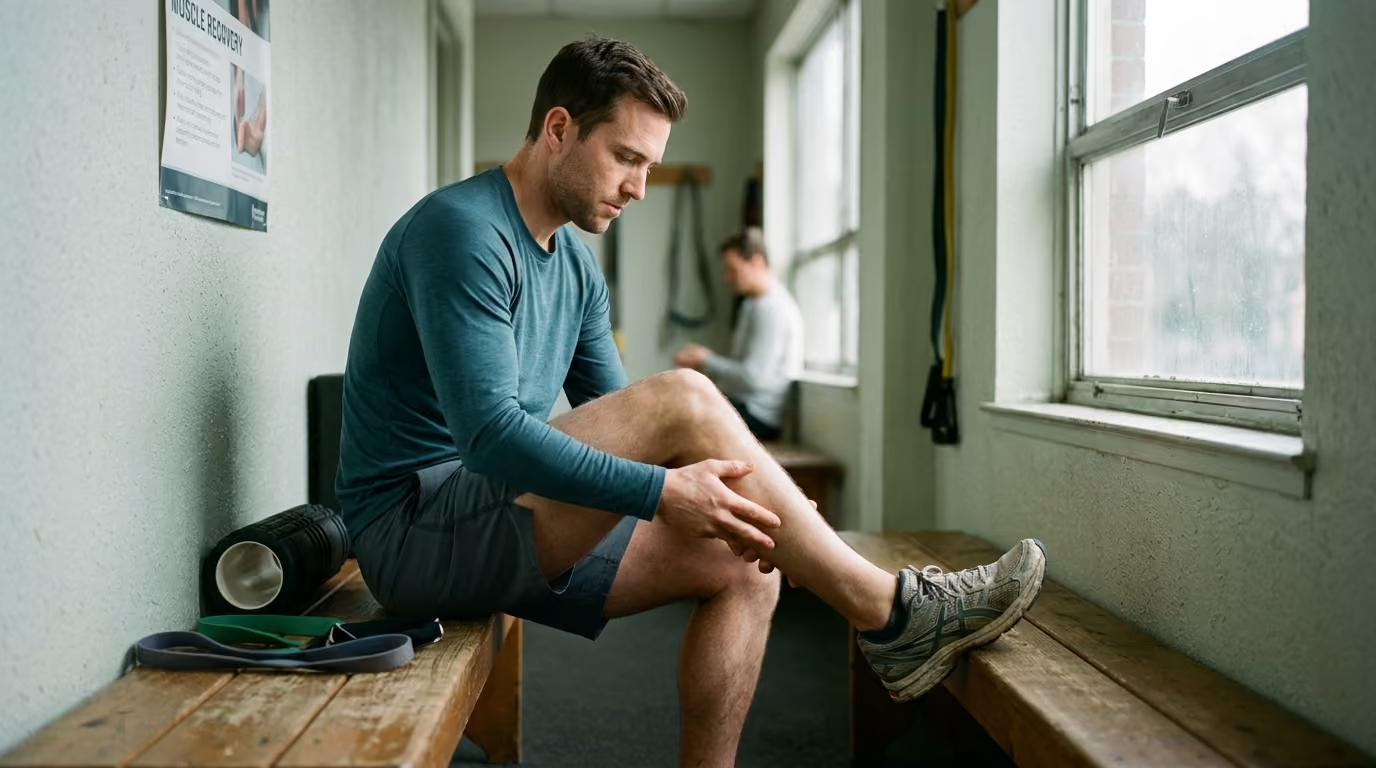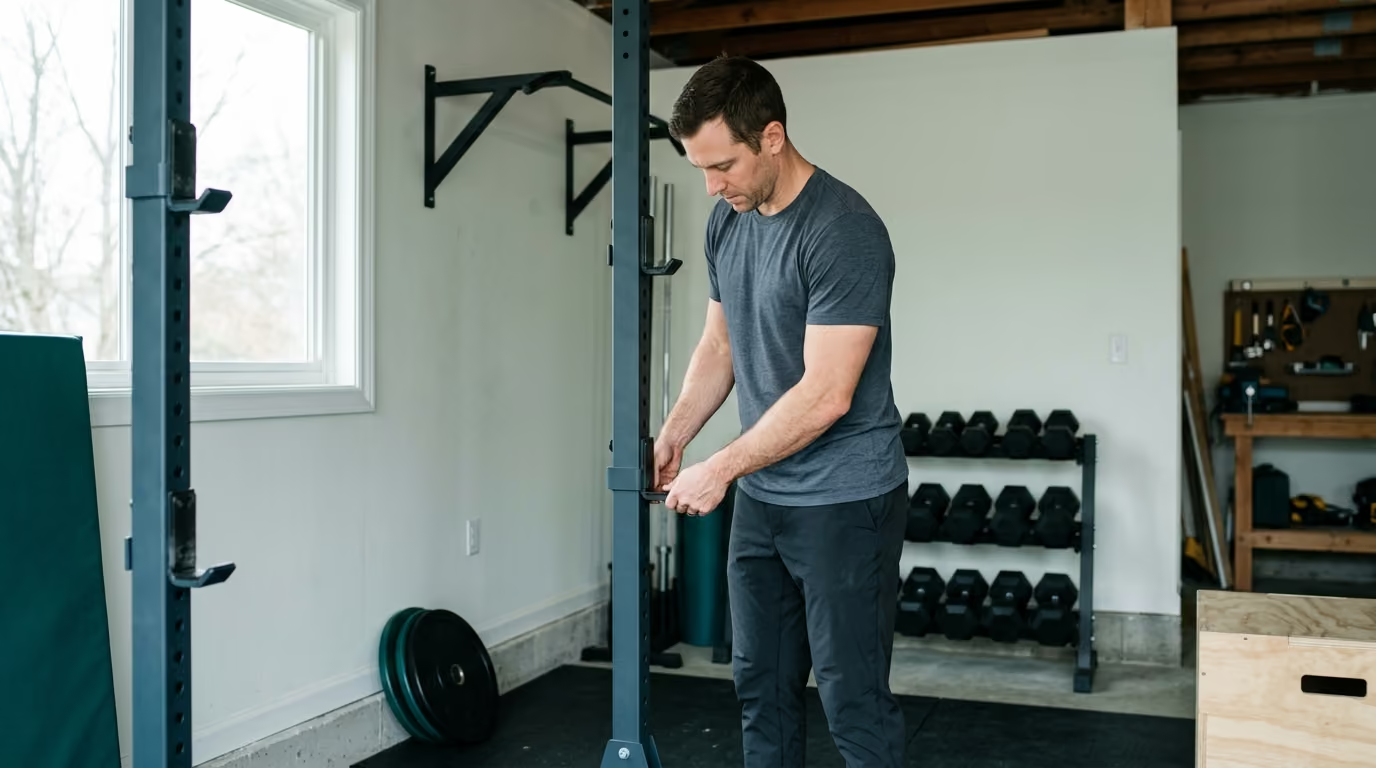

Frustrating waits for shared equipment disappear entirely when you invest in a minimalist home training space tailored for serious strength development.





You finish a ten-hour sequence of strategy meetings, close your laptop, and look at the clock. A commercial fitness facility requires a twenty-minute drive each way, locker room transitions, and waiting for open equipment. By the time you factor in the logistics, your remaining evening window disappears. Many professionals face this friction daily, watching their physical capacity erode under the weight of executive schedules.
Building a dedicated training space at home or in your private office eliminates logistical friction. However, most people approach home fitness backwards by purchasing trendy machines before defining their actual physical requirements. A high-performance training setup is not a collection of expensive machinery. It is a deliberately designed system that delivers measurable physical adaptations per square foot, per dollar, and per minute invested.
When you treat your training space as a high-yield asset, the design criteria become clear. You need equipment that supports major human movement patterns, allows progressive loading, fits your architectural constraints, and operates with zero setup friction. This guide details how to plan, build, and program a minimalist, high-yield training environment that supports lifelong strength, work capacity, and health.
A high-performance home gym must produce measurable physiological adaptations. These adaptations are governed by mechanical tension, metabolic stress, cardiovascular workload, and neuromuscular recruitment. When designing a home system, understanding the underlying physiology ensures you buy tools that trigger these mechanisms efficiently.
Resistance training triggers adaptations in both the central nervous system and skeletal muscle tissue. The American College of Sports Medicine outlines clear progression models for resistance exercise. In novice trainees, initial strength gains stem primarily from neural adaptations. These include improved motor unit recruitment, higher firing rates, and better intermuscular coordination.
As training experience accumulates, structural changes drive performance. Muscle hypertrophy requires adequate mechanical tension delivered across sufficient weekly volume. Research on training volume indicates that ten or more weekly sets per muscle group serves as an effective starting target for muscular growth. A meta-analysis published in the Journal of Sports Sciences demonstrated a dose-response relationship between weekly resistance sets and muscle growth, showing that higher volumes generally yield superior hypertrophy.
To drive these adaptations continuously, you must apply progressive overload. The American College of Sports Medicine recommends increasing resistance by 2 to 10 percent whenever you can perform one to two repetitions beyond your target rep range with proper form. In a home environment, this principle applies equally to external iron, elastic resistance, and bodyweight leverage modifications.
Physical conditioning extends beyond muscular strength. Cardiorespiratory fitness serves as a primary marker of longevity, operational stamina, and metabolic health. The World Health Organization 2020 Guidelines on Physical Activity and Sedentary Behaviour recommend that adults perform 150 to 300 minutes of moderate-intensity aerobic physical activity, or 75 to 150 minutes of vigorous-intensity aerobic physical activity weekly.
The Centers for Disease Control and Prevention defines exercise intensity using practical markers like the 0 to 10 effort scale and the talk test. Moderate-intensity activity registers at a 5 to 6 on the exertion scale, allowing you to carry on a conversation but not sing. Vigorous activity registers at 7 to 8, making it impossible to speak more than a few words without pausing for breath.
Meeting these cardiovascular targets does not require a bulky commercial treadmill. Aerobic capacity, capillary density, and mitochondrial efficiency improve through running outside, stair climbing, jump-rope intervals, or compact stationary cycling. Training these pathways supports cognitive stamina during high-stakes workdays and enhances energy, strength, and physical performance across demanding business cycles.
A complete home training environment must support five foundational physical qualities:
Evaluating equipment against these five qualities prevents redundancy. If a piece of equipment only supports one movement at a high cost, it does not belong in a high-performance home system.
Corporate professionals, founders, and investors operate under distinct constraints. Schedules shift rapidly, cognitive loads remain elevated, and travel frequently disrupts normal routines. Traditional fitness models assume two hours of uninterrupted free time, which is rarely realistic for modern executives.
I spent a week at a popular health optimization conference and left completely exhausted by the complexity. Everyone was pushing a new supplement protocol, a complicated gadget, or a rigid daily routine. It struck me that true high performers do not have time to make health a full time job. They need maximum return on minimum viable effort. That observation became the filter for every piece of research we publish.
Executive performance requires preserving cognitive capital for mission-critical tasks. A home gym removes several operational friction points that compromise physical consistency:
A systematic review published in the International Journal of Behavioral Nutrition and Physical Activity examined the determinants of adherence to home-based exercise. The researchers found that simplicity, self-efficacy, and minimal logistical barriers are critical predictors of long-term consistency. When you remove friction, training becomes a default habit rather than an administrative burden.
Prolonged sitting presents independent cardiovascular and metabolic risks, even for individuals who complete a morning workout. The National Institute for Occupational Safety and Health recommends implementing short activity breaks throughout the workday. These breaks counteract postural fatigue, enhance blood flow, and sustain cognitive focus.
A well-planned office setup allows you to execute these micro-sessions without changing clothes or breaking your workflow. Two minutes of bodyweight squats, band pull-aparts, or brisk stair intervals elevate alertness and improve focus and cognition between demanding strategy meetings. Integrating physical activity into the rhythm of your workday protects long-term health while reinforcing mental clarity.
Building a home fitness space requires rigorous architectural planning. An overcrowded room creates safety hazards, increases setup friction, and discourages consistent use. You must evaluate space through operating footprints rather than static equipment dimensions.
Assess your available square footage before purchasing any hardware:
Equipment specifications list static dimensions, but safe training requires dynamic clearance. A standard barbell measures 7.2 feet in length, yet loading plates safely requires at least two feet of open space on either side. This creates an operating width of more than eleven feet.
Measure your ceiling height before purchasing pull-up bars or power racks. Standard ceilings measure eight feet, which permits strict pull-ups for most individuals. However, standing overhead presses with a barbell may require nine-foot clearances depending on your height and arm length. For eight-foot ceilings, seated dumbbell presses provide an identical muscle building stimulus without structural interference.
Environmental factors directly influence workout quality and adherence:
To build a high-performance system, score every potential equipment acquisition across ten functional criteria. This framework prevents impulsive purchases and ensures your training environment delivers maximum utility per square foot.
Resistance bands represent the most space-efficient resistance tool available. They provide variable elastic resistance, which increases mechanical tension as the band stretches toward the end range of motion. Bands excel at horizontal pulling, rotational stability, shoulder mobility, and dynamic warm-ups.
Their primary limitation involves load quantification. Because tension changes with displacement, precise tracking of progressive overload is difficult. Ensure all door anchors and structural attachment points are rated for heavy shock loads to prevent catastrophic snapping.
High-quality adjustable dumbbells form the cornerstone of any compact strength setup. Modern selectorized systems offer weight increments from 5 to 50 pounds, or 10 to 90 pounds, in a single compact footprint. They support horizontal presses, overhead presses, single-leg squats, Romanian deadlifts, and unilateral rows.
Their primary drawback is the mechanical complexity of selector pins and internal dials. Dropping adjustable dumbbells on hard surfaces can fracture internal locking mechanisms. Treat them with care and maintain a controlled lowering phase on every repetition.
Kettlebells excel at ballistic power, hip hinge velocity, and loaded carries. Movements like the kettlebell swing, clean, and snatch develop posterior chain power and conditioning without joint impact. A single 16-kilogram and 24-kilogram bell can anchor a complete metabolic and strength regime.
However, kettlebells feature fixed weights, which limits fine-grained progressive overload. Ballistic movements also demand precise technique. Rushing through high-rep kettlebell complexes under heavy fatigue increases the risk of lower back strain if technical form breaks down.
Vertical and horizontal pulling are frequently neglected in minimalist home gyms. Doorframe, wall-mounted, or joist-mounted pull-up bars solve the vertical pulling challenge. They build latissimus dorsi strength, shoulder girdle integrity, and grip endurance.
Suspension trainers expand this capability by enabling bodyweight rows, face pulls, and core stability drills. They weigh less than three pounds, pack into travel luggage, and anchor securely to doors, rafters, or outdoor structures.
A heavy-duty adjustable bench expands your training catalog significantly. It allows flat, incline, and seated presses, chest-supported rows, Bulgarian split squats, and hip thrusts. Look for a bench with a minimum 600-pound load rating, dense closed-cell foam padding, and a stable three-point or four-point frame. A bench that wobbles under load erodes lifting confidence and compromises joint stability.
A power rack and Olympic barbell system represents the gold standard for absolute strength development. It provides the highest loading ceiling for back squats, front squats, deadlifts, and bench presses. If you are training for maximal strength or competitive strength sports, a barbell system is indispensable.
The trade-offs are substantial. A full rack system requires at least 100 square feet of dedicated space, structural floor protection, significant financial investment, and acoustic isolation. If your primary goals are general health, joint longevity, and lean mass maintenance, dumbbells and bands deliver comparable outcomes with less overhead.
Cardio machines must be evaluated based on noise, joint impact, and footprint. Stationary magnetic-resistance bikes are quiet and compact, making them ideal for home offices. Compact water or magnetic rowers deliver full-body conditioning and store vertically against a wall. Treadmills offer straightforward mechanics for walking and running, but they demand substantial floor space, generate high impact noise, and require regular motor maintenance.
Equipment is useless without a structured training framework. A home gym program must deliver maximum training stimulus in minimal time. Focus on fundamental movement patterns rather than isolated muscle groups.
For busy professionals, a three-day full-body split scheduled on non-consecutive days (e.g. Monday, Wednesday, Friday) provides an optimal balance between mechanical stimulus and nervous system recovery. Each session targets all primary movement patterns.
To stimulate steady muscular and neuromuscular adaptations, follow the double-progression model:
This framework removes guesswork and ensures that every session drives measurable structural adaptations. Tracking your sets, reps, and loads creates accountability and ensures steady gains in physical capacity.
Executive schedules frequently collide with international travel, unexpected board meetings, and compressed deadlines. Maintaining physical capacity during these high-friction periods requires a strategy focused on minimum effective doses.
When traveling, hotel gyms are often poorly equipped or closed. Packing a suspension trainer and two looped resistance bands gives you a complete travel gym weighing under four pounds.
If you have zero equipment in your room, execute this 15-minute density circuit:
Perform this sequence continuously as a circuit for four rounds, taking 60 seconds of rest between rounds. This preserves muscle mass, sustains metabolic rate, and enhances stress resilience and sustainable performance while operating across multiple time zones.
During intense workdays with back-to-back calls, breaking away for a 45-minute workout may be impossible. In these scenarios, use five-minute movement snacks every two hours. A study reviewed by the National Institute for Occupational Safety and Health confirmed that distributing short activity breaks throughout sedentary workdays improves circulation, reduces muscular discomfort, and mitigates posture-related strain.
A basic office routine requires zero equipment changes:
These brief bouts accumulate significant weekly movement volume without inducing excessive sweating or cognitive fatigue. They prevent energy crashes and protect your physical foundation during demanding work cycles.
A rigorous approach to home gym design requires examining what the scientific literature actually demonstrates. Many online fitness claims rely on oversimplified interpretations of exercise science.
A systematic review published in the International Journal of Environmental Research and Public Health highlighted that 12 to 20 weekly sets per muscle group may represent an effective target for hypertrophy. However, these studies were conducted primarily on young, resistance-trained men under controlled laboratory conditions.
Extrapolating these set volumes directly to older executives with high business stress and compromised sleep can lead to overtraining. High life stress taxes systemic recovery reserves. For busy professionals, 6 to 10 high-effort sets per muscle group weekly often produce 80 to 90 percent of maximal hypertrophy gains while demanding significantly less time and recovery capacity.
An umbrella review published in the Journal of Human Kinetics reinforced that while higher volumes show a graded relationship with muscle growth, low to moderate volumes still deliver substantial adaptations. More volume is not universally better. Training volume must always match your systemic recovery capacity.
While home gyms eliminate travel friction, they introduce psychological challenges. A comprehensive review published in Systematic Reviews analyzing 127 home-based exercise studies found a median adherence rate of 79 percent, with wide variation across cohorts. The authors noted that exercise-related adverse events were rare (under 3.2 percent), confirming that home training is exceptionally safe.
However, home environments lack the social accountability and environmental cues of coaching facilities. Common barriers include work disruptions, family obligations, and unstructured routines. To maintain adherence, treat training sessions as non-negotiable appointments on your primary executive calendar.
Many trainees equate muscle soreness with workout effectiveness. Delayed onset muscle soreness (DOMS) reflects unaccustomed mechanical strain and micro-tears in connective tissue, not functional growth or performance improvements.
Chasing soreness encourages constant exercise rotation, which ruins your ability to track progressive overload. A home gym routine should repeat core movement patterns consistently. Gauge your progress by tracked load increases, technical proficiency, resting heart rate trends, and overall daytime energy.
A successful training environment evolves systematically based on documented physical needs. Do not expand your equipment inventory based on marketing trends. Upgrade your hardware only when your current setup creates a clear mechanical limit that programming adjustments cannot solve.
Tracking these metrics ensures that your training space supports long-term health and physical resilience. By treating physical fitness as a disciplined operating system, you build a sustainable foundation for sustained executive performance and longevity and healthspan.
Review this guide whenever your physical training stalls, your weekly schedule changes significantly, or you relocate your home or office workspace. Re-evaluating your space and equipment scorecard ensures your training environment remains focused, safe, and aligned with your demanding professional life.
A well-designed home gym is not an indulgence. It is a strategic investment in physical capacity, cognitive endurance, and sustainable performance that pays compounding dividends across your entire career.
Stay connected for research and practical guidance on executive performance, energy, focus, sleep, recovery and longevity. Ideas built for people who want to stay sharp, capable and effective for the long run.


Build habits and systems that support clear thinking, steady energy and long term capacity throughout a demanding career.
explore the Blog