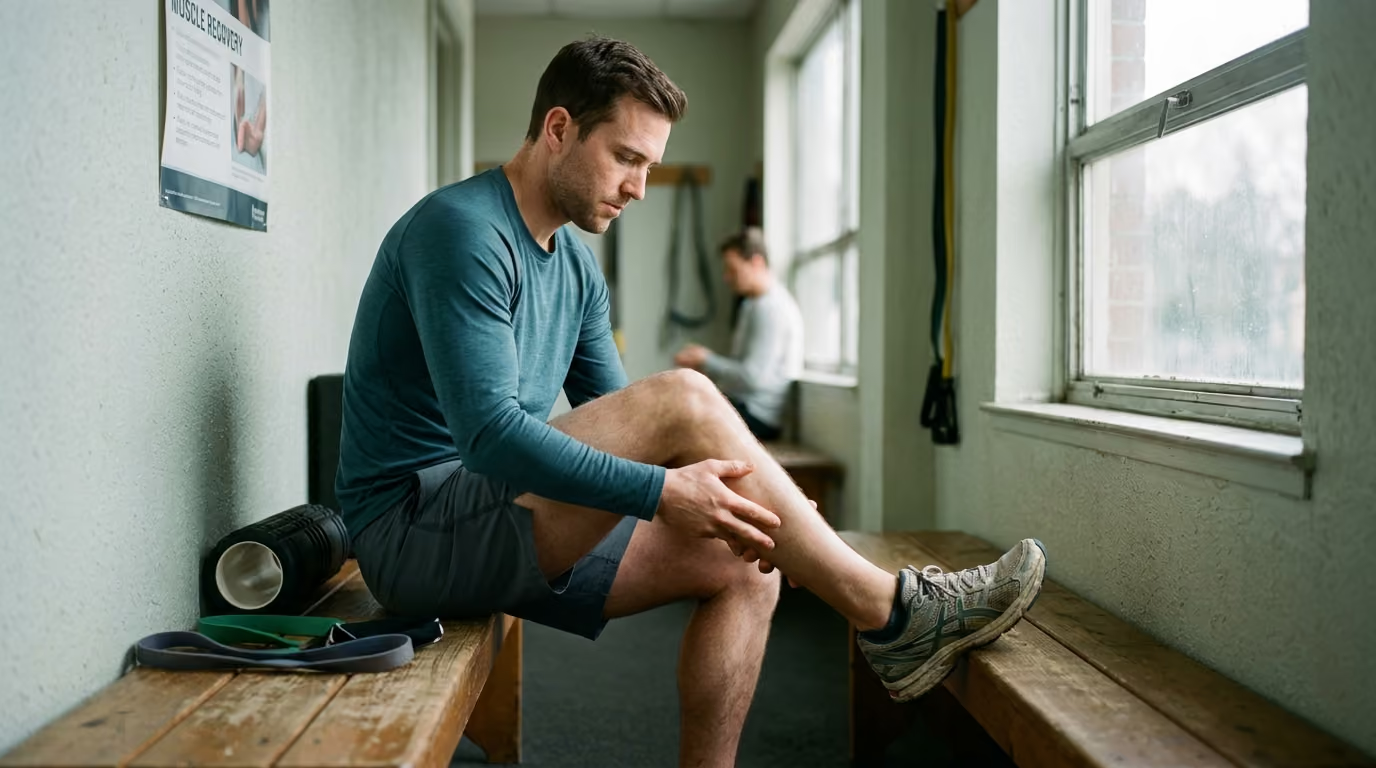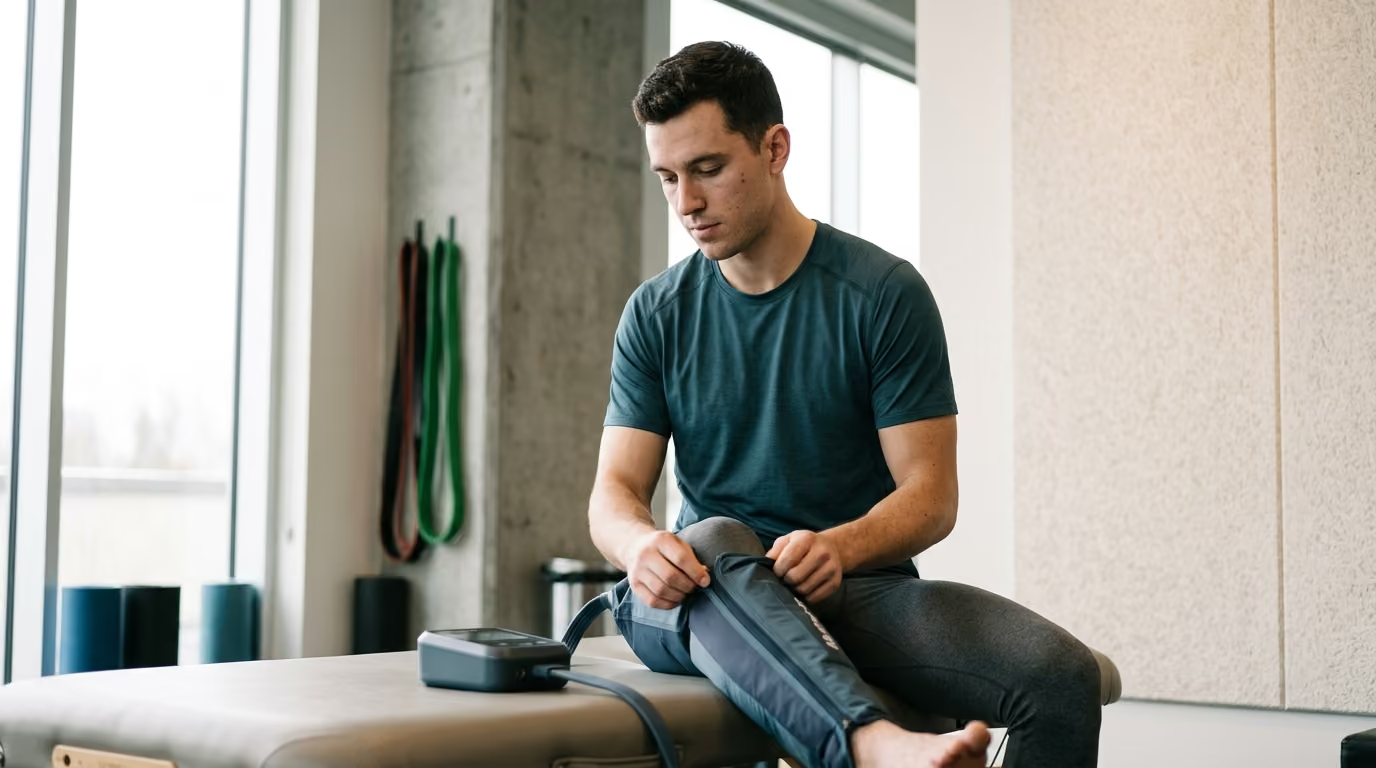

Evidence-based physical recovery methods vary in their effectiveness for reducing muscle soreness, restoring athletic performance, and supporting long-term training adaptations.





Physical recovery is the biological restoration of work capacity, neuromuscular function, and tissue integrity after physiological stress. It is not merely the absence of muscle soreness. Popular fitness culture frequently confuses feeling better with structural adaptation and systemic repair. An intervention can numb pain while blunting muscular growth. Another method can leave you feeling stiff while accelerating tissue remodeling.
Understanding what actually drives recovery requires separating subjective comfort, performance restoration, and long-term training adaptations. When you step out of a hard training session, your body initiates a cascade of inflammatory signaling, fluid shifts, and metabolic clearing. Intervening in that cascade changes how your body responds. This guide examines the peer-reviewed evidence behind popular recovery modalities, detailing their physiological mechanisms, ideal use cases, potential conflicts, and practical application for demanding schedules.
To evaluate any recovery modality, you must separate four distinct endpoints. These are symptom relief, performance restoration, physiological recovery, and long-term adaptation.
Symptom relief is the reduction of perceived discomfort, muscle tightness, or delayed-onset muscle soreness. DOMS is primarily a subjective sensory response to micro-trauma, local inflammation, and non-contractile connective tissue disruption after unaccustomed or eccentric exercise. You can reduce DOMS through altered pain perception, changes in local tissue temperature, or reduced sensory nerve conduction. However, dulling pain does not mean the underlying muscle fibers have finished structural remodeling.
Performance restoration is the return of task-specific physical capacity. This includes countermovement jump height, maximal voluntary contraction, bar velocity at a given load, and repeated sprint output. A modality might relieve soreness completely while your maximal force production remains suppressed by ten percent. Conversely, an athlete may feel stiff and sore while demonstrating baseline power output.
Physiological recovery involves the resolution of biological stress markers. This process requires restoring glycogen stores, clearing excess cellular debris, normalizing intracellular calcium handling, and resolving acute inflammation. It operates on biological timelines that external tools cannot entirely compress.
Long-term adaptation represents the functional and structural improvements that occur over weeks and months of training. These adaptations include muscle protein synthesis, mitochondrial biogenesis, tendon stiffening, and neural drive efficiency. Acute inflammation, reactive oxygen species, and local swelling are not mere design flaws. They serve as essential molecular signals that trigger adaptation.
Suppressing these acute responses with aggressive recovery interventions can improve short-term comfort at the expense of long-term progress. Evaluating a modality requires asking what outcome you want over what time frame, after what type of training, and at what cost to adaptation.
Cold-water immersion involves submerging the body in water typically cooled to between 10 and 15 degrees Celsius for 10 to 15 minutes. It is widely used in competitive sports to accelerate recovery between congested events. The underlying physiological mechanisms are well documented. Cold temperatures induce acute peripheral vasoconstriction, which reduces local blood flow, limits interstitial fluid accumulation, and dampens the acute inflammatory response. Furthermore, cold water slows nerve conduction velocity, providing a temporary analgesic effect that reduces perceived soreness.
A comprehensive review of cold-water immersion found consistent evidence that the practice reduces delayed-onset muscle soreness compared to passive rest. Athletes routinely report lower levels of perceived fatigue and a faster return of perceived readiness. In multi-day tournament formats or congested competition schedules, these benefits are practical. When you must perform at maximum capacity twice in 48 hours, long-term muscular development becomes secondary to acute functional readiness.
The conflict arises when cold-water immersion is used routinely after resistance training aimed at hypertrophy and maximal strength. Systematic reviews and randomized controlled trials indicate that repeated post-exercise cold immersion blunts long-term muscular gains. In an experimental study examining cellular signaling, post-exercise cold immersion blunted muscle fiber hypertrophy and suppressed the activation of key anabolic signaling pathways, including the p70S6K pathway.
A meta-analysis evaluating strength adaptations reported that post-exercise cold-water immersion attenuated strength gains, showing an overall negative effect size compared to active or passive control conditions. Interestingly, subgroup analyses revealed that while whole-body cooling showed mixed results, direct cooling of the trained limbs produced a statistically significant reduction in long-term strength development.
The cold exposure appears to reduce the activity of satellite cells, blunt the upregulation of muscle protein synthesis, and restrict blood flow when amino acid delivery is most critical. For professionals pursuing hypertrophy, building strength, or maintaining muscle mass through energy and strength training, immediate cold-water immersion should not be a standard post-lifting routine. Reserve cold immersion for competitive events, endurance-heavy phases, or extreme soreness that would otherwise prevent scheduled movement.
Mechanical and circulatory recovery methods aim to alter fluid dynamics, enhance local blood flow, and provide novel sensory inputs to the central nervous system. Among these tools, manual massage and pneumatic or textile compression garments are the most common.
A large meta-analysis evaluating 107 studies identified massage as the single most powerful modality for reducing delayed-onset muscle soreness and perceived fatigue. Massage also produced measurable reductions in circulating markers of inflammation and muscle damage, such as creatine kinase and interleukin-6. The primary mechanism of massage is sensory and neurological rather than mechanical muscle remodeling. By stimulating cutaneous mechanoreceptors, massage alters pain signaling through the central nervous system, reduces muscle tone, and activates the parasympathetic branch of the autonomic nervous system.
While massage excels at restoring subjective comfort and reducing perceived fatigue, it does not accelerate structural muscle repair. It improves movement tolerance and relaxation, making it valuable when soreness or sympathetic overarousal impairs training quality. Importantly, unlike cold exposure, manual therapy does not appear to impair downstream anabolic signaling or blunted muscle hypertrophy.
Compression garments function by applying graduated external pressure to the limbs. This pressure reduces venous pooling, enhances venous return, and limits the expansion of extravascular edema after muscle-damaging exercise. A meta-analysis examining compression garments reported moderate pooled effects for reducing DOMS, with a Hedges' g of 0.403, and moderate improvements in the recovery of muscle strength and power, with effect sizes of 0.462 and 0.487 respectively. It also noted lower circulating creatine kinase levels, with a Hedges' g of 0.439.
However, broader reviews caution that while compression garments improve standardized laboratory recovery markers, their capacity to improve real-world physical performance remains equivocal. Kinetic and kinematic outputs during complex athletic movements rarely show meaningful differences with compression use. Compression garments remain a low-risk, passive adjunct that supports subjective comfort and reduces swelling, particularly during long travel or periods of prolonged standing.
Thermal therapies using heat operate through the opposite physiological mechanism of cold exposure. Application of heat via traditional saunas, infrared saunas, or hot-water immersion promotes peripheral vasodilation, increases cardiac output, elevates microvascular blood flow, and upregulates heat shock proteins. These responses enhance tissue compliance, facilitate the transport of nutrients and metabolic byproducts, and induce profound mental relaxation.
Despite widespread enthusiasm for post-exercise heating, the scientific evidence regarding acute athletic recovery remains mixed. A systematic review evaluating acute post-exercise heat exposure identified four studies showing beneficial recovery effects, four studies demonstrating no measurable effect, and one study documenting adverse effects on subsequent performance. The acute physiological stress of heat exposure, including elevated core temperature, increased heart rate, and fluid loss, can compound post-exercise fatigue if applied carelessly.
Infrared saunas are frequently marketed as a superior recovery tool capable of deep tissue penetration. In a controlled six-week resistance-training study, post-exercise infrared sauna sessions did not produce any statistically significant increases in muscle hypertrophy compared to resistance training alone. The researchers did observe small improvements in specific countermovement jump and early acceleration metrics, but generalized claims of accelerated muscle building were unsupported.
Heat exposure remains an effective tool for heat acclimation, cardiovascular conditioning, and psychological down-regulation. When an athlete needs to adapt to hot environments, regular post-exercise sauna bathing improves plasma volume expansion and thermoregulatory efficiency. However, it should not be viewed as an acute recovery tool for resistance training.
If used immediately after an exhaustive session, heat can exacerbate dehydration and prolong sympathetic nervous system activation. For individuals balancing heavy training with high-stress professional responsibilities, managing systemic load through evidence-based stress resilience strategies is far more critical than adding uncalibrated thermal strain.
Static stretching has been prescribed for decades as an essential post-workout cooldown practice. The conventional belief asserted that stretching elongated damaged muscle fibers, cleared metabolic waste products, improved local circulation, and prevented delayed-onset muscle soreness. Rigorous modern exercise science does not support these assumptions.
A comprehensive 2025 systematic review and meta-analysis evaluated the effects of post-exercise stretching across dozens of controlled trials. The researchers found no statistically significant effects of post-exercise stretching on muscle soreness, maximal strength recovery, athletic performance, pain threshold, or acute flexibility improvements. The calculated effect sizes across all recovery outcomes were categorized as trivial to small and statistically non-significant.
Stretching a muscle does not repair microscopic sarcomere disruptions, nor does it accelerate the clearance of intracellular waste products. Delayed-onset muscle soreness is primarily caused by inflammatory cascades and nociceptive sensitization in connective tissue sheaths, neither of which are resolved by mechanical tension. While stretching temporarily alters stretch tolerance by desensitizing local pain receptors, it does not alter the underlying timeline of muscle recovery.
Furthermore, improper timing of static stretching can impair physical output. Systematic reviews show that prolonged static stretching, particularly when individual holds exceed 60 seconds, causes an acute reduction in maximal muscle strength, power output, and explosive force production.
This neural suppression occurs via reduced motor unit activation and temporary decreases in musculotendinous stiffness. Stretching remains a valid training modality when the specific goal is increasing chronic joint range of motion, but it should not be prescribed as an intervention to accelerate physical recovery after hard training.
Contrast-water therapy alternates brief immersions in warm water (typically 38 to 40 degrees Celsius) and cold water (10 to 15 degrees Celsius). The theoretical mechanism relies on a "vascular pumping" action, where alternating vasodilation and vasoconstriction stimulates blood flow, reduces edema, and accelerates metabolite clearance without requiring active muscular exertion.
A pooled meta-analysis of 13 studies demonstrated that contrast-water therapy significantly reduced delayed-onset muscle soreness and limited strength loss compared to passive rest across multiple time horizons, from under six hours to 96 hours post-exercise. However, when researchers compared contrast therapy against active recovery, cold-water immersion, warm-water immersion, or compression garments, contrast therapy showed no superior outcomes.
Contrast therapy is a viable alternative to passive sitting, particularly for athletes who enjoy the sensory contrast. However, its logistical complexity makes it unnecessary for most training routines when simpler methods yield equivalent results.
Active recovery involves low-intensity, non-fatiguing movement performed immediately after hard exercise or on dedicated rest days. Protocols typically utilize light cycling, walking, swimming, or bodyweight mobility drills at low cardiovascular intensities. A systematic review reported that active-recovery protocols lasting between six and ten minutes produced consistently positive effects on immediate performance restoration.
Active movement utilizes the natural skeletal muscle pump to promote venous return and enhance capillary blood flow without inducing further mechanical micro-trauma.
The primary risk of active recovery is excessive intensity. If a scheduled recovery session elevates heart rate into moderate training zones or involves eccentric loading, it adds training stress rather than dissipating fatigue. A recovery session should remain restorative, serving to lower sympathetic tone and encourage joint mobility.
When applied correctly, light movement provides the subjective and circulatory benefits of hydrotherapy modalities without requiring dedicated equipment or specialized facilities. Integrating gentle movement into an overall lifestyle that prioritizes healthy aging and longevity supports sustained functional capacity over decades.
High-performing executives and founders operate in environments where recovery protocols frequently collide with professional realities. When demanding travel schedules, board meetings, and high-stress negotiations eliminate the luxury of idealized training regimens, recovery requires practical triage rather than perfection.
I remember landing at Heathrow after a brutal overnight flight from New York. I had a board meeting in three hours. The standard advice of getting eight hours of sleep felt like a cruel joke. That was the exact moment I realized our readers do not need perfect scenarios.
They need triage protocols. They need to know what the science says about recovering cognitive function and physical readiness when they only managed three hours of fragmented sleep at high altitude.
In high-stress professional situations, the body is already managing substantial allostatic load. Adding aggressive, uncomfortable recovery modalities can backfire by introducing additional physiological stress. When you are operating on restricted sleep or enduring consecutive 14-hour workdays, your nervous system is in a persistent state of sympathetic activation.
In our experience working with corporate operators, attempting to squeeze in a punishing ice bath or an intense heat session during an exhausting travel window often deepens systemic fatigue.
Instead, prioritize frictionless recovery interventions. Wear graduated compression socks during flights exceeding four hours to minimize lower-limb edema and venous stasis. Replace high-intensity recovery sessions with a 15-minute outdoor walk, which provides gentle active recovery, clears joint stiffness, and exposes the eyes to natural morning light to support circadian alignment.
When severe sleep disruption strikes, protect muscle tissue by maintaining daily protein intake between 1.6 and 2.2 grams per kilogram of body weight, and shift scheduled heavy strength training to lower-volume maintenance work. For deeper insights on managing executive workload alongside physical health, explore our guides on executive performance and operational stamina.
Building an effective recovery routine requires moving away from random wellness habits toward a targeted decision framework. Every recovery tool should address a specific physiological constraint without compromising your primary training objectives.
Use this five-step decision filter to determine whether a recovery intervention is appropriate for your current training block:
While sports science has advanced significantly over the past two decades, significant gaps and methodological limitations remain within the recovery literature. Understanding these limitations prevents over-interpreting laboratory findings or falling for commercial marketing claims.
First, a substantial portion of recovery research relies on surrogate biomarkers rather than direct performance measures. Studies frequently measure changes in circulating creatine kinase, lactate dehydrogenase, or subjective visual analog scales for pain.
While these markers provide useful physiological clues, they correlate poorly with complex athletic performance. A reduction in circulating creatine kinase does not guarantee that an individual can produce higher peak power, sprint faster, or sustain high cognitive focus during demanding tasks.
Second, the vast majority of recovery studies evaluate acute timelines ranging from 24 to 96 hours. Long-term studies tracking athletes over several months of combined training and recovery interventions are rare. An intervention that appears beneficial over a 48-hour window may produce neutral or negative consequences when applied chronically over a full training year.
The interference effect of cold-water immersion on muscle hypertrophy only became clear when researchers moved from acute 24-hour marker studies to multi-week training interventions.
Third, blinding is nearly impossible in physical recovery research. An athlete always knows whether they are submerged in ice water, sitting in a 90-degree sauna, receiving a manual massage, or wearing tight compression tights. The powerful psychological expectations associated with modern recovery culture introduce significant placebo effects, particularly for subjective endpoints like delayed-onset muscle soreness and perceived readiness.
Finally, study populations in exercise science remain skewed toward young, recreationally active male cohorts. Data cannot always be extrapolated directly to female athletes, master competitors, or corporate executives managing high levels of non-exercise psychological stress.
Cold showers do not replicate the physiological effects of cold-water immersion. Water in a shower does not provide hydrostatic pressure, nor does it maintain continuous skin contact across the entire surface area of the body. While cold showers trigger an acute sympathetic gasp reflex and increase alertness, they do not lower intramuscular tissue temperature sufficiently to alter local blood flow, reduce swelling, or blunt inflammatory cascades in the manner of a 12-degree water submersion.
Percussive massage guns provide localized sensory stimulation that can temporarily alter pain perception, reduce perceived muscle tightness, and improve joint range of motion through neural mechanisms. However, they do not replicate the broad mechanical fluid shifts, extensive parasympathetic down-regulation, or skilled soft-tissue assessment provided by an experienced manual therapist. Percussive devices are convenient tools for self-administered pre-workout preparation or targeted post-workout symptom management, but they should not be viewed as complete replacements for comprehensive manual therapy.
Yes, in the vast majority of non-elite scenarios. Sleep provides the hormonal, neural, and cellular foundation for protein synthesis, tissue repair, and cognitive restoration. Proper nutrition delivers the amino acids required for structural remodeling and the carbohydrates needed to replenish muscle glycogen stores. If sleep duration, protein distribution, caloric balance, and hydration are deficient, no amount of sauna bathing, cold plunging, or compression therapy will restore physical capacity. Modalities provide marginal percentage gains only when the physiological foundation is secure.
Training through mild to moderate delayed-onset muscle soreness is generally safe and will not cause muscle damage if your movement patterns remain normal. Engaging in light to moderate exercise often provides a temporary analgesic effect by increasing local blood flow and tissue temperature. However, if muscle soreness is severe enough to alter your biomechanics, force you to compensate with other muscle groups, or cause sharp localized joint pain, you should modify the session. In such cases, shift to low-intensity active recovery or train an unaffected muscle group to prevent compensatory injuries.
Stay connected for research and practical guidance on executive performance, energy, focus, sleep, recovery and longevity. Ideas built for people who want to stay sharp, capable and effective for the long run.


Build habits and systems that support clear thinking, steady energy and long term capacity throughout a demanding career.
explore the Blog