
Fitness is often measured by heavy barbell lifts, but true physical durability and longevity depend on grip capacity and loaded carries.





Practical strength is not the ability to lift a barbell once in a controlled gym environment. It is the capacity to produce force, stabilize your spine, control external objects, and move confidently across varied terrain. True physical readiness requires transferring force from your hands through your core and down into the ground.
Many training programs isolate muscles on fixed machines. These exercises build cosmetic mass, but they often fail to develop functional durability. In contrast, training your grip and carrying heavy objects develops total-body coordination, joint integrity, and postural endurance.
This guide delivers a comprehensive blueprint for developing grip capacity and loaded carry performance. We examine the clinical research linking hand force to longevity, dissect the biomechanics of locomotion under tension, and provide structured routines for demanding schedules. For broader perspectives on physical conditioning, visit our energy, strength and physical performance resources.
Clinical literature frequently treats hand dynamometer force as a window into systemic physiological health. Large-scale epidemiological studies consistently show that lower grip strength correlates with higher rates of all-cause mortality, cardiovascular events, and extended hospital stays.
In the Tromsø Study, researchers followed thousands of adults over multiple decades. They found that each standard deviation reduction in grip strength correlated with a 17 percent higher hazard of all-cause mortality. This association remained significant even after controlling for age, sex, and physical dimensions. The strongest associations appeared in deaths related to cardiovascular disease, stroke, and chronic respiratory illness.
A broad systematic review of adults aged 60 and older reinforced these conclusions. Researchers reported a pooled mortality hazard ratio of 1.79 when comparing categorical grip performance across large populations. Every single unit increase in measured grip force was associated with a measurable reduction in mortality risk.
The European Working Group on Sarcopenia in Older People uses grip strength as a primary diagnostic marker for age-related muscle wasting. Their clinical consensus sets the baseline threshold for low strength at below 27 kilograms for men and below 16 kilograms for women. Falling below these metrics signals an accelerated loss of functional reserve, impaired mobility, and increased fall risks.
However, we must interpret these findings with scientific rigor. Grip strength is a predictive risk marker, not an isolated cure. Squeezing a spring gripper will not magically grant longevity. Low grip force reflects general physical inactivity, poor nutritional status, neuromuscular decline, and chronic systemic inflammation. The goal is to build comprehensive strength through compound movements, with hand capacity serving as an honest indicator of structural robustness. For a deeper understanding of functional healthspan, review our guide to healthy aging and physical longevity.
The hand contains no muscles responsible for heavy gripping. The primary motors of the fingers are located in the forearm, transmitting force through long tendons crossing the wrist. True grip capacity relies on an integrated kinetic chain spanning the fingertips, wrist joint, elbow, shoulder girdle, and deep core.
Crush grip describes the action of closing your fingers against resistance into the palm, as seen when squeezing a hand dynamometer. Support grip involves holding an object for extended periods, such as carrying a heavy travel bag or hanging from a pull-up bar. Pinch grip applies force between the thumb and the opposing fingers without palm support. Open-hand grip requires controlling thick bars or irregular shapes where the fingers cannot wrap completely around the surface.
Forearm and wrist integrity dictates how much force your upper body can safely exert. If the wrist flexors and extensors cannot stabilize the joint, neural feedback mechanisms will inhibit muscle activation upstream in the chest, back, and shoulders. This protective reflex prevents joint damage when the body senses an unstable extremity.
Implement diameter alters muscle recruitment patterns substantially. Research evaluating forearm muscle coordination indicates that wide implements and sloper positions demand significantly higher activation from the flexor digitorum superficialis and flexor carpi radialis. By varying your grip modalities, you build resilient connective tissue that protects against chronic conditions like medial and lateral epicondylalgia.
A loaded carry is locomotion under the constraint of an external load. While traditional resistance exercises like squats and deadlifts occur in static stances, carries force the body to stabilize weight while stepping through space.
Electromyographic research demonstrates that dynamic farmer carries recruit higher bilateral activation in the latissimus dorsi, trapezius, multifidus, and external obliques than static standing holds. As you step forward, your center of mass shifts over a single supporting leg. Your lateral hip stabilizers and contralateral core musculature must fire intensely to prevent pelvic tilt and spinal collapse.
Studies evaluating strongman biomechanics highlight that superior carry capacity correlates with shorter ground-contact times and consistent stride frequency. Moving heavy weights builds structural efficiency and dynamic balance. It trains the nervous system to coordinate force production across multiple planes while maintaining forward momentum.
Bracing under load requires a specific respiratory strategy. Holding your breath increases intra-abdominal pressure, but prolonged breath-holding causes rapid spikes in blood pressure and induces premature fatigue. Practical carry performance requires learning to brace your abdominal wall while maintaining steady, rhythmic breathing underneath the shield of your ribs.
High-stress corporate schedules create unique physical strains. Extended transcontinental travel, sedentary boardroom meetings, and irregular rest patterns degrade physical posture and weaken stabilizing muscles. Sitting in compressed airline seats shortens the hip flexors and deactivates the gluteal complex, leaving the lower back vulnerable to acute injury during normal travel activities.
A chief executive recently told me she was drinking six espressos a day just to get through her afternoon strategy sessions. When we looked at the half life of caffeine and her sleep data, the problem was glaringly obvious. Her solution for energy was destroying her deep sleep, which in turn destroyed her energy the next day. We focus on these vicious cycles because breaking them is the fastest way to restore baseline performance. For practical solutions on breaking fatigue patterns, explore our resources on sleep and recovery habits and managing stress and burnout.
Loaded carries counteract the physical toll of continuous office work. Walking with heavy weights forces the thoracic spine into healthy extension and activates the rhomboids and lower trapezius. This active recruitment corrects rounded shoulders and strengthens the posterior chain without requiring complicated gym setups.
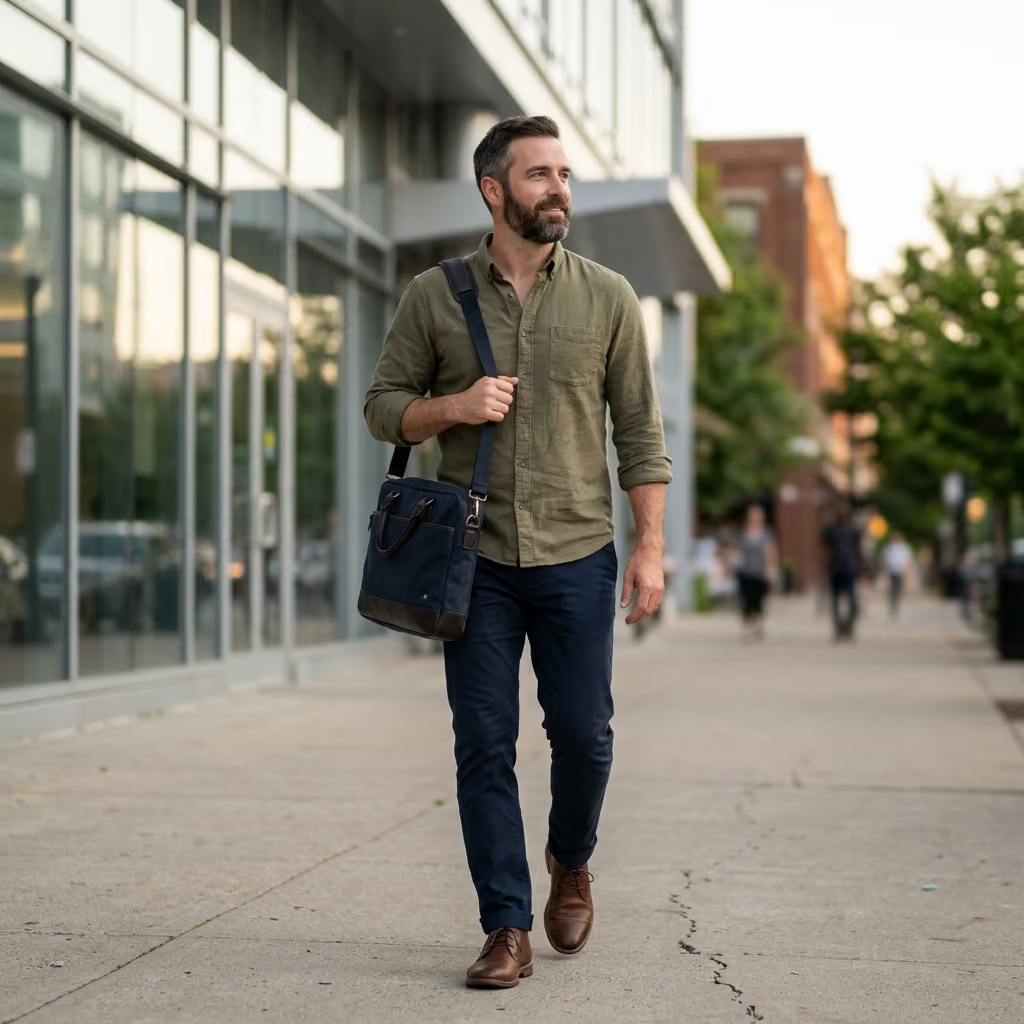
Carrying uneven loads develops functional anti-rotational stability. Navigating airports with an off-center carry builds the specific muscular endurance needed to transport briefcases and luggage without straining the lower back. When you cultivate physical strength, daily physical tasks require a far lower percentage of your maximal capacity, preserving mental energy for demanding professional tasks.
Accurate measurement allows you to track progress, identify left-to-right asymmetries, and ensure your program produces tangible adaptations. A testing battery should assess both absolute hand force and dynamic support endurance.
The American Society of Hand Therapists established a reliable protocol using a calibrated hydraulic dynamometer. Sit upright in a sturdy chair with your feet flat on the floor and your shoulders relaxed. Position your elbow at a 90-degree angle with your forearm in a neutral posture and the wrist slightly extended between 0 and 30 degrees.
Set the dynamometer handle to the second notch, which accommodates standard hand geometry. Squeeze the handle with maximal effort for three full seconds while exhaling smoothly. Complete three trials per hand, resting 60 seconds between attempts to avoid muscular fatigue. Record the highest score and the average score, noting any bilateral asymmetry greater than 10 to 15 percent.
The timed hang evaluates upper-body support endurance and shoulder joint tolerance. Grasp a stable pull-up bar with an overhand, shoulder-width grip. Step off the platform so your entire bodyweight is suspended freely above the floor.
Maintain an active hang by engaging your shoulder blades slightly downward and keeping your abdominal wall firm. Record the total duration until your fingers begin to open or your form deteriorates. A baseline standard for healthy adults is 60 seconds of continuous suspension, while 90 seconds reflects advanced support endurance.
Select a dumbbell or kettlebell equal to approximately 25 to 30 percent of your body mass. Hold the implement in one hand at your side and walk a straight 30-meter path. Maintain an upright posture with your shoulders level and your torso perpendicular to the ground.
Record your walking speed, step stability, and any lateral leaning away from the load. Repeat the test on the opposite side using identical parameters. Significant differences in pace, posture, or grip endurance between sides reveal functional imbalances that require focused unilateral training.
You do not need long training sessions to build dependable grip strength and work capacity. An effective program requires consistent execution of fundamental movement patterns paired with progressive overload.
This structure fits easily into a crowded calendar, requiring only two 30-minute sessions per week. It pairs primary compound movements with specific carry variations to build practical strength without causing excessive fatigue.
If getting to a gym is impossible, you can maintain hand and forearm capacity directly at your desk. Keep a moderate-resistance torsion gripper, a pinch-block device, or thick rubber bands in your office.
Perform three sets of moderate-intensity pinches or hand extensions during transition periods between calls. Perform active hangs from a doorway pull-up bar for 30 seconds before your first morning meeting. These small training doses accumulate meaningful volume across the month without causing sweat or joint strain. For more high-yield strategies, review our complete executive performance library.
Different carry styles emphasize distinct regions of the kinetic chain. Rotating these variations prevents overuse issues while building well-rounded physical capacity.
The farmer carry is the baseline standard for full-body load transport. Holding heavy implements at your sides allows you to use substantial weights, challenging the hips, upper back, and grip simultaneously.
Begin by standing between two dumbbells, kettlebells, or a loaded trap bar. Hinge at your hips with a neutral spine, secure your grip, and stand up smoothly. Pull your shoulder blades down and back, engage your core, and walk forward using short, deliberate strides. Avoid letting the weights swing or bounce against your thighs.
The suitcase carry applies an asymmetric load to the body, forcing the contralateral obliques and quadratus lumborum to fire intensely to prevent lateral spinal flexion.
Hold a single weight in one hand while maintaining a completely vertical spine. Your shoulders and hips must remain level throughout the walk. Walk forward along a straight line without leaning away from the weight. This movement builds functional core stiffness and directly corrects gait compensations.
Holding weights in the rack position at shoulder height shifts the center of mass forward. This variation requires immense thoracic extension strength and anterior core bracing.
Clean two kettlebells to your chest so the handles rest across your palms and the bells sit comfortably in the pockets of your shoulders. Keep your elbows tucked close to your ribcage and your wrists neutral. Walk with controlled steps, taking care not to lean backward to balance the load.
The waiter carry places the load directly overhead with the arm fully locked. This position demands high levels of glenohumeral stability, scapular upward rotation, and mid-back endurance.
Press a dumbbell or kettlebell overhead until your elbow is fully extended and your bicep sits aligned with your ear. Pull your lower ribs down toward your pelvis to prevent hyperextending your lumbar spine. Walk slowly and deliberately, keeping your gaze forward and stabilizing the shoulder with every step.
Holding an awkward implement like a sandbag, medicine ball, or stone against your torso eliminates grip as the primary limiting factor, shifting the demand entirely to your trunk, upper back, and respiratory system.
Wrap both arms tightly around the center of the sandbag, pulling it close to your chest. Keep your hips under your shoulders and avoid arching your lower back. Walk under control while maintaining steady abdominal breathing against the direct compression of the bag.
Frequent travel disrupts standard training schedules. Long flights, hotel gyms with limited equipment, and continuous meetings require a flexible approach to maintaining your physical baseline.
Hotel fitness centers often lack heavy dumbbells or trap bars. You can increase the training difficulty of lighter weights by altering your grip mechanics. Wrap a small hand towel around the handle of a light hotel dumbbell to increase the handle diameter. Carrying a 15-kilogram dumbbell with a thick towel wrap challenges your forearm flexors as intensely as a bare 30-kilogram weight.
You can also use your own luggage to perform loaded carries. A heavy carry-on bag or loaded duffel bag serves as an effective tool for suitcase carries in your hotel room or along quiet corridors. Perform five sets of 30-second walks, focusing on posture and abdominal bracing.
When you lack all equipment, use structural isometric holds. Stand in a doorway and press your open palms outward against the frame with maximal effort for ten seconds to activate your shoulder stabilizers. Grip the edge of a sturdy door or desk for timed fingertip hangs. These isometric variations preserve neural drive and connective tissue strength until you return to your standard training environment.
While grip training and loaded carries provide proven benefits, we must remain aware of their physiological limitations and potential risks.
A high dynamometer score does not make someone immune to cardiovascular disease. Hand strength correlates with health outcomes because it reflects overall muscle mass, active living, and neuromuscular integrity. Focusing exclusively on hand exercises while neglecting lower-body strength, mobility, and cardiorespiratory conditioning will not produce meaningful longevity improvements.
Loaded carries can also create significant spinal and joint stress when performed incorrectly. Biomechanical evaluations of heavy load carriage demonstrate that excessive mass increases lumbar flexion moments and pelvic instability. Trainees with existing lower-back pain may find heavy bilateral carries aggravating if they compensate by arching their spines.
Dead hangs require adequate shoulder mobility. Forcing an individual with structural impingement, rotator cuff tears, or loose shoulder ligaments into a passive hang can worsen tissue inflammation. Begin with feet-assisted hangs to regulate the tension on the shoulder capsule before attempting full bodyweight suspension.
Finally, loaded carries do not replace dedicated aerobic conditioning or full-range strength work. They should function as a high-yield accessory within a balanced training regimen that includes knee-dominant leg exercises, vertical pulling, horizontal pressing, and structured zone-two cardiovascular training.
A 48-year-old managing partner experienced chronic lower back soreness and neck tension following weekly domestic flights. While he performed traditional hotel gym workouts, his posture collapsed when transporting heavy travel bags across large airports.
We integrated suitcase carries and active hangs into his schedule twice per week. He performed three sets of 40-meter suitcase carries per side using a 20-kilogram kettlebell, paired with two 30-second active bar hangs. Within eight weeks, his lateral core endurance improved, his travel-related back stiffness resolved, and he maintained better spinal alignment during long working days.
A 42-year-old technology founder possessed strong baseline numbers in the deadlift and barbell row, but his grip consistently failed during long sets or outdoor activities. His support grip endurance was significantly lagging behind his absolute hip extension force.
We added two weekly carry sessions featuring heavy trap-bar farmer carries and thick-handled dumbbell holds. Rather than chasing single maximal lifts, he trained with 35-kilogram implements per hand for 45-second timed intervals. Over ten weeks, his support grip endurance increased by 40 percent, resolving his deadlift limitations and improving his manual stamina.
A 63-year-old executive noticed declining hand strength, occasional balance hesitations, and fatigue when carrying heavy household items. Her baseline dynamometer score read 18 kilograms, placing her near the clinical threshold for functional decline.
We instituted a gentle, progressive carrying protocol using bilateral farmer carries with two 8-kilogram kettlebells and feet-supported bar hangs. Over four months of consistent training, her dynamometer score rose to 24 kilograms. Her walking gait became more confident, and her perceived physical exertion during daily activities decreased dramatically.
Two to three sessions per week provide an optimal stimulus for most professionals. This frequency delivers enough volume to drive neuromuscular adaptations without overloading your wrists, elbows, or lower back.
Using straps eliminates the grip and forearm benefits of the movement. If your goal is to build practical carry capacity, use bare hands or chalk. Only use straps if you are working around an acute hand injury or deliberately using carries solely to overload your legs and cardiovascular system.
Dead hangs are beneficial when introduced conservatively, but they must be matched to your joint tolerance. If you have a history of shoulder subluxation or rotator cuff tendinopathy, begin with feet-assisted hangs on a low bar. This setup allows you to regulate the load on your shoulder girdle while building connective tissue resilience.
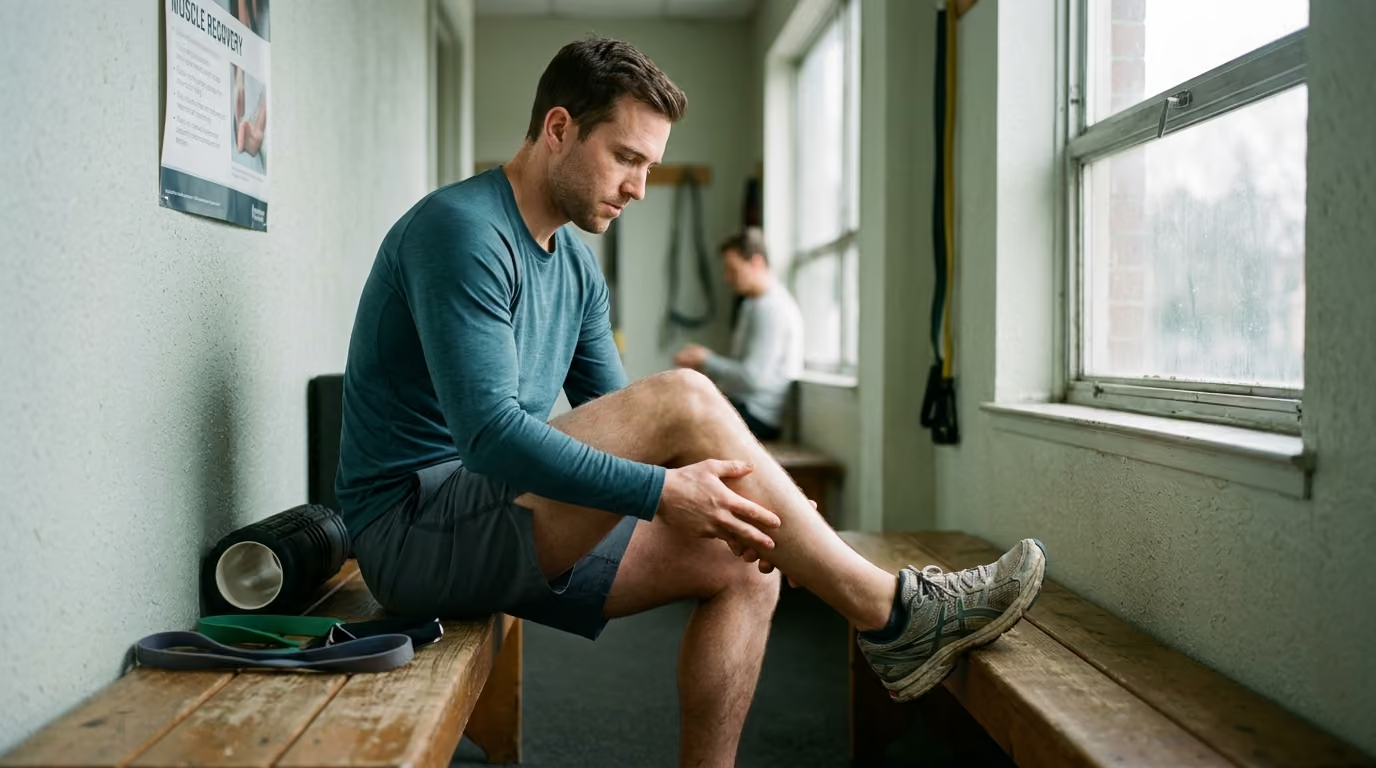
Medial or lateral elbow soreness usually indicates that your training volume or load has exceeded your tendon recovery capacity. Reduce your carrying frequency, avoid thick-handled implements temporarily, and incorporate active forearm extensor exercises using elastic bands to restore muscular balance around the elbow joint.
Stay connected for research and practical guidance on executive performance, energy, focus, sleep, recovery and longevity. Ideas built for people who want to stay sharp, capable and effective for the long run.


Build habits and systems that support clear thinking, steady energy and long term capacity throughout a demanding career.
explore the Blog