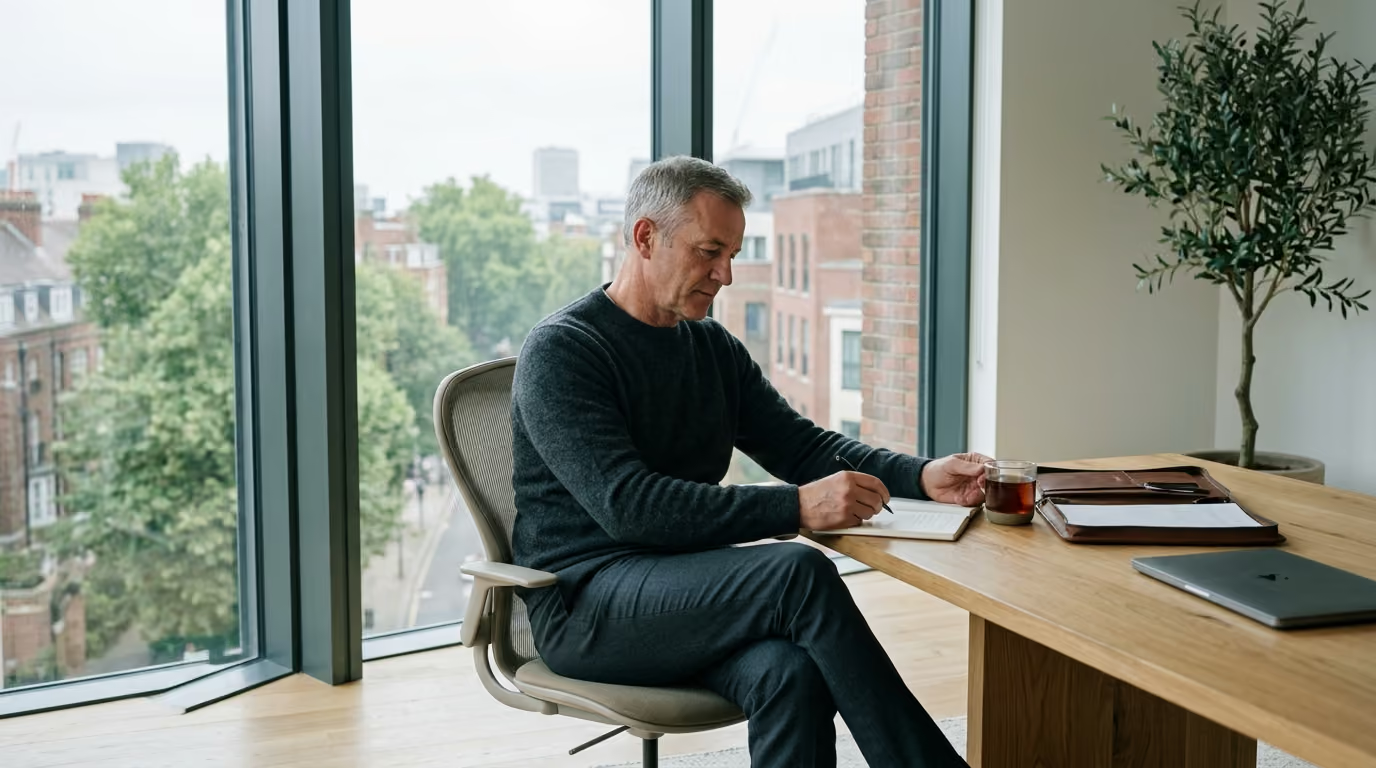

Demanding executive schedules often deplete energy, making architectural spaces, circadian lighting, acoustic zones, and built-in movement pathways vital.





Most executives treat health as a relentless series of personal choices. They believe that sustained energy, cognitive focus, and physical longevity depend entirely on discipline. When their routines collapse under the weight of eighty-hour workweeks, frequent travel, and back-to-back board meetings, they blame their lack of willpower.
This framing is fundamentally flawed. Human behavior is heavily dictated by the immediate physical and sensory environment. When your office, bedroom, kitchen, and travel routines are arranged to create friction against healthy habits, personal willpower will always lose over time.
Longevity is largely an architectural problem. If you want to sustain high output over decades, you must design your surroundings so that biological recovery, natural movement, and restorative rest happen automatically. By altering the defaults, lighting, furnishings, and spatial layouts of your daily spaces, you remove the constant cognitive burden of self-control.
Every day, an executive makes hundreds of micro-decisions regarding resource allocation, risk management, and operational strategy. Relying on decision-making capacity to choose an apple over a pastry, or to walk up three flights of stairs instead of taking an elevator, rapidly depletes cognitive bandwidth.
Behavior architecture restructures the physical world so that beneficial physiological choices require the least effort. Instead of demanding discipline, the space itself guides your actions.
This sequence governs every physical environment you inhabit.
Exposure represents what your senses repeatedly encounter throughout the day. This includes the spectral quality of your office lighting, ambient background noise levels, and the visibility of food. If you are constantly exposed to glare and processed snacks, your physiology adapts negatively before you even make a conscious choice.
Cues serve as immediate psychological triggers for specific actions. A pair of running shoes placed beside the door is a visual cue to move. A laptop sitting on your nightstand is an active cue to work, which keeps your sympathetic nervous system engaged when you should be preparing for sleep.
Friction defines the physical or logistical resistance required to complete an action. High friction stops behavior. If preparing a nutritious lunch requires thirty minutes of chopping and cooking during a packed workday, you will order takeout instead. If using the office stairs requires searching for a locked security door, you will take the elevator.
Behavior is the resulting execution of the habit. It is not an isolated event born from motivation. It is the direct downstream output of exposure, cues, and friction.
Recovery determines whether your body and nervous system can return to baseline. If your environment maintains high levels of sensory stimulation, noise, and work cues around the clock, physiological recovery remains incomplete. Over months and years, this lack of recovery accelerates biological aging and degrades sustainable executive performance.
A dangerous misconception in executive health is that a vigorous morning workout cancels out ten hours of continuous sitting. The World Health Organization clearly differentiates physical inactivity from sedentary behavior. Physical inactivity means failing to achieve recommended weekly exercise thresholds. Sedentary behavior refers to extended periods of low energy expenditure in a seated or reclining position.
An executive can run five miles at dawn, meet all aerobic guidelines, and still suffer the metabolic consequences of prolonged daily sitting. Research indicates that replacing sedentary time with physical movement of any intensity produces measurable metabolic and cardiovascular benefits.
Your physical environment must do more than accommodate a single workout. It must actively disrupt uninterrupted sitting across the entire workday.
Light is the primary environmental time-giver for your central circadian pacemaker, the suprachiasmatic nucleus. The timing, intensity, and spectral distribution of light determine cortisol curves, melatonin synthesis, body temperature rhythms, and autonomic tone.
Working in windowless conference rooms under static, low-intensity fluorescent bulbs disrupts these biological clocks. The body perceives an eternal biological twilight, blunting daytime alertness and damaging nighttime sleep architecture.
Research confirms that office workers exposed to high levels of circadian-effective light in the morning fall asleep faster, achieve deeper sleep, and report lower depressive symptoms than those in dim environments. Exposure to natural daylight or high-lux full-spectrum light early in the morning suppresses residual melatonin and initiates a healthy cortisol awakening response.
To build a circadian-supportive workstation, arrange your primary desk within three feet of an exterior window. Position your monitor perpendicular to the window to eliminate harsh screen glare while keeping daylight within your peripheral field of view.
If your office lacks exterior windows, install dedicated circadian luminaires that deliver high melanopic lux during the morning and early afternoon. Program these fixtures to provide intense, cool-spectrum light until 2:00 PM before transitioning to warmer, lower-intensity illumination.
As evening approaches, the goal of your home environment shifts entirely toward nervous system down-regulation. Bright overhead lighting after sunset signals daytime alertness to the brain, delaying melatonin secretion and degrading slow-wave sleep.
Replace bright overhead lights in living areas with low-wattage lamps placed below eye level. Use bulbs with a warm color temperature of 2700 Kelvin or lower.
In the bedroom, eliminate all stray light sources. Install custom blackout curtains that seal tightly against the window frame. Cover small LED indicators on air purifiers, thermostats, and electronics with opaque blocking tape. Ambient light levels during sleep should be absolute zero to maintain deep sleep and recovery protocols.
A study on built environments and sleep quality shows that nighttime light intrusion and neighborhood noise significantly degrade sleep depth. Investing in soundproofing, acoustic seals on doors, and steady white-noise generators provides essential protection against unpredictable urban disturbances.
Most modern corporate headquarters are designed to minimize physical effort. Elevators occupy central visual positions in lobbies, while stairwells are hidden behind heavy, industrial fire doors. Amenities are often grouped together so employees barely need to leave their chairs.
Active architectural design reverses this layout to encourage natural, incidental physical exertion.
Sit-stand workstations have become a standard corporate perk, yet the clinical evidence regarding their stand-alone benefits is surprisingly modest. Systematic reviews reveal that while height-adjustable desks successfully reduce total occupational sitting time, they produce minimal increases in overall physical activity. Standing motionless at a desk still burns very little energy and can cause lower-limb fatigue and spinal compression if maintained for hours.
Height-adjustable desks are valuable tools for posture variation, not substitutes for movement. The true objective is dynamic postural transition throughout the day.
To achieve the World Health Organization recommendation of 150 to 300 minutes of weekly activity, movement must be woven into your daily operational environment. Physical activity includes transportation, occupational movement, and casual walking, not just scheduled sports.
In our experience working with corporate teams, changing the layout of basic office tools alters movement patterns immediately. Place shared printers, water refill stations, and trash bins outside individual offices at opposite ends of the floor. This architectural friction forces you to stand and walk multiple times each hour.
Transform your meeting architecture by creating dedicated indoor and outdoor walking routes for one-on-one discussions. If a meeting involves three or fewer people and does not require active screen sharing, make walking the standard default. Walking increases blood circulation, reduces mental fatigue, and stimulates divergent creative thinking.
Make physical stairwells visually prominent, brightly lit, and easily accessible from all main pathways. If you control your office layout, ensure stairs are an inviting route rather than a forgotten fire escape.
Mental fatigue among executives rarely stems from the sheer volume of intellectual challenges. It is far more often caused by the sustained effort of ignoring distractions in chaotic, poorly planned spaces.
When you must work against open-office noise, constant chatter, visual movement, and frequent interruptions, your prefrontal cortex burns through energy at an unsustainable rate. Creating dedicated zones tailored for cognitive performance and mental clarity is a direct investment in your sustained working capacity.
The popular open-plan office layout was originally promoted as a way to spur collaboration. In practice, it often introduces continuous sensory distraction. Human speech is particularly disruptive to working memory and executive function, as the brain automatically processes nearby language.
To protect cognitive bandwidth, divide your workspace into three distinct functional zones:
When spatial constraints prevent physical separation, use high-grade active noise-canceling headphones to create a functional acoustic boundary. Establish clear social rules in your office, such as treating headphones as a visual sign that a colleague is in an uninterrupted focus block.
Biophilic design is often misunderstood as simply scattering potted plants around an office. Systematic reviews on restorative workplaces indicate that decorative plants alone offer minimal measurable cognitive benefits.
The largest restorative effects come from real daylight access, unobstructed views of natural outdoor landscapes, and clean visual sightlines. Looking at outdoor greenery and distant horizons relieves eye muscle strain and restores attentional capacity through gentle, low-effort sensory engagement.
If your office has windows overlooking trees, water, or open sky, arrange your seating so you can look outside without turning your neck. Take brief thirty-second breaks every twenty minutes to look at the farthest point on the horizon. This practice relaxes the ciliary muscles of the eyes and resets your visual focus.
When real outdoor views are impossible, prioritize natural materials like solid wood desks, high-resolution photography of open landscapes, and balanced daylight-spectrum lighting.
Nutrition is heavily influenced by proximity and visual cues. Most dietary failures during demanding workdays do not stem from a lack of nutritional knowledge. They occur when hunger peaks during a stressful schedule, forcing the executive to consume whatever processed food is instantly available.
By redesigning your kitchen, office pantry, and desk storage, you can systematically remove unhealthy default options.
The visual presence of food prompts automatic eating behaviors, even in the absence of physiological hunger. A bowl of candy on a conference table or open snacks on an office counter constantly trigger appetite centers in the brain. Resisting these temptations requires active willpower that gradually drains over a long workday.
Clear all open counters and desks of visible food items. Keep only fresh whole fruit, raw nuts, and clean water containers within your line of sight.
Store all packaged foods and quick carbohydrates behind closed, opaque cabinet doors, or remove them from the office entirely. Increasing physical friction by placing treats behind doors or in a distant kitchen gives your prefrontal cortex time to pause and make a deliberate choice.
When high-stress meetings compress your schedule, the friction required to prepare a healthy meal must be lower than the friction of ordering fast food.
Eating while responding to emails causes distracted overconsumption and prevents your nervous system from entering a relaxed parasympathetic digestive state. Step away from your desk to eat, even if it is only for ten minutes in a quiet conference room or an outdoor seating area.
Designing ideal environments at home is relatively straightforward because you control the floor plan, furnishings, and rules. The real challenge comes during high-stress professional situations: ten-hour cross-country flights, back-to-back presentations, high-security facilities, and generic business hotels.
Travel acts as an environmental stress test. When your familiar daily cues disappear, your routines can easily break down.
I spent a week at a popular health optimization conference and left completely exhausted by the complexity. Everyone was pushing a new supplement protocol, a complicated gadget, or a rigid daily routine. It struck me that true high performers do not have time to make health a full time job. They need maximum return on minimum viable effort. That observation became the filter for every piece of research we publish.
To maintain behavioral continuity across cities and time zones, you must carry a reliable toolkit that lets you adjust any hotel room or transit lounge.
When you enter a hotel room for a multi-day business trip, do not let the bed become a catch-all station for working, eating, and sleeping. Blurring these functional lines creates persistent mental associations between the bed and professional stress, making deep sleep much harder to achieve.
Zone the room immediately upon arrival:
Building a supportive longevity space does not require gutting your house or undertaking a multi-million-dollar corporate renovation. It requires a clear, step-by-step audit of your current living, working, and resting spaces.
Follow this practical, schedule-friendly implementation plan to upgrade your physical environments over four weeks.
While intelligent environmental design removes daily friction and supports healthy habits, it is not a cure-all. It is critical to recognize what the scientific research does and does not prove.
Much of the scientific literature on active design, ergonomics, and workplace lighting evaluates immediate behavioral changes, such as reduced sitting time or improved subjective alertness. Demonstrating that an environmental adjustment reduces sitting time by sixty minutes a day is not the same as proving a reduction in all-cause mortality, cardiovascular disease, or cognitive decline.
Connecting architectural changes directly to long-term health outcomes requires multi-decade longitudinal studies that are extremely difficult to isolate from other lifestyle factors.
The Cochrane reviews on ergonomic interventions highlight another important limitation. Across hundreds of evaluated workplace studies, the evidence for ergonomic equipment independently preventing chronic musculoskeletal injuries remains low to moderate.
A high-end ergonomic chair or an expensive motorized desk will not protect you from back pain if your work culture forces twelve hours of relentless daily sitting and extreme psychological stress. Environmental improvements must be paired with practical movement habits, adequate recovery, and reasonable workloads to deliver lasting physiological benefits.
Finally, environmental design cannot replace professional medical care. If you suffer from chronic insomnia, severe daytime exhaustion, persistent joint pain, or clinical depression, an improved bedroom layout or full-spectrum desk lamp is not a substitute for clinical diagnostics. Environmental design supports healthy human physiology, but it is not a replacement for comprehensive medical care.
There will be weeks when your schedule is taken over by board meetings, emergency operations, or multi-city international roadshows. During these intense periods, building an ideal environment is impossible. Your goal shifts from perfection to defending your core physical baselines.
When you are stuck in a windowless room for a twelve-hour negotiation, you cannot remodel the office. However, you can manage your immediate personal space.
Request that the room temperature be lowered to prevent afternoon drowsiness. Drink water regularly and excuse yourself for brief, two-minute walking breaks down the hall every hour. Stand up and pace at the back of the room during slide presentations when appropriate.
During long international flights, turn your seat into a temporary recovery pod. Put on your eye mask, insert earplugs, and wear loose, comfortable clothing to reduce sensory overload. Skip the heavy, high-sodium airplane meal and focus entirely on resting your nervous system.
When you land, get outside into direct sunlight for twenty minutes and complete a short walk. This simple routine resets your peripheral biological clocks and starts adapting your body to the local time zone.
These practical environmental pivots protect your energy when time is short, supporting a comprehensive healthy aging and executive longevity framework.
To ensure your environmental redesigns are working effectively, track objective behavioral data rather than relying on vague impressions. Review these core metrics every quarter to evaluate how well your spaces support your health.
Track these behavioral markers over ninety days. When your physical spaces are designed correctly, positive health metrics improve naturally without requiring continuous, exhausting willpower.
Designing your physical environment for longevity means building spaces that quietly protect your energy, focus, and recovery every single day.
Stay connected for research and practical guidance on executive performance, energy, focus, sleep, recovery and longevity. Ideas built for people who want to stay sharp, capable and effective for the long run.


Build habits and systems that support clear thinking, steady energy and long term capacity throughout a demanding career.
explore the Blog