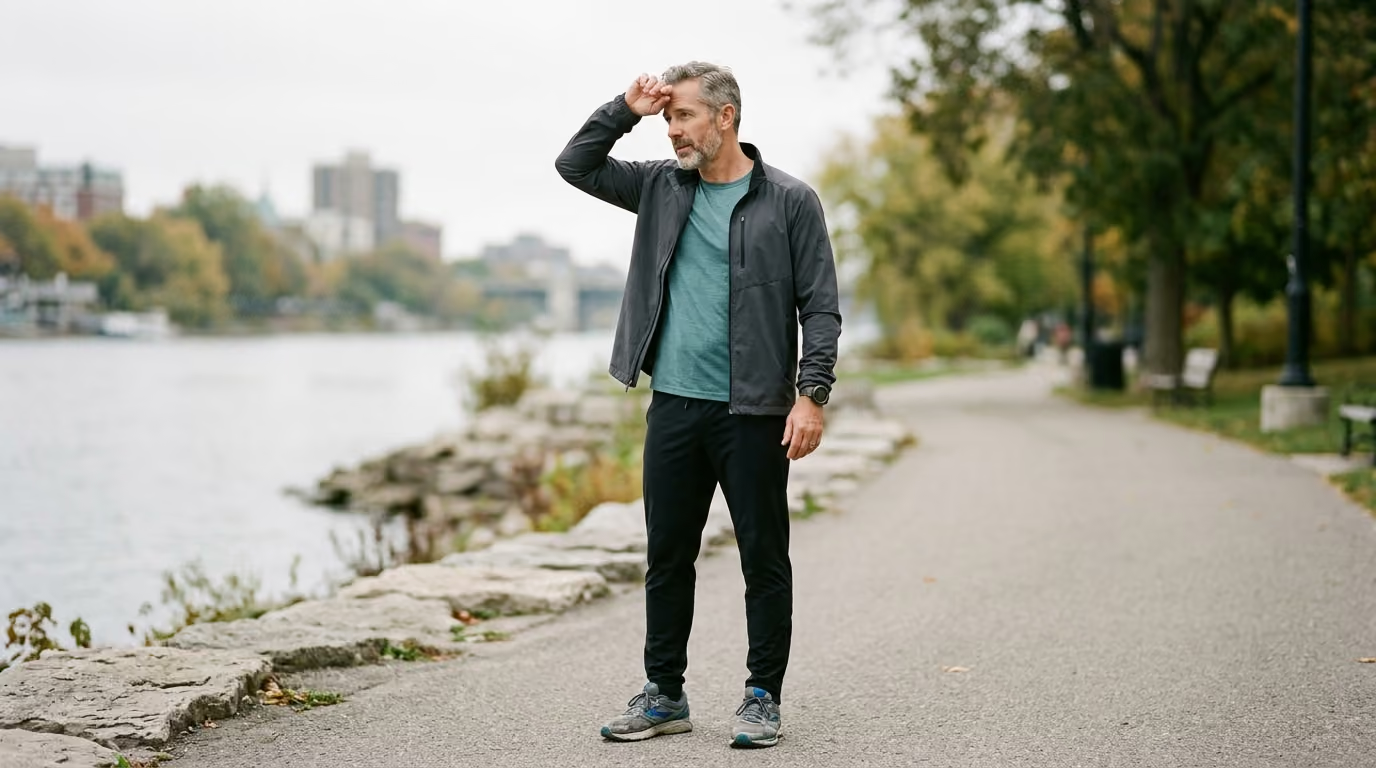

Longevity practices encompass fasting, thermal exposure, breathwork, and recovery technology, balancing clinical evidence and healthspan outcomes against.





Longevity practices are structured behavioral, thermal, nutritional, and technological interventions designed to preserve biological function and delay age-related decline. They are not guaranteed methods for extending human lifespan, nor do they replace primary medical care, foundational nutrition, or consistent sleep.
The modern performance landscape presents dozens of competing protocols, ranging from multi-day fasts and cold plunges to photobiomodulation panels and wearable recovery trackers. Evaluating these options requires understanding the difference between transient physiological changes and long-term health outcomes. It also demands an honest accounting of opportunity cost.
Every hour spent managing an elaborate recovery protocol is an hour taken from sleep, structured exercise, deep work, or family life. This guide evaluates the evidence, benefits, risks, and practical trade-offs of the most common longevity practices.
To evaluate any longevity protocol, you must first define what success looks like. The broader health conversation frequently conflates three distinct metrics: lifespan, healthspan, and performance-span.
Lifespan is the total number of years an individual lives. Healthspan represents the period of life spent free from chronic disease, debilitating pain, and functional disability.
Performance-span is an executive-specific concept. It describes the duration of your life during which you can maintain high cognitive output, emotional stability, physical vigor, and professional capability. An intervention might improve short-term performance without extending lifespan. Conversely, a severe longevity protocol that impairs daytime energy compromises performance-span in pursuit of an unproven theoretical benefit.
To evaluate scientific claims accurately, we use a five-tier evidence hierarchy:
A common pitfall is treating Tier 4 mechanistic data as equivalent to Tier 1 clinical proof. Demonstrating that an intervention activates heat-shock proteins, stimulates autophagy in rodents, or transiently spikes heart-rate variability does not prove it will extend human survival.
Furthermore, you must separate acute physiological reactions from chronic adaptations. An acute reaction is the temporary stress response occurring during an ice bath or sauna session. A chronic adaptation is the permanent, systemic shift in vascular compliance, metabolic health, or muscular capacity that persists over months and years. Exploring evidence-based strategies for healthy aging and longevity requires holding every protocol to this standard of proof.
Intermittent fasting encompasses various protocols, including alternate-day fasting, periodic multi-day fasts, and daily time-restricted eating such as a 16:8 schedule. The primary biological mechanisms attributed to fasting include improved insulin sensitivity, ketone production, cellular stress resistance, and the activation of autophagy pathways.
During extended periods without food, the body shifts from glucose utilization to fatty acid oxidation and ketone production. However, human clinical trials demonstrate that fasting is not inherently superior to standard, calorie-matched energy restriction. When total caloric intake and protein are held constant, intermittent fasting produces cardiometabolic, weight loss, and glycemic improvements that mirror traditional continuous energy restriction.
The primary clinical advantage of time-restricted eating is behavioral compliance. For busy professionals, setting a clear daily eating window eliminates late-night snacking, reduces total daily caloric intake, and simplifies meal planning without requiring meticulous food logging.
Direct human data proving that fasting extends human lifespan does not exist, as lifetime randomized trials are practically impossible in humans. The strongest human evidence supports fasting as an effective tool for body weight regulation and glycemic control.
A daily 12-hour overnight fast appears safe, sustainable, and broadly beneficial across diverse populations without presenting measurable risks. More intensive protocols, such as multi-day fasts or strict four-hour feeding windows, carry substantial trade-offs.
For aging professionals, protecting lean skeletal muscle mass is a foundational priority. Aggressive fasting often leads to inadequate daily protein distribution, accelerating sarcopenia. Research examining aging populations urges caution before applying prolonged fasting protocols to older adults.
The real cost of extreme fasting is rarely measured in hunger alone. It is measured in missed social meals, compromised cognitive output during high-stakes work, and under-fueled resistance training sessions.
If an aggressive fasting protocol causes you to skip the post-workout protein needed for muscle synthesis, the net longevity effect may be negative. For most high-performing professionals, a moderate 12-hour or 14-hour overnight eating window captures the behavioral and digestive benefits of fasting while protecting lean tissue and daytime cognitive capacity.
Sauna bathing and structured heat exposure subject the body to controlled thermal stress. Exposure to ambient temperatures between 80 and 100 degrees Celsius elevates skin and core temperatures, induces heavy sweating, and increases heart rate to levels comparable to moderate aerobic exercise.
The physiological response includes peripheral vasodilation, enhanced cardiac output, improved endothelial function, and the upregulation of heat-shock proteins. Heat-shock proteins act as molecular chaperones, assisting in protein folding and cellular repair under conditions of metabolic stress.
Sauna use carries some of the strongest observational longevity data in preventative medicine. Prospective cohort studies from Finland have followed thousands of regular sauna users over decades. The data reveals a clear dose-response relationship: individuals using a sauna four to seven times per week demonstrated significantly lower risks of sudden cardiac death, fatal coronary disease, stroke, and all-cause mortality compared to once-weekly users.
While Finnish cohort findings are compelling, they remain observational. Regular sauna users in these cohorts may share confounding lifestyle characteristics. They may have higher disposable incomes, lower occupational stress, greater physical activity, and stronger social connections.
Sauna bathing in Finland is frequently a relaxing, communal ritual performed after physical labor or exercise. Therefore, heat exposure must be classified as a powerful healthspan adjunct rather than a standalone medical cure.
Saunas offer high value when used intentionally, but logistical burdens can rapidly erode their utility.
If you enjoy the practice and have easy access, three to four weekly sessions of 15 to 20 minutes represent a defensible longevity habit. If access is difficult, the cardiovascular benefits can be largely replicated through standard zone 2 aerobic conditioning.
Cold-water immersion and cryotherapy subject the body to rapid cooling, triggering an immediate sympathetic nervous system response. The skin experiences sudden vasoconstriction, shunting blood to the core, while heart rate, respiration, and blood pressure rise sharply.
Cold exposure is widely marketed as a tool for increasing brown adipose tissue, burning fat, boosting systemic immunity, building mental resilience, and extending lifespan. However, the scientific evidence supporting these broader claims remains preliminary and limited.
Recent systematic reviews highlight that while cold-water immersion produces measurable shifts in inflammatory markers and short-term heart-rate variability, high-quality randomized trials confirming long-term health improvements are sparse. Cold-water immersion does not have human prospective cohort data demonstrating reduced all-cause mortality. Its primary clinical and athletic utility lies in acute recovery and the management of perceived muscle soreness.
Cold-water immersion is effective for reducing the sensation of delayed-onset muscle soreness within 24 to 48 hours following strenuous exertion. For an athlete competing in a multi-day tournament, cold plunging provides immediate functional utility.
However, for an executive training for long-term strength, bone density, and muscle mass, routine post-workout cold water immersion can be counterproductive. Cold immersion immediately following resistance training blunts the intracellular signaling pathways, specifically the mTOR pathway, that drive muscular hypertrophy and vascular adaptation.
The opportunity cost of cold exposure is often psychological. The intense discomfort can foster a false belief that suffering equals biological progress. If an executive spends mental energy enduring freezing water while ignoring a chronic sleep deficit or unmanaged hypertension, their priorities have inverted. Cold exposure should be treated as an optional recovery and focus tool, not a mandatory pillar of longevity.
Breathwork and meditation operate directly on the central and autonomic nervous systems. Unlike thermal or nutritional stressors, these practices do not rely on physical hormesis. Instead, they downregulate chronic sympathetic overactivation, lowering circulating catecholamines and restoring vagal tone.
Slow, diaphragmatic breathwork, particularly protocols incorporating extended exhalations or paced respiration at approximately six breaths per minute, stimulates the baroreflex and enhances parasympathetic dominance. Meditation practices, including focused attention, open monitoring, and mindfulness-based stress reduction, alter neural processing in the amygdala and prefrontal cortex. These practices reduce rumination, sharpen attentional control, and modify the psychological appraisal of workplace stress.
The connection between chronic psychological stress and accelerated biological aging is well established. Sustained sympathetic activation drives systemic low-grade inflammation, elevates resting blood pressure, disrupts endothelial function, and impairs metabolic control.
Meta-analyses of randomized controlled trials demonstrate that slow breathwork protocols produce meaningful reductions in self-reported anxiety, perceived stress, and depressive symptoms. Similarly, comprehensive reviews of meditation trials reveal significant decreases in physiological stress markers, including resting systolic blood pressure, evening salivary cortisol, resting heart rate, and circulating C-reactive protein.
From an opportunity-cost perspective, breathwork and meditation are among the most efficient practices available. A five-minute slow-breathing session requires zero equipment, costs nothing, and can be executed at an executive desk between high-stakes meetings or on an airplane tarmac.
These practices do not displace exercise or sleep. In fact, by downregulating evening cognitive arousal, they directly improve sleep onset latency and sleep quality. Integrating structured mindfulness supports both immediate cognitive clarity and daily focus and long-term cardiovascular resilience.
Photobiomodulation uses specific wavelengths of red and near-infrared light, typically ranging from 630 to 850 nanometers, to penetrate cutaneous and subcutaneous tissues. The proposed mechanism centers on cytochrome c oxidase within the mitochondrial respiratory chain. Absorption of light photons is hypothesized to enhance electron transport, increase adenosine triphosphate synthesis, reduce oxidative stress, and accelerate local tissue repair.
Commercial manufacturers frequently claim that whole-body red-light panels reverse skin aging, boost systemic metabolism, cure chronic fatigue, and extend human lifespan. However, the clinical reality is far more modest.
Systematic reviews evaluate the broad evidence base for photobiomodulation in athletic performance and recovery as low-to-moderate in quality. The primary research is often limited by small sample sizes, lack of standardized dosimetric parameters, and varying device irradiances.
Targeted photobiomodulation demonstrates defensible, clinically validated utility in specific rehabilitation contexts. Systematic reviews confirm that red and near-infrared light can reduce pain in conditions like knee osteoarthritis, tendinopathies, and chronic joint dysfunction.
Emerging research also examines photobiomodulation for sleep quality. A recent systematic review identified modest improvements in subjective sleep scores following light therapy, though investigators noted wide confidence intervals and urged caution pending larger trials.
The modern recovery market includes numerous high-tech devices, each requiring realistic appraisal.
Recovery technologies should be viewed as targeted interventions for specific symptoms, such as joint pain or travel-induced edema, rather than essential longevity drivers. Allocating large budgets to consumer gadgets while neglecting fundamental health habits represents an inefficient use of resources.
Every health-related decision involves an opportunity cost. Time spent researching, purchasing, setting up, and executing non-essential recovery protocols is time taken from proven healthspan pillars.
The foundational comparator for any longevity practice is physical exercise. Physical activity has the strongest, most comprehensive body of evidence in preventative medicine, backed by Tier 1 clinical and epidemiological data.
The World Health Organization physical activity guidelines establish the baseline requirements for adults:
Meeting these targets produces dramatic, reproducible reductions in all-cause mortality, cardiovascular events, metabolic dysfunction, and cognitive decline. No cold tub, red-light panel, or fasting schedule can match the multisystem adaptations produced by regular muscular contraction and cardiovascular exertion.
To structure your weekly schedule efficiently, longevity practices should be categorized by their evidence tier, time commitment, and opportunity-cost profile.
The fundamental rule of executive health is simple: never let a tertiary practice displace a foundational pillar. A 20-minute sauna session after lifting weights is an excellent adjunctive habit. That same 20-minute sauna session used to replace a missed strength workout represents an ineffective trade-off.
Corporate demands, international travel, and irregular calendars require a robust, flexible approach to health maintenance. Attempting an inflexible eight-step longevity routine during a deal closing or transatlantic flight creates unnecessary friction, driving up stress hormones and compromising recovery.
Executives need a lean decision framework that maintains physiological baselines during demanding business cycles. Understanding the connection between stress resilience and sustainable performance allows you to adapt health protocols to demanding business cycles rather than abandoning them entirely.
Review these realistic corporate scenarios to evaluate whether your current habits match your actual physiological needs:
Before adopting any new health intervention, run it through this operational filter:
Applying this structured approach ensures that you invest time and capital only into interventions that deliver measurable, meaningful improvements in your performance-span.
The scientific study of human longevity faces inherent structural challenges. Humans live long, complex, and unconfined lives, making lifetime randomized controlled trials of lifestyle interventions virtually impossible. Most longevity claims rely on intermediate surrogate markers, animal models, or retrospective epidemiological data.
Understanding these scientific limitations prevents high-performing professionals from falling for marketing claims disguised as medical consensus.
A major limitation in longevity research is the reliance on surrogate biomarkers. A study may show that a supplement, thermal protocol, or dietary pattern reduces an inflammatory cytokine like interleukin-6, transiently raises growth hormone, or improves an epigenetic methylation score.
While these changes are mechanistically interesting, they do not prove a reduction in future heart attacks, strokes, or all-cause mortality. Biological systems are complex and redundant. Lowering a single inflammatory marker does not automatically translate into a longer life, particularly if the intervention introduces unmeasured systemic stress.
Much of the data supporting practices like regular sauna bathing, Mediterranean dietary patterns, and outdoor physical activity comes from observational cohorts. These studies are prone to the healthy user bias.
Individuals who consistently use saunas, take specific nutrients, or practice mindfulness are often wealthier, more health-conscious, less likely to smoke, and more likely to have access to top-tier healthcare. Statistical adjustments can attempt to control for these variables, but residual confounding factors frequently inflate the apparent benefits of the lifestyle practice under review.
In commercial recovery technologies, such as red-light therapy panels, pneumatic compression units, and cryo-cabins, device specifications vary substantially. A clinical trial showing positive results for photobiomodulation may use a medical-grade laser with exact, high-power irradiance applied directly to the skin.
A consumer purchasing a low-cost LED panel cannot assume they will achieve the same biological effect. The wide variance in wavelength, power output, distance, and treatment duration across commercial devices makes universal efficacy claims scientifically inaccurate.
Reviewing the current body of longevity and healthspan research reminds us that human biology responds best to strong, consistent, foundational habits rather than short-term technological workarounds.
No. Cold exposure triggers sympathetic nervous system activation, elevating heart rate and blood pressure through peripheral vasoconstriction. However, it does not involve the cyclical muscular contractions, mechanical work, shear stress on the vascular endothelium, or metabolic turnover that drive true cardiovascular adaptations. Cold immersion provides acute alertness and temporary pain relief, but it does not build aerobic capacity or mitochondrial density.
For most healthy adults, a 16:8 feeding schedule is safe if total daily caloric and micronutrient needs are met. However, the primary risk is inadequate daily protein intake and sub-optimal protein distribution. Skeletal muscle protein synthesis requires regular intake of essential amino acids throughout the day. If compressing your meals into an eight-hour window causes you to miss your protein targets or compromises your strength training, shifting to a 12-hour or 14-hour window is more effective for long-term healthspan.
Look at validated functional endpoints rather than proprietary wearable readiness scores. Positive indicators include consistent progress in your strength and cardiovascular training, stable daytime energy, resting blood pressure under 120/80 mmHg, rapid sleep onset, and uninterrupted nocturnal rest. If your protocols leave you chronically fatigued, anxious about your metrics, or struggling to recover from basic workouts, your regimen is adding unnecessary stress.
Prioritize based on evidence and clinical targets. If your goal is cardiovascular health, stress management, and relaxation, a sauna has stronger observational support and clear physiological parallels to aerobic conditioning. If you are managing localized joint pain, tendonitis, or superficial tissue healing, a targeted, high-irradiance red-light device may provide focused pain relief. Neither device should be purchased before establishing consistent physical exercise, a balanced diet, and structured sleep and recovery routines.
Stay connected for research and practical guidance on executive performance, energy, focus, sleep, recovery and longevity. Ideas built for people who want to stay sharp, capable and effective for the long run.


Build habits and systems that support clear thinking, steady energy and long term capacity throughout a demanding career.
explore the Blog