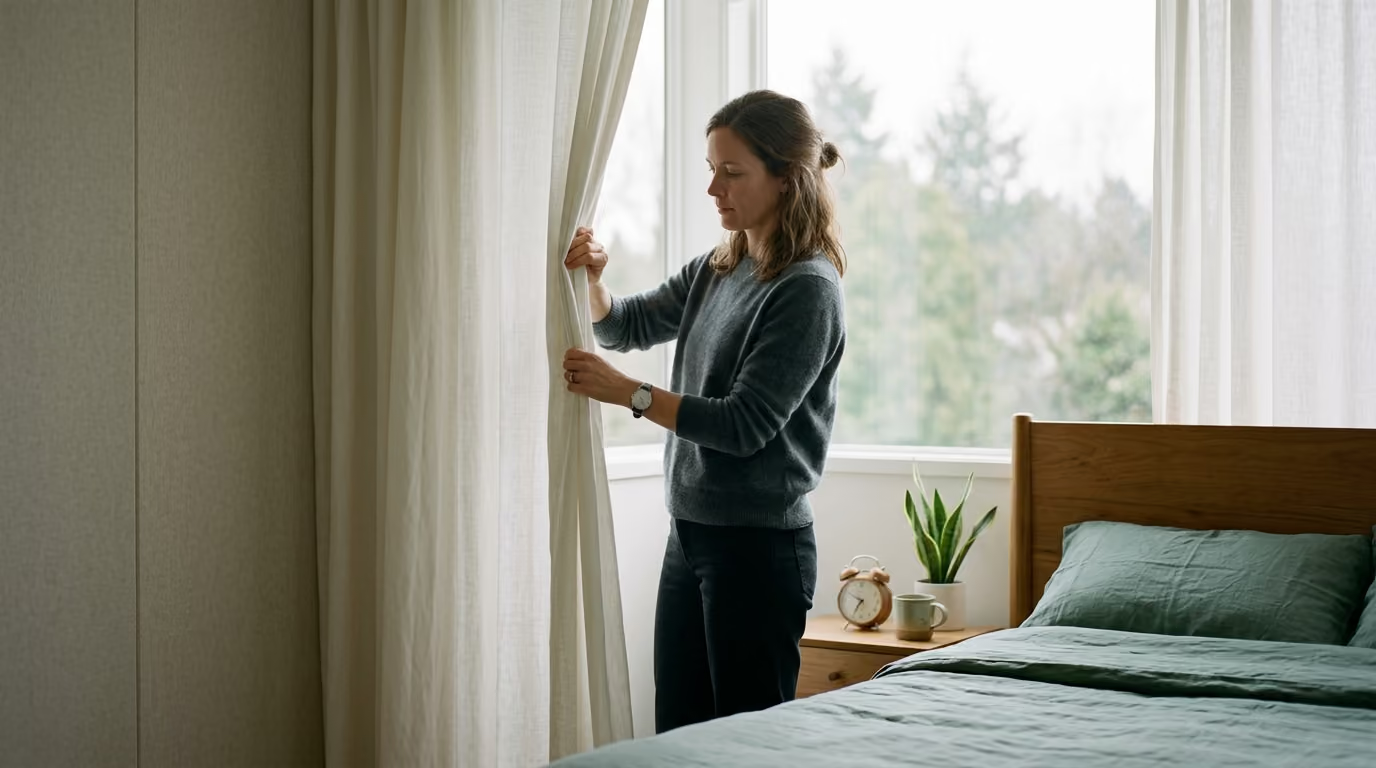

Waking up exhausted after full nights in bed often stems from unoptimized room temperature, light leaks, poor acoustics, and inadequate bedroom ventilation.





Why do you wake up exhausted even after spending eight full hours in bed? Many professionals search for answers in supplements, morning routines, or sleep tracking devices. Yet the primary barrier to restorative rest often sits in the physical room around you.
A high-performance bedroom is not an exercise in luxury interior design. It is a precise physiological tool designed to lower your core temperature, protect your nervous system from micro-arousals, and maintain stable air quality throughout the night. When engineered correctly, your sleep environment accelerates sleep onset, protects deep sleep architecture, and ensures that every hour in bed translates directly into cognitive recovery.
This guide provides a comprehensive, research-backed blueprint for building an elite sleeping environment. We will examine the six critical domains of bedroom engineering: temperature, darkness, acoustics, ventilation, physical comfort, and psychological conditioning.
Sleep is not a uniform state of unconsciousness. It is an active, highly organized sequence of neurological cycles. Over a typical night, your brain moves through alternating stages of light sleep, slow-wave sleep, and rapid eye movement (REM) sleep. Slow-wave sleep supports physical restoration, cellular repair, and growth hormone secretion. REM sleep facilitates memory consolidation, emotional processing, and executive decision-making capacity.
The physical environment serves as the gatekeeper for these delicate transitions. When environmental stimuli cross sensory thresholds, the central nervous system triggers brief autonomic arousals. These micro-arousals may not fully wake you up, but they immediately fragment your sleep architecture. They shift you out of restorative deep sleep into lighter stages, elevating heart rate and morning cortisol.
Research led by Caddick and colleagues identified that an optimal sleep environment requires controlling six interacting physical domains: temperature, darkness, sound, air quality, physical comfort, and psychological ease. These variables work synergistically. A room that is perfectly dark but poorly ventilated will still produce restless sleep. A silent room with an unsupportive, heat-trapping mattress will still cause frequent postural shifts and sleep fragmentation.
Effective sleep engineering focuses on control without excessive complexity. By systematically eliminating disruptive stimuli, you allow your natural circadian biology to execute its recovery protocols without interference. For professionals managing high cognitive loads, exploring our comprehensive sleep and recovery resources provides the foundation for sustaining elite output.
Thermoregulation is the biological catalyst for sleep initiation. As your natural circadian bedtime approaches, your body increases peripheral blood flow to your hands and feet to dump heat. This process lowers your internal core body temperature by approximately 1°C. If your sleeping environment prevents this heat loss, sleep latency increases, and slow-wave sleep is compromised.
A broad scientific review identified an acceptable ambient temperature range between 17°C and 28°C (62.6°F to 82.4°F), depending on humidity and bedding insulation. However, public health agencies recommend a tighter window for restorative sleep. The Centers for Disease Control and Prevention (CDC) recommends a room temperature between 15.5°C and 19.4°C (60°F to 67°F). Guidance from the National Institute for Occupational Safety and Health (NIOSH) suggests a baseline of 18.3°C to 20.0°C (65°F to 68°F).
Ambient room temperature is only one part of the thermal equation. The true physiological interface is the bed microclimate, which is the layer of air trapped between your skin, your sleepwear, and your sheets. A bedroom set to 18°C can still trap excessive heat if you sleep on a dense, non-breathable foam mattress under a heavy synthetic duvet.
Conversely, older adults often require slightly warmer environments. Clinical field studies show that older individuals achieve their highest sleep efficiency between 20°C and 24°C (68°F to 75.2°F). When temperatures rise just 5°C above this range, older adults experience a 5% to 10% decline in objective sleep efficiency. This variance highlights why universal temperature rules must be personalized based on age, body composition, and bedding choices.
To construct a responsive thermal environment, treat your bed as an adaptable climate control system:
Light is the primary environmental cue regulating the human master circadian clock. Specialized intrinsically photosensitive retinal ganglion cells detect ambient light and signal the suprachiasmatic nucleus. In the presence of short-wavelength blue and bright white light, the brain suppresses melatonin production and elevates alert state pathways.
A high-performance bedroom must achieve complete, uninterrupted darkness during the entire sleep opportunity. Exposure to even modest levels of artificial light during the night disrupts sleep depth and increases the risk of premature waking. Darkness serves two distinct purposes: it stabilizes biological night signaling, and it eliminates visual stimuli that trigger cognitive engagement during brief nocturnal awakenings.
The scientific consensus confirms that complete darkness provides the optimal baseline for deep sleep. Achieving this requires a layered defense against external and internal light sources:
While complete darkness is ideal for sleep physiology, total absence of light can create psychological anxiety or fall hazards if you wake during the night. The solution is not overhead lighting, which immediately resets your circadian phase.
Instead, install motion-activated, floor-level pathway lighting in hallways and bathrooms. These fixtures should utilize very dim, long-wavelength amber or red light below 5 lux. Low-wavelength light illuminates your path safely without activating the retinal ganglion cells that suppress melatonin.
Unpredictable sound is one of the most common causes of sleep fragmentation. Noise impacts the nervous system not only through raw decibel levels, but through the contrast between ambient silence and sudden acoustic peaks. A consistent, low-level sound is far less disruptive than an intermittent, unpredictable noise like a closing door or passing siren.
World Health Organization (WHO) Night Noise Guidelines establish clear thresholds for residential sleep protection. Continuous indoor equivalent sound levels should not exceed 30 dBA to prevent adverse sleep impacts. Furthermore, individual noise events should remain below 45 dBA to prevent micro-arousals and cardiovascular stress responses. Caddick and colleagues similarly recommended maintaining total ambient bedroom noise below 35 dB.
Managing bedroom acoustics requires a structured hierarchy that addresses sound from its origin to your ear canal:
First, eliminate sound at the source by enabling silent modes on personal electronics, servicing vibrating HVAC units, and silencing household appliances. Second, block the transmission path by sealing gaps in bedroom doors and upgrading to double-pane acoustic windows. Third, absorb internal room reflections by adding dense wool area rugs, upholstered headboards, and heavy fabrics to eliminate flutter echoes.
When environmental noise cannot be physically blocked, sound masking provides an effective buffer. A dedicated white-noise or pink-noise machine generates a uniform spectrum of sound frequencies. This steady acoustic layer raises the background noise floor, reducing the relative prominence of sudden external sounds.
A sound masking device must never be played at excessive volumes. Setting a noise machine above 60 dBA introduces an acoustic stressor that can itself degrade sleep depth. Place the sound machine between your bed and the noise source, keeping the output at a soft, continuous level around 40 to 45 dBA.
Air quality is frequently overlooked in executive bedroom design. A room can appear spotless, quiet, and cool while harboring dangerous levels of carbon dioxide, particulate matter, and chemical pollutants. Because humans spend seven to nine continuous hours breathing in a closed bedroom, air exchange rates heavily dictate morning mental clarity.
In an occupied bedroom with closed doors and windows, carbon dioxide ($CO_2$) exhaled by sleepers accumulates rapidly. Outdoor air typically registers between 400 and 450 ppm of $CO_2$. In an unventilated bedroom, concentrations regularly climb above 1,500 to 2,500 ppm by morning.
Controlled clinical trials demonstrate the direct physiological cost of elevated bedroom $CO_2$:
To protect cognitive performance, engineer your bedroom ventilation to keep continuous overnight $CO_2$ levels below 850 ppm, and strictly prevent spikes above 1,000 ppm.
According to the Environmental Protection Agency (EPA), managing indoor air requires a strict three-tier approach: source control, ventilation, and supplemental filtration.
First, eliminate pollutant sources inside the sleeping area. Remove scented candles, synthetic air fresheners, damp textiles, and unsealed composite wood furniture that off-gasses volatile organic compounds (VOCs). Keep pets and their dander out of the sleeping space if you experience allergic sensitivities.
Second, ensure consistent fresh air exchange. Sleep with the bedroom door open to connect the room volume to the larger house, or crack a window slightly when outdoor air is clean and quiet. If your home has a central mechanical HVAC system, set the fan to run continuously or install an energy recovery ventilator (ERV) to introduce balanced, filtered outdoor air.
Third, deploy high-efficiency particulate air (HEPA) filtration. A standalone HEPA air purifier effectively captures airborne dust, pollen, mold spores, and fine particulate matter ($PM_{2.5}$). However, remember that an air purifier does not remove carbon dioxide. Filtration must always be paired with active outdoor air exchange.
Maintain relative indoor humidity between 30% and 50%. Relative humidity exceeding 60% provides breeding conditions for mold spores and dust mites. Conversely, dry air below 30% irritates upper respiratory membranes, leading to mouth breathing, snoring, and fragmented rest. Washing bedding every one to two weeks in hot water (above 55°C / 130°F) eliminates allergen reservoirs and supports airway stability.
The bed is the immediate mechanical interface supporting your musculoskeletal system for one-third of your life. The objective of mattress and pillow selection is to maintain neutral spinal alignment, minimize localized pressure points, and isolate partner movement without trapping metabolic heat.
A systematic review published in musculoskeletal medicine demonstrated that medium-firm mattresses consistently optimize subjective comfort, sleep quality, and clinical spinal alignment. Newer clinical trials indicate that medium-firm surfaces promote more stable sleep stage continuity, reduce sleep onset latency, and increase sleep-spindle density compared to excessively hard or soft alternatives.
To evaluate your sleep surface, assess these critical engineering characteristics:
Pillow height must correspond precisely to your primary sleeping posture. Side sleepers require a thicker pillow profile to fill the gap between the lateral shoulder edge and the cervical spine. Back sleepers need a moderate, contoured profile that supports the neck without tilting the head forward. Stomach sleeping generally places asymmetric torque on the cervical spine and requires an ultra-low profile or no pillow at all.
Select bedding fabrics based on tactile friction and moisture management. Tightly woven long-staple cotton, French linen, or bamboo-derived lyocell offer exceptional breathability and soft surface textures. Avoid scratchy synthetic polyesters, heavily scented laundry detergents, and plastic mattress protectors that disrupt skin comfort and trap moisture.
Your sleep environment is both a physical structure and a powerful psychological conditioned stimulus. Under normal conditions, walking into a dedicated bedroom should immediately trigger an automatic downshift in autonomic arousal. However, when the bedroom is routinely used for work, high-stakes communication, or emotional conflict, the brain forms a strong conditioned association between the room and acute alertness.
Clinical insomnia protocols established by the American Academy of Sleep Medicine (AASM) place heavy emphasis on stimulus control therapy. The objective is simple: extinguish the learned association between the bed and wakeful arousal, and rebuild a direct conditioned pathway between the bed and rapid sleep initiation.
Executing stimulus control requires strict spatial and temporal boundaries around your sleeping area:
If you find yourself lying awake in bed for more than 20 minutes unable to sleep, get out of bed immediately. Remaining in bed while tossing, turning, and checking the clock strongly reinforces the neural association between your mattress and mental frustration.
Move to a dimly lit room nearby. Engage in a calming, non-stimulating activity such as reading a physical book under warm light, listening to quiet audio, or practicing gentle breathwork. Return to the bedroom only when physiological sleepiness returns.
For leaders managing intense professional demands, combining physical stimulus control with targeted cognitive and focus strategies ensures that mental hyper-arousal does not compromise overnight biological recovery.
I remember landing at Heathrow after a brutal overnight flight from New York. I had a board meeting in three hours. The standard advice of getting eight hours of sleep felt like a cruel joke. That was the exact moment I realized our readers do not need perfect scenarios. They need triage protocols. They need to know what the science says about recovering cognitive function when you only managed three hours of terrible sleep at high altitude.
In the corporate arena, executives frequently confront environments they cannot control: dry hotel rooms, noisy international properties, unstable flight schedules, and emergency overnight deliverables. Under these high-pressure constraints, aiming for an ideal bedroom setup is impossible. What matters is executing rapid, high-impact environmental triage.
When operating away from your primary residence, apply this rapid four-step environment intervention within five minutes of entering any hotel room:
When time is limited, maintaining strict control over environmental temperature and sensory inputs protects whatever sleep cycles you have left. To dive deeper into sustaining executive health across high-friction periods, consult our executive performance frameworks.
Building a high-performance sleep environment should not be done through chaotic, simultaneous adjustments. If you change your mattress, drop your thermostat by five degrees, purchase an air purifier, and start taking sleep supplements all on the same day, you cannot identify what caused your sleep to improve or deteriorate.
Take a disciplined, diagnostic approach by testing one variable at a time over a multi-week progression.
Before purchasing expensive hardware, log your baseline sleep metrics for seven continuous days. Record your approximate sleep onset latency, nocturnal awakenings, morning mental clarity, ambient room temperature, and subjective rest scores.
If you utilize an indoor environmental monitor, track overnight ambient temperature, relative humidity, and carbon dioxide curves. Look for obvious correlations. Do your nighttime awakenings cluster at times when bedroom temperature climbs above 21°C? Does your morning brain fog correspond to nights where closed doors drove $CO_2$ past 1,400 ppm?
Implement environmental upgrades in a structured, sequential order:
While optimizing your sleeping environment produces profound improvements in sleep architecture, it is essential to understand what the research does and does not support.
First, carbon dioxide is a reliable marker of indoor ventilation adequacy, but levels between 1,000 and 1,500 ppm are not acutely toxic in a medical sense. These levels simply reflect stale air and insufficient outdoor exchange that subtly fragment sleep. You do not need to panic over minor temporary fluctuations.
Second, ambient temperature optimization exhibits diminishing returns. Forcing your bedroom down to freezing temperatures will not make you sleep infinitely deeper. Excessive cold causes shivering, peripheral vasoconstriction, muscle stiffness, and elevated stress responses that fragment rest. The goal is mild coolness and thermal neutrality, not extreme cold exposure.
Third, consumer sleep trackers and smartwatches provide helpful estimates of total sleep duration and wakefulness, but their sleep-staging algorithms are not equivalent to clinical polysomnography (PSG). Do not allow arbitrary sleep scores from consumer apps to induce sleep anxiety.
Finally, bedroom engineering cannot cure underlying clinical sleep pathologies. If you suffer from loud habitual snoring, gasping for air, witnessed breathing pauses, severe restless legs, or chronic clinical insomnia, no mattress, blackout shade, or air filter will resolve the condition. These symptoms require formal medical evaluation by a board-certified sleep specialist. Environmental optimization supports healthy biology, but it does not replace medical treatment for sleep disorders. Managing chronic stress also remains paramount; explore our guides on stress and burnout mitigation to address internal drivers of sleep disruption.
High-performing professionals frequently find themselves living in rented corporate housing, temporary urban apartments, or high-density buildings where structural renovations are impossible. You do not need to own a home or undertake extensive remodeling to build an exceptional sleeping space.
In rented properties, utilize non-damaging temporary solutions. Temporary pleated blackout paper shades stick directly to window frames using light adhesive, providing total darkness without requiring drill holes. If window glass radiates intense summer heat, apply static-cling thermal window films that peel off cleanly upon move-out.
In shared living spaces or urban apartments adjacent to high-traffic streets, focus your budget on localized micro-interventions rather than room-wide construction:
These targeted interventions allow you to control your immediate sensory zone regardless of broader building constraints. For a complete collection of executive health blueprints, visit our long-form resource library.
Transforming your sleep environment requires practical execution. Use this step-by-step checklist to systematically upgrade your bedroom over the next seven days:
Stay connected for research and practical guidance on executive performance, energy, focus, sleep, recovery and longevity. Ideas built for people who want to stay sharp, capable and effective for the long run.


Build habits and systems that support clear thinking, steady energy and long term capacity throughout a demanding career.
explore the Blog