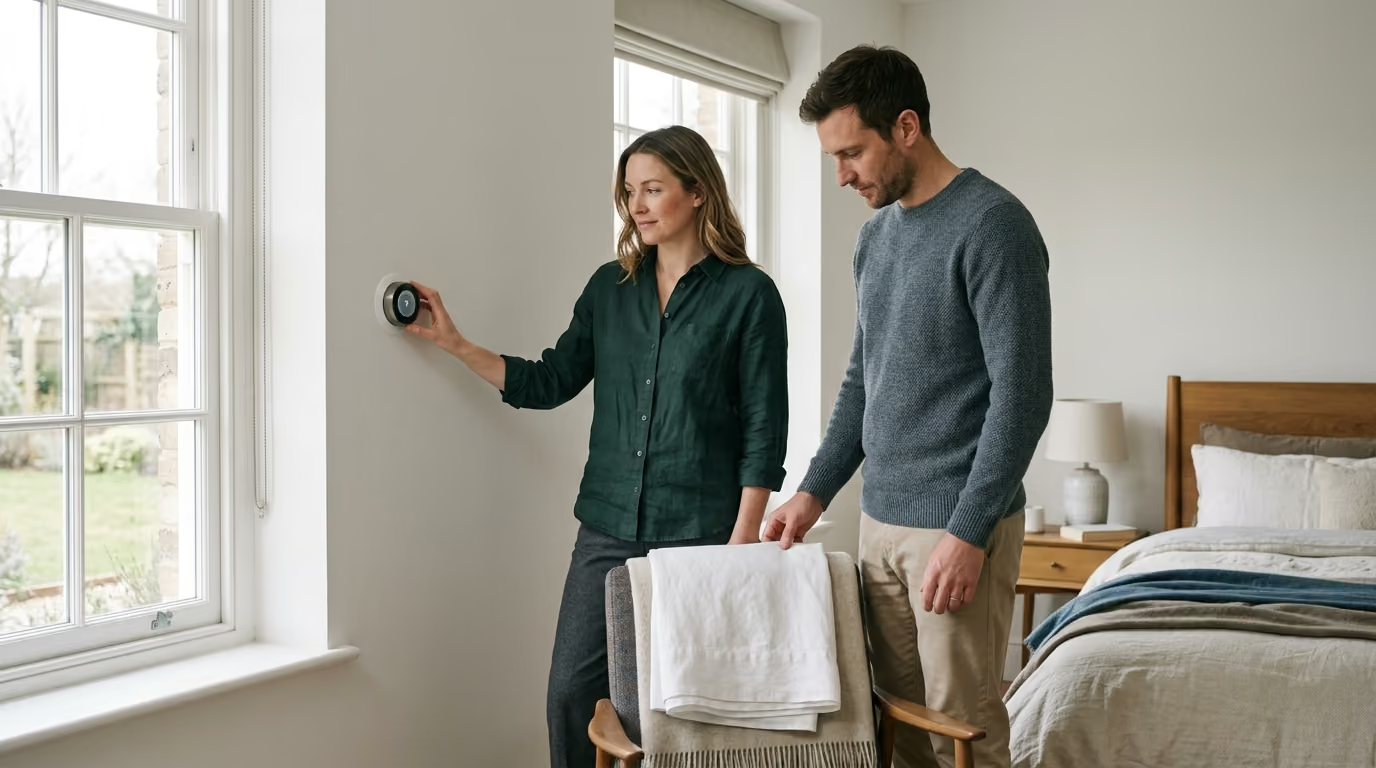

Waking up overheated or shivering disrupts deep rest, but optimizing bedroom microclimates, thermoregulation, and layered bedding restores restorative.





Thermal regulation during sleep is not a simple matter of comfort or setting a thermostat to a generic number. It is a biological control mechanism that dictates how quickly you fall asleep, how much deep and rapid eye movement sleep you achieve, and how completely your autonomic nervous system recovers overnight.
Many professionals treat bedroom temperature as a minor preference. They sleep in rooms that are either excessively warm from trapped microclimates or excessively cold from aggressive air conditioning.
A functional thermal environment separates room air temperature from the bed microclimate. It coordinates core temperature reduction with peripheral heat dissipation.
This guide examines the clinical and physiological research on human thermoregulation during sleep. It translates those mechanisms into practical systems for home environments, high-pressure travel schedules, and demanding recovery requirements.
Human sleep and body temperature follow linked circadian rhythms governed by the master circadian clock in the suprachiasmatic nucleus. Under normal conditions, your core body temperature begins to drop two to three hours before your habitual bedtime. This decline coincides with the evening rise in endogenous melatonin secretion. The drop in core temperature is not passive. It is driven by an active redistribution of heat from internal organs to the skin surface, particularly through the hands and feet.
To understand this mechanism, you must distinguish internal core temperature from peripheral skin temperature. Core temperature represents the thermal state of vital organs in the brain and trunk. Skin temperature reflects the thermal interface between your body and the external environment. Skin temperature changes rapidly in response to room air velocity, ambient temperature, clothing insulation, and vascular tone.
The brain monitors skin temperature continuously to assess whether the surrounding environment is safe and hospitable for sleep. When peripheral blood vessels in the hands and feet dilate, a process known as distal vasodilation, warm blood from the core moves to the skin surface. This blood radiates heat into the surrounding air.
As a result, your skin temperature rises while your internal core temperature drops. This distal-to-proximal temperature gradient serves as one of the strongest physiological signals for rapid sleep initiation.
Clinical trials show that manipulating skin temperature directly influences how fast you fall asleep. In one experimental study, warming proximal skin by just 0.78 degrees Celsius accelerated sleep onset latency by 26 percent, reducing the time to fall asleep by over three minutes.
This highlights an important distinction: your core needs to lose heat, but your skin needs to be warm enough to permit that vascular heat transfer. If your hands and feet are vasoconstricted and freezing, internal heat remains trapped within the core. This delay disrupts your intended focus and cognition the following morning by delaying the entire sleep cycle.
Once sleep begins, your body continues to interact dynamically with its thermal environment. During non-rapid eye movement (NREM) sleep, particularly stage three slow-wave sleep, the body maintains homeostatic thermoregulation, albeit at a lower core temperature set point. During this deep stage, growth hormone is released, metabolic waste is cleared from the brain, and physical recovery takes place.
If the room or bedding is too hot, the body must expend metabolic effort through sweating and restless movements to dump heat. This breaks the continuity of slow-wave sleep.
During rapid eye movement (REM) sleep, physiological thermoregulation becomes largely inactive. The human body temporarily loses its ability to sweat or shiver efficiently in response to ambient thermal stress. If the surrounding room or bed microclimate drifts outside your thermoneutral zone during REM periods, your brain cannot easily compensate through autonomic adjustments.
Instead, it forces a transient micro-arousal or a full awakening to prompt behavioral adjustments, such as kicking off a blanket or pulling up a sheet. These disruptions fracture overall sleep architecture and impair executive recovery.
Systematic research shows clear stage-specific sensitivities. In a controlled trial using temperature-regulated mattress systems, applying cooling during the first half of the night increased deep sleep by approximately 14 minutes, or 22 percent, in men. The same intervention produced an approximately 9-minute, or 25 percent, increase in REM sleep among women.
Furthermore, targeted conductive heat dissipation during a 7.5-hour sleep opportunity expanded stage N3 deep sleep by 7.5 minutes while reducing overnight resting heart rate by 2.36 beats per minute. These data demonstrate that precise thermal management directly supports sleep and recovery by stabilizing restorative sleep stages.
Many professionals make the mistake of assuming that setting the wall thermostat is the only step required to control sleep temperature. Ambient temperature measures the air in the room, which is influenced by heating systems, air conditioners, windows, and ceiling fans.
The bed microclimate, however, refers to the precise thermal and humidity envelope created beneath your covers. It consists of the thin layer of air immediately surrounding your skin, shaped by your mattress, sheets, blankets, and sleepwear.
A room can read a crisp 18 degrees Celsius, yet the sleeper can wake up drenched in sweat if their mattress or duvet traps metabolic heat. Conversely, a room at 22 degrees Celsius can feel uncomfortably cold if light, non-insulating bedding allows heat to escape faster than the body produces it.
Academic reviews in environmental physiology consistently identify an in-bed microclimate of approximately 30 degrees Celsius as the thermoneutral baseline for resting humans under covers. In this microclimate, the body maintains thermal balance without sweating, shivering, or shifting positions restlessly.
Relative humidity serves as a powerful modifier of this microclimate. When relative humidity within the bed envelope climbs above 60 percent, the air becomes saturated with moisture. Sweat can no longer evaporate efficiently from the skin surface, halting evaporative heat loss.
When this happens, skin temperature spikes, heart rate increases, and the nervous system triggers an arousal to vent the trapped air. Maintaining ambient bedroom humidity between 40 and 60 percent ensures that moisture evaporates smoothly, preserving microclimate stability throughout the night.
Mattress construction also influences whether a microclimate remains stable or overheats. Traditional dense memory foams conform closely to the body, creating an insulating cradle that restricts airflow and absorbs radiant heat.
Over several hours, this heat reflects directly back into the body, causing late-night awakenings. Hybrid constructions, open-cell latex, breathable mattress toppers, and active circulating cooling pads help prevent this issue by continuously removing heat and humidity from beneath the torso.
Public discussions on sleep hygiene often declare a single number, such as 18 degrees Celsius or 65 degrees Fahrenheit, as the universal standard for bedroom temperature. Scientific research paints a more nuanced picture.
Broad environmental reviews show that ambient bedroom temperatures between 17 and 28 degrees Celsius can support healthy sleep, provided that bedding, sleepwear, and humidity are adjusted to maintain a 30-degree microclimate. For most working adults using standard bedding, a narrower baseline of 18 to 21 degrees Celsius offers a reliable starting point.
The assumption that colder is always better is incorrect. When ambient temperatures drop below 16 degrees Celsius without sufficient bedding, the body experiences cold stress. The sympathetic nervous system responds by triggering peripheral vasoconstriction, shivering, and transient spikes in blood pressure.
These physiological responses prevent the body from entering deep, restorative sleep. The objective is not maximum cold, but minimum thermoregulatory effort.
Population-level data reveal clear risks when sleep environments become too hot. In an epidemiological study analyzing approximately 765,000 survey responses, a 1-degree Celsius upward deviation in nighttime temperature produced an estimated three additional nights of insufficient sleep per 100 individuals each month.
A separate repeated-measure investigation established that every 10-degree Celsius rise in ambient temperature drove a 20.1 percent increase in the odds of sleep insufficiency. This temperature jump reduced total sleep duration by nearly 10 minutes and cut deep slow-wave sleep by 2.82 percent.
Age also alters the optimal temperature window. Studies on community-dwelling older adults indicate that sleep efficiency peaks at warmer ambient temperatures, typically between 20 and 24 degrees Celsius, or up to 25 degrees Celsius in specific cohorts.
When ambient temperatures for these older individuals rose above 25 degrees Celsius to reach 30 degrees Celsius, their sleep efficiency dropped by 5 to 10 percent. Because aging diminishes peripheral vasomotor responsiveness, older adults are vulnerable to both room overheating and sudden cold stress.
Demanding professional schedules disrupt nocturnal thermoregulation through multiple overlapping pathways. High cognitive workloads, sustained psychological pressure, and late-evening strategy sessions elevate sympathetic nervous system tone.
Elevated catecholamines like adrenaline and noradrenaline promote peripheral vasoconstriction and raise basal metabolic rate. This sustained sympathetic activation prevents the normal evening dilation of blood vessels in your hands and feet.
As a result, core body temperature remains elevated well past your target bedtime, leaving you feeling mentally exhausted yet physically wired. For leaders striving to preserve high-level executive performance, this physiological mismatch delays sleep onset and degrades early-night slow-wave sleep.
Late dinners and business travel further complicate internal temperature regulation. Digesting a large, protein-heavy or calorie-dense meal late at night triggers diet-induced thermogenesis. The metabolic cost of digesting food generates internal heat for several hours, keeping core temperature elevated and directly competing with the downward circadian thermal trajectory.
Alcohol consumed during evening events creates a biphasic response: it initial induces vasodilation, but later metabolizes into aldehydes that trigger middle-of-the-night sympathetic surges, night sweats, and frequent awakenings.
Executive travel introduces unpredictable environmental challenges. Hotel rooms often feature loud, poorly calibrated HVAC units that blow dry, turbulent air directly across the bed. These systems swing erratically between freezing drafts and stifling heat.
Standard commercial hotel bedding frequently relies on thick, synthetic polyester comforters and dense mattress protectors. These materials trap body heat, forming an impermeable, humid microclimate that triggers sweat responses even in cool rooms.
Transitioning rapidly across time zones also desynchronizes your central circadian pacemaker from local clock time. Your body may attempt to initiate sleep while your internal temperature rhythm is still at its daytime peak, compounding fatigue and degrading recovery. You can build reliable structures around these demands by reviewing frameworks for stress resilience and sustainable performance.
Designing a stable thermal sleep environment requires systematic control over room air, bed textiles, and skin-level heat transfer. Rather than adjusting your thermostat at random, you should assemble your sleep system in structured, modular layers.
Set your bedroom thermostat between 18 and 21 degrees Celsius as a baseline. Use a standalone digital hygrometer placed on your nightstand at mattress height to monitor your true sleep environment, rather than relying on a wall thermostat located across the room.
Maintain relative humidity between 40 and 60 percent using an ultrasonic humidifier in dry climates or a dedicated dehumidifier in humid environments. Position an oscillating fan or an air purifier to create gentle, indirect air circulation throughout the room, avoiding direct drafts focused on your face or chest.
Inspect your mattress and mattress protector for heat retention. Dense memory foams and waterproof synthetic covers trap warm air, reflecting body heat directly back toward the torso. Replace synthetic mattress protectors with breathable, moisture-wicking wool, organic cotton, or open-cell protectors.
If you consistently wake up hot in a cool room, integrate an active water-circulating or air-circulating cooling mattress pad. These systems conduct heat away from the body, stabilizing the microclimate surface regardless of seasonal ambient swings.
Use natural, high-breathability textiles for your sheets and blankets, such as long-staple cotton, linen, Tencel, or lightweight wool. Wool functions exceptionally well in sleep environments because its porous fibers absorb vapor without feeling damp, releasing excess heat while preserving comfort.
Select a low-to-medium insulation duvet, or use two separate, lighter blankets rather than a single heavy, non-breathable down comforter. If you share a bed with a partner who has different thermal preferences, implement the European method: use two separate twin-sized duvets on a single king mattress. This simple change allows each sleeper to adjust their microclimate independently.
Wear loose-fitting, moisture-wicking sleepwear made from merino wool, bamboo-derived viscose, or breathable modal blends. Avoid restrictive synthetics that trap sweat against the skin.
If you experience cold extremities and struggle to fall asleep, wear a pair of loose, breathable bed socks to promote distal vasodilation.
Alternatively, take a warm shower or footbath at roughly 40 degrees Celsius for 10 to 20 minutes approximately one hour before bed. This gentle pre-bed warming encourages peripheral blood vessels to open, enabling your core to shed heat rapidly once you turn off the lights.
To explore deeper protocols for physical and cognitive recuperation, examine our guides within sleep optimization and recovery.
Business travel routinely disrupts your ability to control your thermal environment. Hotel heating and cooling systems are notoriously unpredictable, and unfamiliar sleeping environments often present thermal challenges that degrade sleep quality.
You can protect your recovery on the road by implementing a proactive, repeatable travel strategy.
When you enter a hotel room, check the thermostat immediately. Set the temperature to 19 degrees Celsius (66 to 68 degrees Fahrenheit). If the thermostat allows, switch the fan setting from "Auto" to "Continuous" or "Low".
A continuous fan maintains air circulation and creates gentle white noise, preventing the sudden, loud temperature cycles that trigger micro-awakenings. If the room air feels dry from commercial heating or cooling, place a damp towel over a luggage rack near the airflow path to add moisture back into the immediate environment.
Evaluate the hotel bed setup before going to sleep. Commercial hotels often dress beds with heavy polyester-blend duvets and synthetic down alternatives that trap body heat. Strip the top decorative cover or duvet insert out of its cover immediately, leaving only the breathable cotton top sheet and a light secondary blanket.
This layered approach gives you granular control over your bed microclimate throughout the night, preventing the common cycle of overheating, waking up sweating, kicking off the duvet, and waking up cold hours later.
When traveling across time zones, time your hot showers or baths strategically. Taking a warm shower 60 to 90 minutes before your target local bedtime forces distal blood flow to the skin, which helps lower your core temperature and signals to your internal clock that it is time to sleep.
Avoid heavy late-night dinners and alcohol close to bedtime in new time zones. Both burden your digestive system, generate diet-induced heat, and prevent your core temperature from reaching the levels required for deep sleep.
While the core principles of human thermoregulation and sleep are well documented, several important limitations exist within the current scientific literature. Recognizing these boundaries prevents over-relying on aggressive interventions or commercial product claims.
First, consumer sleep trackers and wearable devices estimate sleep stages indirectly through movement, heart rate variability, and skin temperature changes. An intervention that appears to increase deep sleep by 20 percent on a wearable screen may simply be altering peripheral vascular tone or reducing physical restlessness, rather than changing underlying brain-wave architecture.
While targeted cooling pads and dynamic mattress systems show promise in laboratory settings, their long-term effects on executive cognition and daytime performance require further independent validation.
Second, individual biological differences significantly alter thermal needs:
Finally, temperature manipulation should never be used as a blunt tool to override poor sleep hygiene or chronic sleep debt. Lowering your room temperature will not compensate for consuming caffeine late in the evening, working under blue light minutes before bed, or dealing with unmanaged psychological stress. Thermal design should function as one part of a comprehensive performance strategy, alongside structured light exposure, balanced nutrition, and consistent behavioral routines across your personal framework for longevity and healthspan.
To learn more about our editorial approach to executive performance and evidence-led health, review the background about Execufuel.
This common mismatch occurs because blood vessels in your hands and feet constrict during periods of stress, fatigue, or autonomic imbalance. When peripheral vessels are constricted, warm blood remains trapped in your body core, preventing heat from escaping through your extremities.
As a result, your core body temperature stays high while your feet feel freezing. Wearing loose bed socks or soaking your feet in warm water for 15 minutes before bed dilates these peripheral vessels, allowing core heat to radiate away and speeding up sleep onset.
Sleeping without clothing can help lower your skin temperature in warm environments, but it removes a functional layer for moisture management. High-quality sleepwear made from natural or technical fibers absorbs sweat and pulls moisture away from the skin, assisting evaporative cooling.
If you sleep without clothing under heavy synthetic bedding, sweat can become trapped against your skin, creating a humid microclimate that disrupts sleep. If you prefer to sleep without clothing, use breathable, moisture-wicking natural sheets to ensure adequate ventilation.
Avoid compromising on an intermediate room temperature that leaves one partner sweating and the other shivering. Instead, set the ambient room temperature to suit the partner who sleeps warmer, and adjust the bed microclimate independently using the split-bedding approach.
Use two separate twin-sized duvets on a king mattress. The partner who runs cool can use a medium-weight duvet or an additional wool layer, while the partner who runs warm can use a lightweight sheet or an active cooling pad. This separates your individual microclimates without requiring separate bedrooms.
Lowering room temperature to 18 degrees Celsius, improving airflow, and using breathable bedding can reduce the severity of night sweats caused by minor overheating or early-night menopausal hot flashes.
However, environmental cooling cannot resolve persistent drenching night sweats caused by underlying medical issues, including thyroid dysfunction, medication side effects, sleep apnea, or hormonal shifts. If you regularly experience drenching night sweats despite sleeping in a cool, well-ventilated room, consult a healthcare provider for a thorough medical evaluation.
Stay connected for research and practical guidance on executive performance, energy, focus, sleep, recovery and longevity. Ideas built for people who want to stay sharp, capable and effective for the long run.


Build habits and systems that support clear thinking, steady energy and long term capacity throughout a demanding career.
explore the Blog