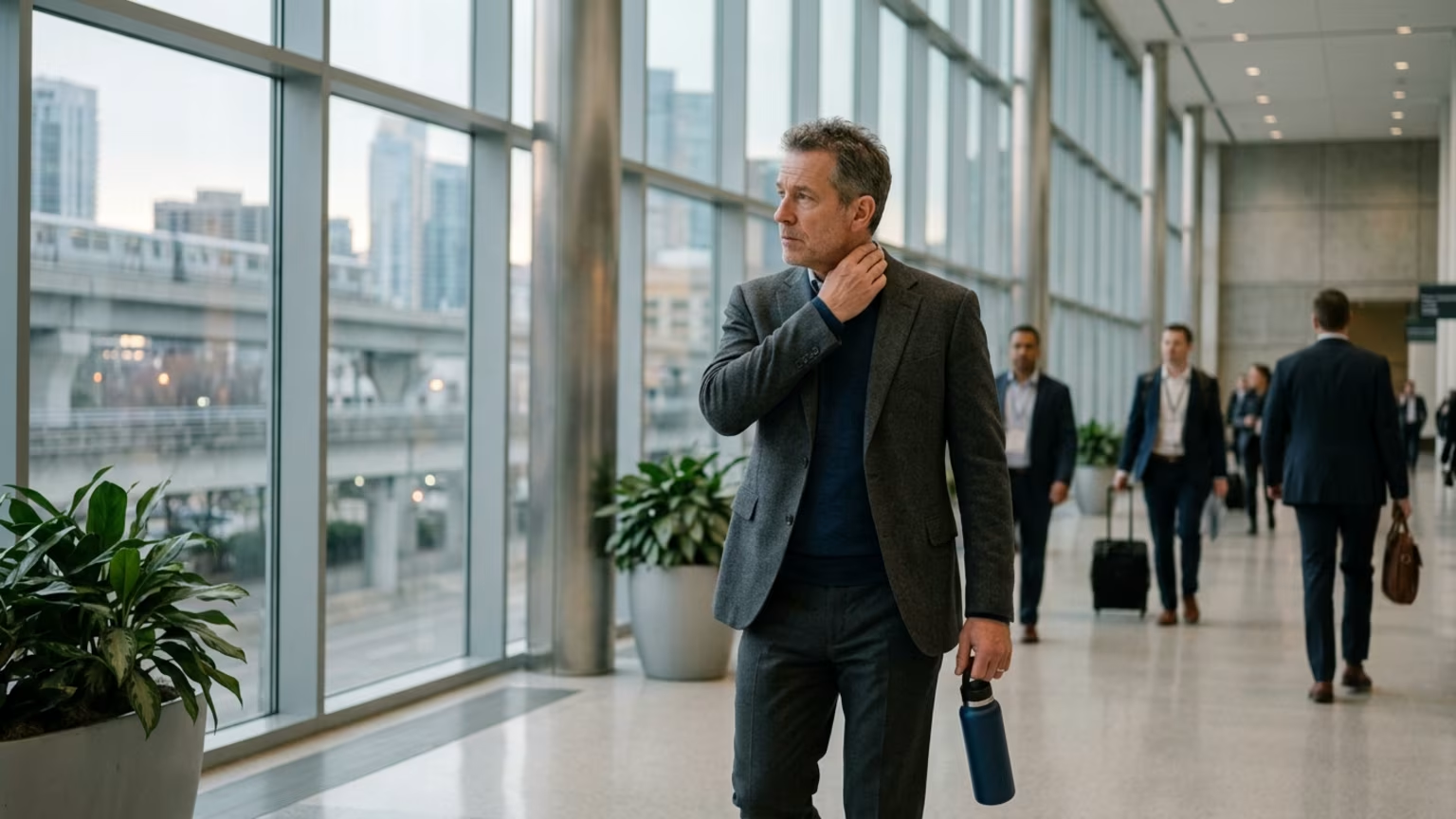

A recent analysis shifts the executive performance focus from time management to energy management, outlining frameworks to protect cognitive capacity and recovery.





On September 24, 2026, Yahoo Lifestyle published an analysis examining how executives manage their capacity under pressure. The piece originated on Forbes.com and was credited to contributor Julian Hayes II. It argued that leadership capacity depends on deliberately managing cognitive, emotional, social, and physical energy rather than simply managing time. By treating energy management as a core operational requirement, the article shifts focus from extending working hours to protecting vital physiological resources.
The central thesis of the analysis is that available hours are only useful when a leader has sufficient capacity to use them effectively. Hayes proposes a four-part framework to evaluate this capacity across different domains of leadership. Cognitive energy represents the mental bandwidth, intense focus, and processing power required for complex, ambiguous decisions. Emotional energy dictates a leader's ability to absorb workplace conflict and cultural tension without becoming completely overwhelmed.
Social energy governs the capacity to manage demanding relationships, unexpected corporate crises, and failed business deals. Executives face constant expectations of availability that can rapidly deplete this specific social resource over time. Finally, physical energy serves as the foundation for the entire leadership capacity system. The article links physical energy directly to consistent sleep, structured exercise, proper nutrition, and planned recovery.
The author presents these baseline health behaviors as the essential bedrock for sustaining performance through heavy workloads and prolonged pressure. In a related Forbes piece, Hayes argues that consistent recovery is necessary for replenishing diminished leadership capacity. He also frames physical training as a practical setting where executives can practice functioning under intense strain. This approach transforms mental strength into a physical leadership skill rather than a purely psychological trait.
During the toughest quarter of my career, I noticed that my ability to handle stress was directly tied to my cardiovascular fitness, not my mindset. I was trying to meditate my way out of a severe physiological deficit. Once we started looking at the data connecting aerobic capacity to emotional regulation and executive function, everything clicked. Physical capacity is the absolute foundation of mental resilience.
The analysis uses the metaphor of the leader as a workplace sponge absorbing anxiety, team stress, and emotional friction. The framework warns that leaders need deliberate, structured ways to process this accumulated strain. The piece attributes a key observation to Jeff Bezos, noting that a senior executive's role is to make a small number of high-quality decisions. To achieve this, the article recommends reserving the highest-energy periods of the day for the most consequential choices.
Operating a demanding business requires leaders to turn these theoretical concepts into daily, actionable systems. The first practical step is conducting a thorough calendar audit to identify hidden capacity drains. A related Forbes article notes that an executive calendar can reveal whether a leader has enough white space for recovery and creative thought. Identifying exactly when demanding decisions and routine meetings occur helps ensure high-consequence work happens when attention is strongest.
Executives must also separate decision importance from decision urgency to protect their cognitive reserves. High-capacity periods should be protected strictly for choices that carry significant strategic weight for the organization. This requires intentionally designing the workweek around sustained cognitive performance. Leaders can batch lower-consequence decisions or delegate them entirely to preserve their mental bandwidth for ambiguous, high-stakes challenges.
Social energy requires careful management in high-stakes environments where demands are constant. The article notes that relationship demands, including missed financial targets and departing employees, place a heavy burden on executives. To mitigate this drain, the author recommends deliberately prioritizing which relationships require direct, immediate attention. Protecting periods of genuine solitude ensures leaders leave enough space to be fully present during their most important stakeholder interactions.
Rethinking recovery is another crucial operational shift required for long-term executive success. A subsequent Forbes article recommends building smaller, intentional recovery cycles into normal working weeks. This approach includes protected exercise time, firm communication boundaries, and establishing an identity entirely outside of work. It also calls for deliberate, additional recovery periods immediately following demanding travel schedules.
This strategy provides a practical alternative to relying exclusively on infrequent annual vacations to manage stress and burnout. Leaders need clear, enforceable boundaries around their availability to prevent constant psychological activation. Establishing defined communication windows and escalation rules can help reduce the expectation of immediate involvement in every minor issue. Protecting periods of genuine solitude allows leaders to remain fully engaged during critical moments.
While the Yahoo analysis focuses on broad frameworks, other recent commentary offers structured approaches to measuring executive capacity. One practitioner framework from The Sleep Consultant outlines a specific 30-day baseline tracking period. During this window, executives track sleep timing, nighttime awakenings, heart rate variability trends, and resting heart rate. They also monitor subjective markers like daily energy levels, decision confidence, and conflict tolerance.
Following this baseline phase, the framework proposes a staged 90-day process for deliberate improvement. Leaders change one weak recovery lever at a time before comparing their leadership indicators against the initial baseline data. This systematic approach allows executives to connect consistent sleep and recovery directly to highly practical business outcomes. It shifts the focus from chasing perfect physiological scores to evaluating actual execution reliability.
Tracking outcomes that matter to leadership requires moving beyond basic physiological activity metrics. If an executive changes their sleep timing or meeting density, the most useful outcome measures are practical business indicators. Leaders should monitor the frequency of avoidable escalations, their prioritization clarity, and their execution reliability. Managing energy should simplify executive work, not create an additional obligation to track every available biological variable.
It is important to evaluate the Yahoo piece as an analytical commentary rather than a new scientific discovery. The article provides a highly useful practitioner lens for viewing executive capacity. However, it does not present a scientifically validated taxonomy of leadership energy. The piece lacks an original sample size, formal survey methodology, clinical outcomes, or longitudinal data.
The statements regarding emotional depletion and leadership bottlenecks remain unsupported by named empirical studies within the text. Furthermore, the article does not provide data proving that reserving peak hours for consequential decisions improves shareholder returns. The quotation attributed to Jeff Bezos lacks original sourcing or context within the article itself. Therefore, it should be viewed as an illustrative anecdote rather than a verified piece of evidence.
Finally, the sponge metaphor for leadership requires careful interpretation to avoid negative outcomes. It might unintentionally imply that executives should simply accept and hold everyone else's stress. The more defensible takeaway is that leaders need systematic ways to process and firmly limit emotional demands. Excessive isolation to protect social energy can also backfire by reducing access to necessary coaching and dissenting views.
It is also critical to recognize that peak hours are not identical for every executive. Individual chronotype, caregiving obligations, health conditions, and heavy travel schedules can dramatically affect when a leader is most alert. The practical objective is intentional recovery, not rigid adherence to a universal daily schedule. Recognizing these individual differences prevents the framework from becoming another rigid, unhelpful performance standard.
Additionally, sleep, exercise, nutrition, and recovery are not interchangeable interventions within this framework. A leader cannot assume that simply adding more exercise will somehow compensate for chronic sleep restriction. Nor can they assume that a high score on a wearable device reliably captures their true psychological recovery. Each element requires specific, targeted attention to build a highly functional foundation for leadership.
The conversation surrounding executive health is shifting away from isolated, individual wellness habits. We expect to see more commentary treating leadership performance as a comprehensive system with clear inputs and mandatory recovery requirements. Sleep, exercise, boundaries, and calendar design are increasingly positioned as non-negotiable operating conditions for sound judgment. This shift recognizes that physical capacity directly dictates long-term business capability.
Future models will likely emphasize recurring weekly recovery over the traditional reliance on extended holidays. We anticipate a growing focus on structured communication boundaries and deliberate decompression tactics after intense periods of travel. As these frameworks evolve, the most successful leaders will adopt practices that simplify their daily work. They will protect their capacity without turning health management into an additional, burdensome obligation.
Stay connected for research and practical guidance on executive performance, energy, focus, sleep, recovery and longevity. Ideas built for people who want to stay sharp, capable and effective for the long run.





Build habits and systems that support clear thinking, steady energy and long term capacity throughout a demanding career.
explore the Blog