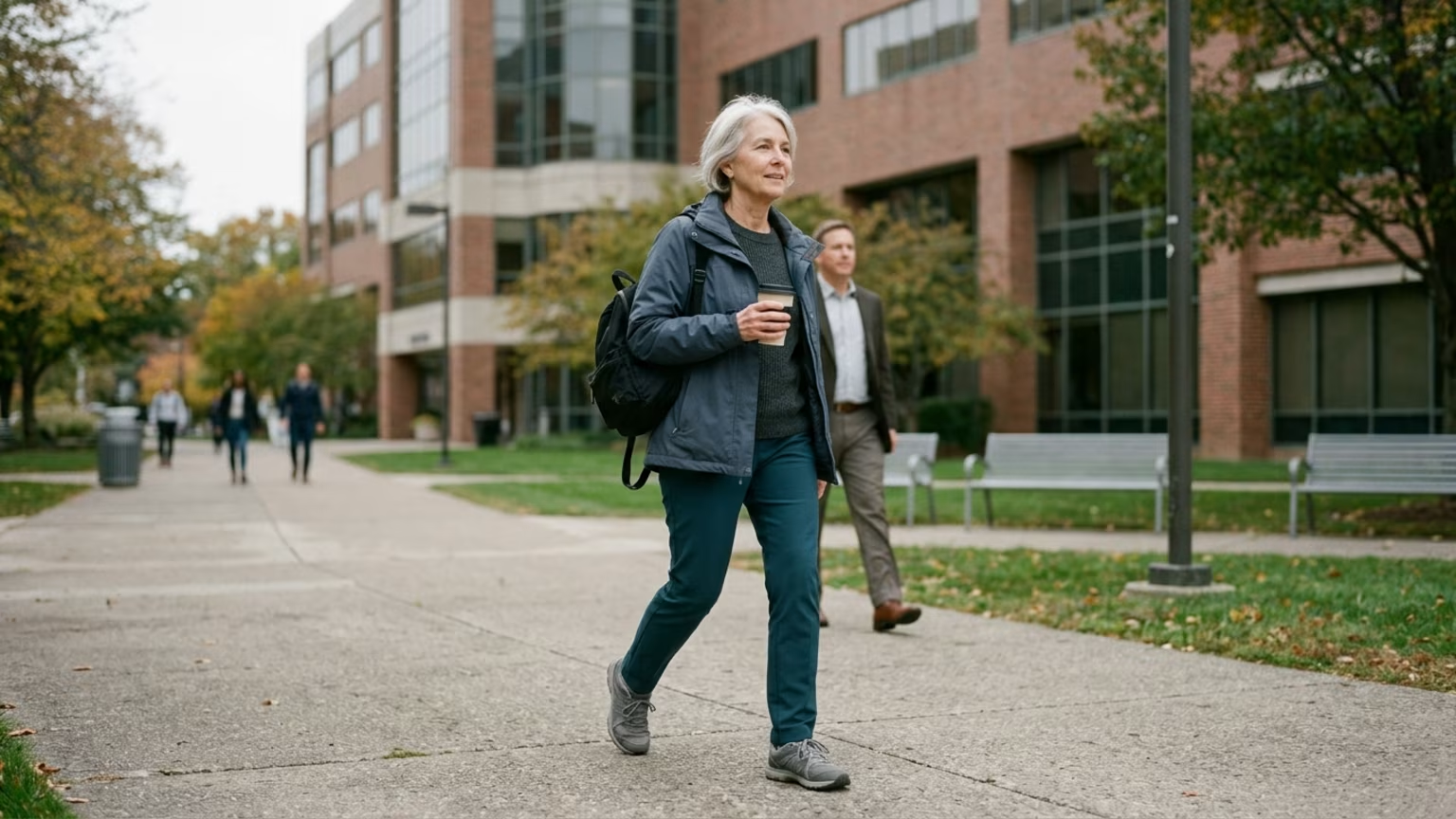

A recent Neurology study shows that super movers—adults 80 and older who walk unusually fast—have a 51% lower risk of cognitive impairment.





Physical mobility and cognitive capacity do not degrade on separate timelines. They are fundamentally intertwined systems that mirror each other in advanced age. A recent study published in Neurology underscores exactly how deeply connected these biological functions remain.
Ambitious professionals often view the brain as a machine separate from the body. You sit at a desk to think, plan and execute strategy. Physical movement is treated as a secondary pursuit for weekends. This flawed belief thrives because mental output feels disconnected from physical endurance early in a career.
Young executives can work sixty hours a week from a chair with no immediate penalty. The mind seems entirely autonomous. Physical fitness is often viewed as a cosmetic preference rather than a biological necessity. Over time, this separation creates a vulnerability in executive performance.
This separation between mind and body is heavily reinforced by modern corporate culture. We celebrate the executive who works through the weekend to close a massive deal. We rarely celebrate the executive who steps away to maintain their aerobic capacity. The flawed assumption is that the brain operates independently of the vascular system feeding it.
I remember landing at Heathrow after a brutal overnight flight from New York. I had a board meeting in three hours. The standard advice of getting eight hours of sleep felt like a cruel joke. That was the exact moment I realized our readers do not need perfect scenarios.
They need triage protocols. They need to know what the science says about recovering cognitive function when you only managed three hours of terrible sleep at high altitude. We cannot treat the physical and the mental as isolated domains. The body is the literal substrate for the mind.
A recent study titled “Cognitive Aging and Brain Health: A Comparison of Super Movers vs Nonsuper Movers” provides hard data. It was published in the journal Neurology on July 14, 2026. The researchers examined nearly 4,000 adults aged 80 and older. These participants were drawn from five international cohorts within the Health and Retirement Study International Network of Studies.
Participants who already had cognitive impairment at baseline were excluded from the main analysis. Follow up ranged from roughly 3.4 to 5.4 years depending on the cohort. The researchers defined a super mover by a very specific metric. This was a person aged 80 or older whose usual walking speed was at least 1.5 standard deviations above the average.
This average was adjusted for people of the same age and sex. Authors Oshadi Jayakody, Sofiya Milman and Nir Barzilai of the Albert Einstein College of Medicine note this is uncommon. One research summary estimates that super movers represent approximately 5% to 10% of community-dwelling adults in their 80s. The clinical results for these fast walkers were striking.
Super movers had an approximately 51% lower hazard of developing incident cognitive impairment than non-super movers. The data reported a hazard ratio of 0.49, with a 95% confidence interval of 0.28 to 0.71. They also demonstrated a slower decline across memory, processing speed, executive function and global cognition. The broader research program included a smaller cohort of nearly 200 people for detailed cognitive testing.
The researchers utilized a third cohort of more than 690 participants to examine overall cognition and dementia prevalence. The rate of newly diagnosed clinical dementia was described as significantly lower among super movers. While the summaries do not provide a specific numerical dementia hazard ratio, the trend was clear. The fastest walkers had roughly half the risk of developing general cognitive impairment during the follow up period.
The study utilized detailed imaging to look deeper into the brain. MRI data from the LonGenity neuroimaging subgroup showed better preservation of specific hippocampal volumes among super movers. This region is heavily involved in episodic memory and spatial navigation. However, global cortical thickness was not significantly different between the two groups in the available summary.
When professionals neglect movement, they inadvertently accept a tax on their future mental capacity. This tax is paid slowly over decades as it reduces structural cognitive reserve. Postmortem data from the Rush Memory and Aging Project provides a fascinating perspective on this phenomenon. The analysis of nearly 700 deceased participants found no significant differences in beta-amyloid plaques or tau tangles between groups.
The researchers also found no significant differences in vascular lesions, Lewy bodies or TDP-43 pathology. This suggests super movers maintained better cognition despite having similar levels of several brain pathologies. The authors noted that superior gait performance in late life may serve as a marker of broader neurocognitive resilience. They preserved their function even when the underlying biology showed typical signs of age related disease.
CNN wellness expert Dr. Leana Wen highlighted the mechanical truth of this resilience. Walking is a highly cognitively complex activity. It requires the brain to process visual information, navigate surfaces, monitor traffic and make constant spatial decisions. When physical capacity degrades, the cognitive tax is often paid in reduced focus and slower mental processing.
Ignoring physical health compromises your cognitive performance and mental clarity over the long run. The direction of the relationship is complex and could involve reverse causation. People whose brains are aging more successfully may simply be better able to maintain fast walking speeds. Regardless of the direction, a brittle physical system lacks the metabolic support needed for sustained cognitive output.
The physical tax is inherently connected to cardiovascular health. Super movers tended to have fewer chronic cardiometabolic conditions and greater physical independence. This highlights a multidimensional view of healthy aging. The brain requires constant, high quality blood flow to execute complex strategic decisions.
If the cardiovascular system is compromised by sedentary behavior, the brain is starved of its fundamental fuel. Over time, this starvation accelerates natural cognitive decline. Founders and investors often pride themselves on their mental endurance while ignoring their physical decay. This creates a dangerous blind spot in long term strategic planning.
This research does not prove that deliberately walking faster will prevent dementia. It shows a powerful association between late-life gait performance and better cognitive outcomes. Therefore, professionals should treat gait as a dashboard signal rather than a competitive leaderboard. The study defines super movers relative to age and sex adjusted norms rather than prescribing a universal speed.
A single speed target would be inappropriate because joint health and neurological status vary considerably. To build a reliable physical structure, prioritize a sustainable aerobic base. For those who are sedentary, start with short walks and gradually increase the duration over time. For those already active, add brief faster intervals to your routine.
A sensible protocol might involve several minutes at a normal pace followed by a two minute faster interval. Aerobic work alone is not enough for longevity and healthspan. You must pair walking with dedicated strength training to preserve muscle mass and overall mobility. Balance activities are also essential to help reduce the risk of falls as we age.
A program combining cardiovascular conditioning, resistance training and balance work builds durable physical capacity. These physical efforts must be paired with fundamental vascular health management. Controlling high blood pressure, cholesterol and diabetes is absolutely critical. Adequate sleep, social engagement and continuous mental stimulation round out this comprehensive approach.
Executives must also be vigilant about unexplained changes in their physical capacity. A meaningful decline in walking speed can have potentially reversible or treatable causes. These might include arthritis, muscle weakness, medication side effects or vision changes. Professionals who notice a substantial mobility change should discuss it with a healthcare professional rather than simply pushing through it.
People with chronic conditions should seek individualized medical guidance before increasing their exercise intensity. You cannot outthink a failing biological foundation. The goal is to maintain the underlying systems that support peak mental performance. Gait speed is merely one window into the health of those systems.
Preserving physical capability is not merely about mobility, but about sustaining the architecture of a capable mind.
Stay connected for research and practical guidance on executive performance, energy, focus, sleep, recovery and longevity. Ideas built for people who want to stay sharp, capable and effective for the long run.





Build habits and systems that support clear thinking, steady energy and long term capacity throughout a demanding career.
explore the Blog