

A 2026 report highlights the shift from rigid sleep tracking to evaluating daytime function, urging executives to prioritize actual energy over wearable scores.





On September 23, 2026, ABC17 News published an article produced by Sleeping.com and Stacker examining whether the intense pursuit of perfect rest has gone too far. The report argues that consumer sleep-tracking data should function as neutral information rather than a nightly performance grade. This shift addresses a growing cultural movement known as sleepmaxxing. Individuals involved in this trend attempt to control their sleep through rigid routines, smart rings, supplements, and mouth tape.
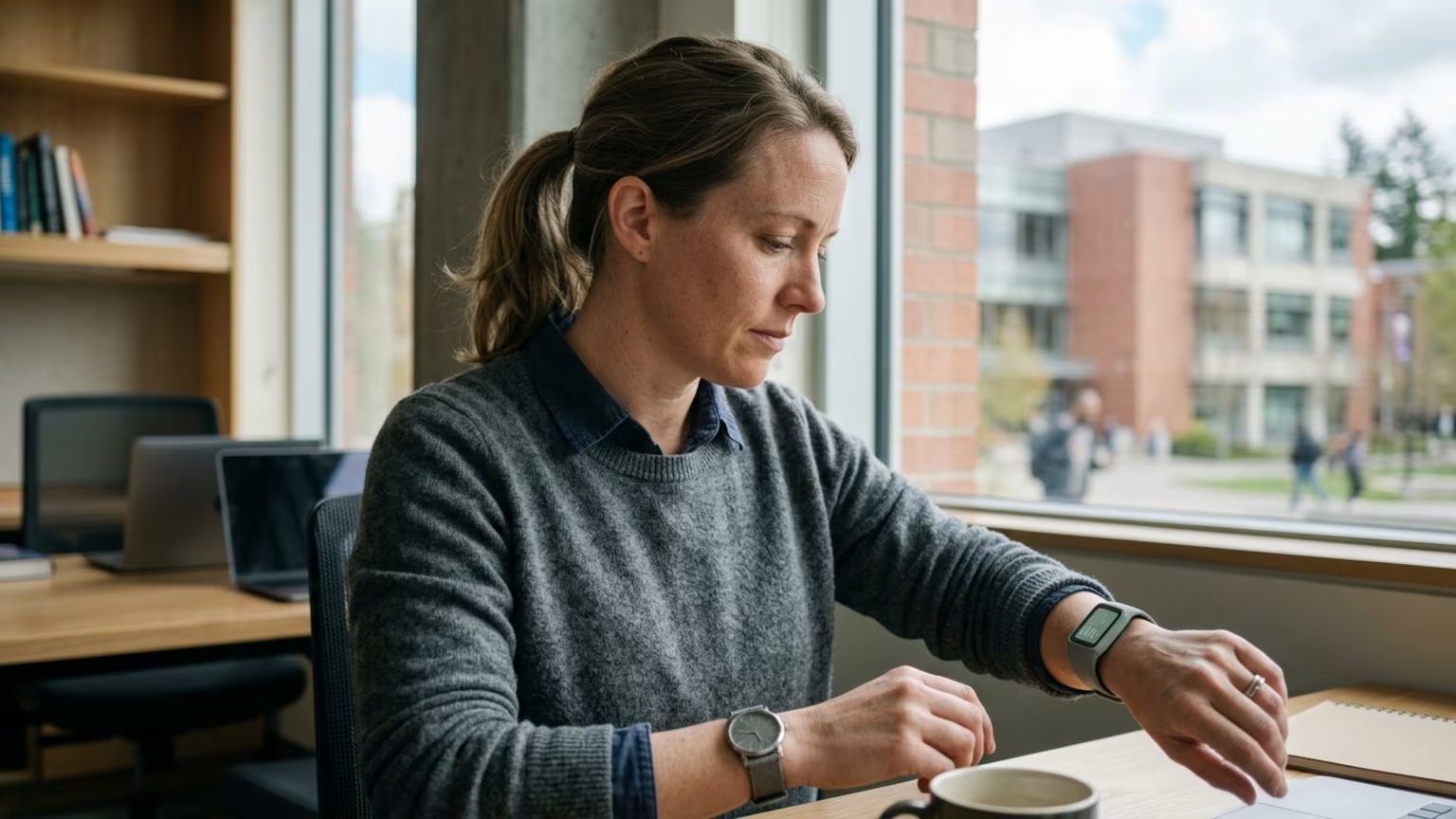
The central concern is that turning rest into a measurable test often creates unnecessary stress. People may wake up feeling completely refreshed but immediately distrust their own physical readiness after seeing a low score on a device. The trend combines wearable technology and social media influence with a growing public interest in physical recovery. However, relying too heavily on automated numbers can distort how a professional actually experiences their morning.
An ordinary night of slightly disrupted sleep might lead to significant anxiety about improving a metric the next evening. This anxiety often triggers counterproductive behaviors that make achieving restful sleep even more difficult over time. The current guidance strongly suggests interpreting wearable data alongside physical symptoms rather than treating the device as an absolute authority. By removing the pressure of a daily grade, individuals can focus on sustainable habits.
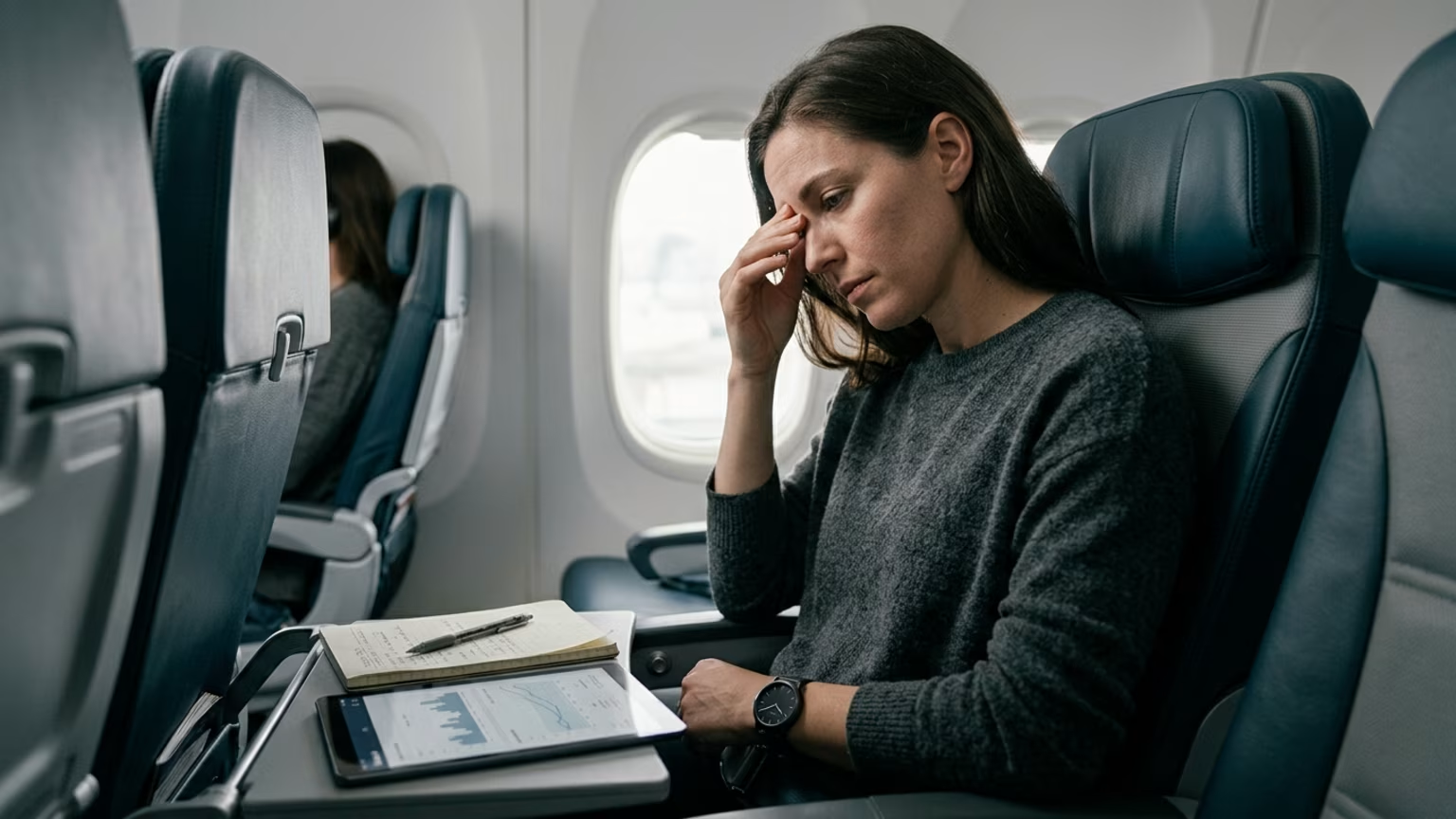
Operators and founders face intense demands on their energy and concentration. As a result, many have eagerly adopted these tracking devices to gain a competitive edge. The promise of measuring rest precisely is highly appealing to professionals who track every other aspect of their business. However, sleep does not respond well to aggressive management tactics. Pushing harder to achieve a better score often creates physical tension that prevents genuine relaxation.
The pushback against score-obsessed recovery stems from both clinical guidance and behavioral research. A recent University of Oxford study, as reported by the BBC, tested this psychological dynamic by providing participants with sleep trackers that displayed randomized scores. The numbers on the devices did not reflect the actual quality of rest the users experienced. This deliberate mismatch allowed researchers to isolate the mental impact of seeing a poor metric.
Participants who were told they had slept badly subsequently reported greater fatigue and lower daytime alertness. Furthermore, these individuals performed worse on daytime focus and reaction-time tests, despite the scores being fake. The findings demonstrate that expectations heavily influence physical capability and subjective energy. When a device tells a professional they are exhausted, they often begin to act exhausted regardless of their actual physiological state.
The American Academy of Sleep Medicine provides specific guidance on the utility of consumer sleep technology. The organization notes that these devices estimate sleep duration, timing, and recovery from basic sensor data. They do not directly measure every aspect of clinical sleep health. Consumer sleep technology may contribute valuable information to a patient-clinician conversation, but it should not replace validated diagnostic testing.
In our experience, demanding professionals easily fall into the trap of over-measuring their habits. I spent a week at a popular health optimization conference and left completely exhausted by the complexity. Everyone was pushing a new supplement protocol, a complicated gadget, or a rigid daily routine. It struck me that true high performers do not have time to make health a full time job. They need maximum return on minimum viable effort. That observation became the filter for every piece of research we publish.
A wearable metric should inform your judgment rather than dictate your daily capacity. If you check your sleep score and immediately feel anxious, the measurement tool is actively detracting from your mental clarity. Executives should treat nightly data as a broad trend indicator across weeks rather than a precise daily verdict. The ultimate measure of recovery is daytime functioning, including mood stability, sustained concentration, and the ability to handle complex decisions without rapid fatigue.
When persistent problems arise, the data can serve as a useful baseline for starting a conversation with a specialist. Repeated exhaustion and ongoing insomnia symptoms deserve professional assessment regardless of the wearable metric. Excessive daytime sleepiness, loud snoring, or breathing pauses also require clinical attention. Leaders should separate recovery management from medical diagnosis entirely.
A founder may use a wearable to decide whether to reduce late-night work, but they should never use it to self-diagnose a circadian rhythm disorder. It is crucial to protect fundamental sleep consistency before chasing minor statistical improvements. Maintaining reliable sleep and wake times offers far more value than attempting to force a higher score through elaborate interventions. By focusing on essential executive performance basics, operators can build resilience without the burden of constant digital surveillance.
The scale of the tracking phenomenon is substantial across the modern workforce. According to the article, a 2026 American Academy of Sleep Medicine survey found that 48% of surveyed adults had used a sleep-tracking device. This represents a significant increase from the 35% adoption rate reported in 2023. The widespread adoption of these tools illustrates the expanding role of consumer sleep technology in daily life.
This growing reliance on metrics comes with measurable behavioral impacts. The same survey reportedly found that 55% of tracker users had changed their behavior based on device information. While altering habits can be beneficial, the emotional cost of this surveillance is also high. The survey found that 51% of tracker users had felt anxious or stressed about achieving a good sleep score.
Contextualizing these numbers requires understanding standard health baselines. For adults aged 18 to 60, the Centers for Disease Control and Prevention recommendation cited in the article remains at least seven hours of sleep per day. However, the emerging consensus emphasizes that sleep quality and subjective daytime functioning matter just as much as pure duration. Tracking tools are most effective when they help users identify inconsistent schedules or short nights without demanding perfection.
While the narrative around tracking anxiety is compelling, the available data has distinct clinical boundaries. The 2026 American Academy of Sleep Medicine findings rely on self-reported survey data, which does not prove that all tracker users experience anxiety. The article also cites the condition known as orthosomnia, which involves a problematic preoccupation with improving wearable-derived sleep data. However, this term was first described in the clinical literature in 2017 after researchers presented just three patient cases.
It is a specific clinical observation rather than a massive epidemiological study. Additionally, consumer sleep technology cannot diagnose or treat sleep disorders without appropriate validation and regulatory clearance. The American Academy of Sleep Medicine cautions that consumer devices have limited validation for sleep staging outside laboratory settings. Performance can vary widely by device, manufacturer, and software version.
Therefore, a poor score on a consumer device does not establish whether someone has insomnia or another clinical condition. The Oxford study demonstrates that expectations can affect subjective daytime experience, but the report does not establish that every low score directly causes cognitive impairment. Finally, the metrics themselves lack standardized medical definitions. Dr. Alanna Hare, a consultant in sleep medicine at London’s Royal Brompton Hospital, told the BBC that a sleep score is not a recognized concept in sleep science.
It is ultimately a label created by manufacturers to simplify complex physiological data. Physical capacity is the absolute foundation of mental resilience, but it requires common sense alongside data. If a wearable suggests you are perfectly rested but you struggle to focus through a morning meeting, your lived experience must take priority. Conversely, a poor metric after a successful workday should not convince you that your energy is failing.
The industry is slowly shifting its focus from absolute daily metrics toward recognizing broad behavioral patterns. Future software updates will likely de-emphasize isolated nightly scores in favor of rolling averages that contextualize rest alongside daytime energy levels. We expect to see tighter integration between consumer devices and professional medical assessments when persistent problems arise. By framing data as a contextual tool rather than a final verdict, manufacturers can help users improve their sleep and recovery without causing undue stress.
Consumer technology will continue to serve as a useful prompt for noticing inconsistent schedules or short nights. However, the market is beginning to understand that excessive conscious control over an unconscious process is counterproductive. Health brands will increasingly separate general wellness improvements from the investigation of persistent clinical symptoms. Ultimately, this maturation will allow ambitious professionals to use data as a supportive guide rather than letting it dominate their daily routines.
The next generation of high performers will likely adopt a more minimalist approach to health technology. They will use devices to establish baseline habits and then remove the sensors once a reliable routine is in place. Continuous surveillance will be reserved for targeted interventions rather than functioning as a permanent lifestyle requirement. This balanced approach will ultimately support sustained energy and clear thinking over the long term.
Stay connected for research and practical guidance on executive performance, energy, focus, sleep, recovery and longevity. Ideas built for people who want to stay sharp, capable and effective for the long run.



Build habits and systems that support clear thinking, steady energy and long term capacity throughout a demanding career.
explore the Blog