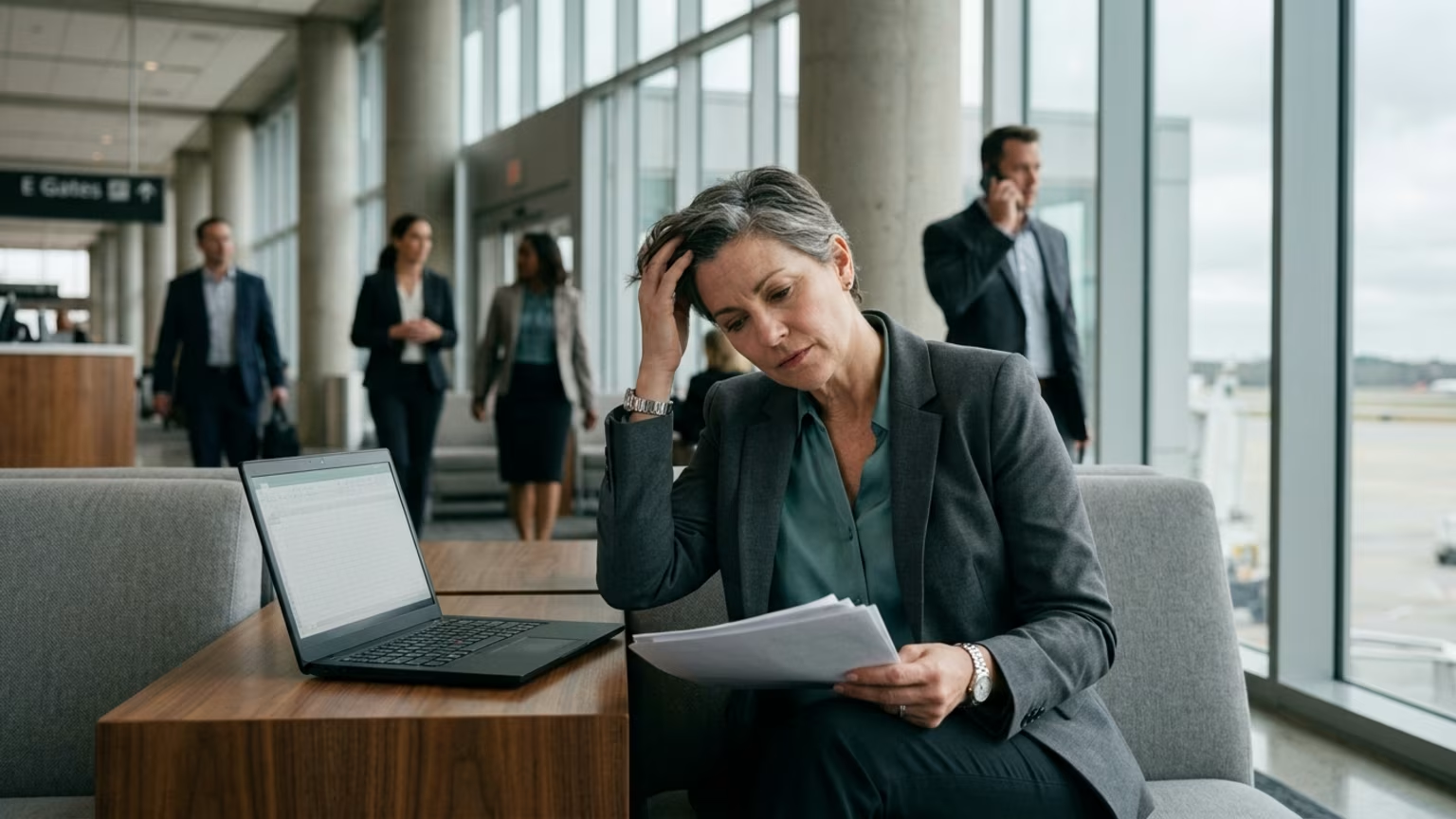
Recent sleep research links chronic fatigue to impaired glucose metabolism, reduced focus, and executive burnout. Learn how to protect cognitive performance.





In August 2026, KEYT distributed a comprehensive Stacker feature analyzing the physiological consequences of chronic sleep loss. The report synthesized decades of sleep research to examine how inadequate rest affects glucose metabolism, emotional regulation, and cognitive performance. For professionals managing high-stakes workloads, these findings clarify the boundary between ordinary fatigue and clinical exhaustion. The World Health Organization now explicitly defines burn-out as an occupational phenomenon resulting from chronic, unmanaged workplace stress.
The aggregated research details specific physical and mental changes that follow restricted sleep. A 2026 narrative review links short or disturbed sleep to clear cardiometabolic risks including obesity, type 2 diabetes, and metabolic syndrome. This same review describes increased amygdala activation alongside reduced prefrontal-cortex activity following sleep deprivation. This neural shift directly impairs episodic-memory formation and reduces the ability to regulate negative affect.
The metabolic impact of this neural shift extends directly to nutritional regulation and daily energy management. Researchers reported an average increase of approximately 600 kilocalories in desired food intake among sleep-deprived participants. While this figure represents a review-level synthesis rather than a universal response, it illustrates how fatigue heavily compromises dietary discipline. For operators attempting to maintain peak physical condition, chronic sleep restriction actively undermines their broader nutritional strategies.
Beyond the recent narrative review, the feature highlights a synthesis covering more than 50 years of experimental research. This extensive historical review found that sleep loss reliably reduced positive emotion and increased anxiety across various test groups. A separate experimental study of 11 healthy men found that glucose clearance reportedly fell by approximately 40% after six nights of restricted sleep. These physiological shifts illustrate why rest directly dictates daily energy levels and emotional stability.
This link between inadequate rest and anxiety holds particular relevance for modern business leaders facing continuous market pressure. The 50-year experimental review underscores that emotional dysregulation is a consistent, documented physiological response to fatigue. When positive emotion decreases and anxiety rises, an executive's capacity to lead teams effectively is severely diminished. Consequently, maintaining a calm operational demeanor requires treating uninterrupted rest as a mandatory professional boundary rather than a luxury.
The cultural prioritization of recovery is also shifting rapidly in response to this science. A 2026 global survey of 30,000 people found 53% ranked sleep above diet and exercise as the most important habit for living a long and healthy life. Sleep researcher Michael Grandner told TIME that sleep may be easier to change than diet or exercise. He noted that behavioral adjustments in rest may produce a faster day-to-day payoff for tired professionals.
Recent neurological research explicitly links sleep loss to impaired episodic-memory formation, affecting everyday cognition, future planning, and reliable decision-making. Insufficient or disrupted sleep fundamentally compromises the brain's ability to encode new information from the previous day. Johns Hopkins neurologist Mark Wu explains that sleep helps the brain process new information and securely store memories. Without adequate rest, a professional simply cannot retain the complex data required for strategic execution.
The biological mechanisms of sleep loss translate directly into severe leadership vulnerabilities. Reduced prefrontal-cortex activity limits the strategic planning necessary for high-stakes knowledge work, while heightened emotional reactivity complicates team management. Executives often treat rest as an optional reward for completed work rather than an operating input for sustained performance. However, the data suggests that protecting cognitive windows requires aggressive, uncompromising sleep preservation.
As our founder often recalls, "I remember landing at Heathrow after a brutal overnight flight from New York. I had a board meeting in three hours. The standard advice of getting eight hours of sleep felt like a cruel joke."
The realization was immediate. "That was the exact moment I realized our readers do not need perfect scenarios. They need triage protocols. They need to know what the science says about recovering cognitive function when you only managed three hours of terrible sleep at high altitude."
These actionable protocols must align with the demanding realities of modern business. We know that inadequate sleep severely compromises glucose regulation, daily focus, and overall metabolic health. This is why building a reliable structure for recovery is non-negotiable for ambitious professionals. Yet, we must also acknowledge that sleep alone cannot fix fundamentally broken organizational systems, as the World Health Organization specifically classifies burnout based on unmanaged workplace stress.
The WHO definition of burnout centers on energy depletion, increased mental distance toward a job, and reduced professional efficacy. Improving nighttime habits will help an operator process information and regulate difficult emotions during the day. However, personal recovery will not resolve a chronically overloaded calendar or poorly designed work pipelines. For sustainable careers, leaders must pair personal physiological recovery with rigorous, systemic management of stress and burnout.
When executives ignore these biological boundaries, they risk profound professional consequences. The inability to form episodic memories means leaders may struggle to recall critical details from vital meetings or negotiations. Heightened emotional reactivity further complicates team management, as sleep-deprived managers are less equipped to regulate negative affect. Protecting high-value cognitive windows requires leaders to schedule complex strategy sessions only when they are fully rested.
If an operator routinely normalizes late-night work followed by early-morning commitments, their performance will inevitably degrade. The evidence supports protecting sleep for steady cognition, but it does not justify an arbitrary, universal productivity schedule. Individuals must identify their peak biological hours and defend them fiercely against creeping administrative burdens. The most successful founders understand that sustained energy is a finite resource requiring daily, disciplined replenishment.
As professionals recognize the steep cognitive cost of fatigue, the market for rest-related products is expanding rapidly. The KEYT feature cited an American Academy of Sleep Medicine survey of 2,007 adults regarding wearable technology, finding 48% had used a sleep tracker. Furthermore, 55% of users changed their behavior after reviewing tracker data. These devices typically use movement and heart rate to estimate rest quality and sleep cycles.
The economic footprint of this behavioral shift is massive across multiple consumer sectors. The Global Wellness Institute valued products and services tied to sleep and personal surroundings at $77.3 billion, including digital subscriptions and bedroom products. The hospitality industry is also aggressively capitalizing on the rising demand for dedicated recovery spaces. A separate hospitality report estimated global sleep tourism at roughly $92 billion in 2026, projecting growth of about 12% annually through 2030.
North American markets show similarly aggressive financial forecasts for the upcoming decade. Grand View Research projected North American sleep tourism to reach an astonishing $331.2 billion by 2030. These figures reflect a broad consumer push toward measurable recovery and dedicated rest environments. While professionals are clearly willing to invest significant personal capital to secure better restoration, this commercial expansion requires a highly critical eye.
ExecuFuel values precise analysis, and this research synthesis contains several critical limitations that demand attention. The cited 40% drop in glucose clearance comes from a small experimental study of just 11 healthy men, which cannot reliably represent broader populations. Similarly, the 2026 global survey of 30,000 people lacks a disclosed sampling method, questionnaire structure, or geographic breakdown. These statistics show interesting cultural trends but do not guarantee universal biological responses across diverse groups.
Consumer sleep tracking presents another major caveat for ambitious professionals seeking reliable health data. Sleep specialist Brian Chen warns that consumer devices cannot confirm sleep apnea, estimating cycles using peripheral metrics whereas a clinical study measures brain activity. While CPAP says 80% of people with sleep apnea do not know they have it, this specific claim lacks public methodology. A positive wearable score should never override persistent physical symptoms like loud snoring or daytime exhaustion.
The relentless pursuit of perfect digital metrics can actually undermine natural recovery processes. The article discusses orthosomnia, a troubling condition where excessive concern about achieving an ideal sleep score interferes with sleep itself. When tracking becomes an additional source of performance anxiety, it fundamentally defeats the purpose of resting. Leaders must prioritize subjective daytime alertness and clear concentration over arbitrary, device-generated scores.
Finally, the varied market forecasts present conflicting financial pictures that require careful interpretation. The $92 billion global sleep tourism estimate for 2026 differs significantly from the $331.2 billion North American projection for 2030. These contrasting figures reflect different market definitions, geographic boundaries, and forecasting methodologies rather than guaranteed health outcomes. Spending money on premium sleep tourism does not automatically equate to measurable improvements in longevity and healthspan.
Furthermore, the assertion that employers and insurers have added sleep programs lacks specific, verifiable evidence in the provided feature. The publicly available material does not identify named companies, specific program designs, or independently measured outcome data. Until peer-reviewed outcome data becomes available, these corporate wellness programs should be viewed as preliminary experiments. Executives should not assume a company-sponsored wellness app will neutralize a toxic, high-pressure work environment.
The future of executive recovery will likely move away from consumer novelty and toward precise clinical integration. As the technology market matures, we expect wearables to become more sophisticated triage tools rather than definitive diagnostic devices. They will reliably alert users to breathing patterns, temperature fluctuations, or heart rate anomalies that warrant professional medical testing. This shift will help proactive professionals treat underlying physiological barriers rather than merely managing the superficial symptoms of fatigue.
We also anticipate a clearer, more productive separation between individual sleep habits and systemic organizational health. The WHO classification of burnout properly places the burden of chronic occupational stress on intelligent workplace design. Future corporate interventions will likely combine personal health tracking with rigorous, systemic workload management. By treating rest as a biological foundation rather than a standalone cure, leaders can build healthier, more sustainable working environments to support executive performance.
Stay connected for research and practical guidance on executive performance, energy, focus, sleep, recovery and longevity. Ideas built for people who want to stay sharp, capable and effective for the long run.




Build habits and systems that support clear thinking, steady energy and long term capacity throughout a demanding career.
explore the Blog