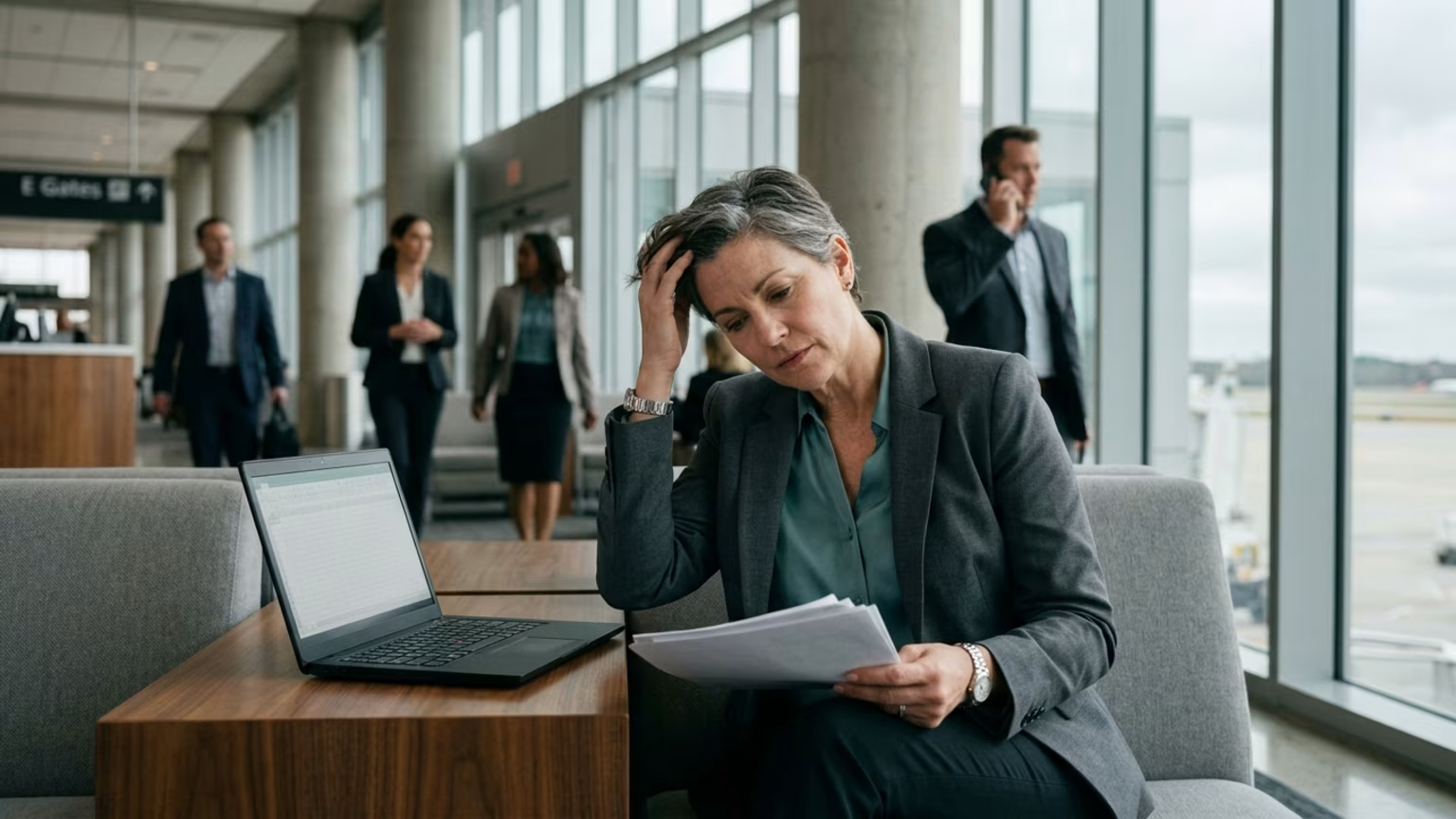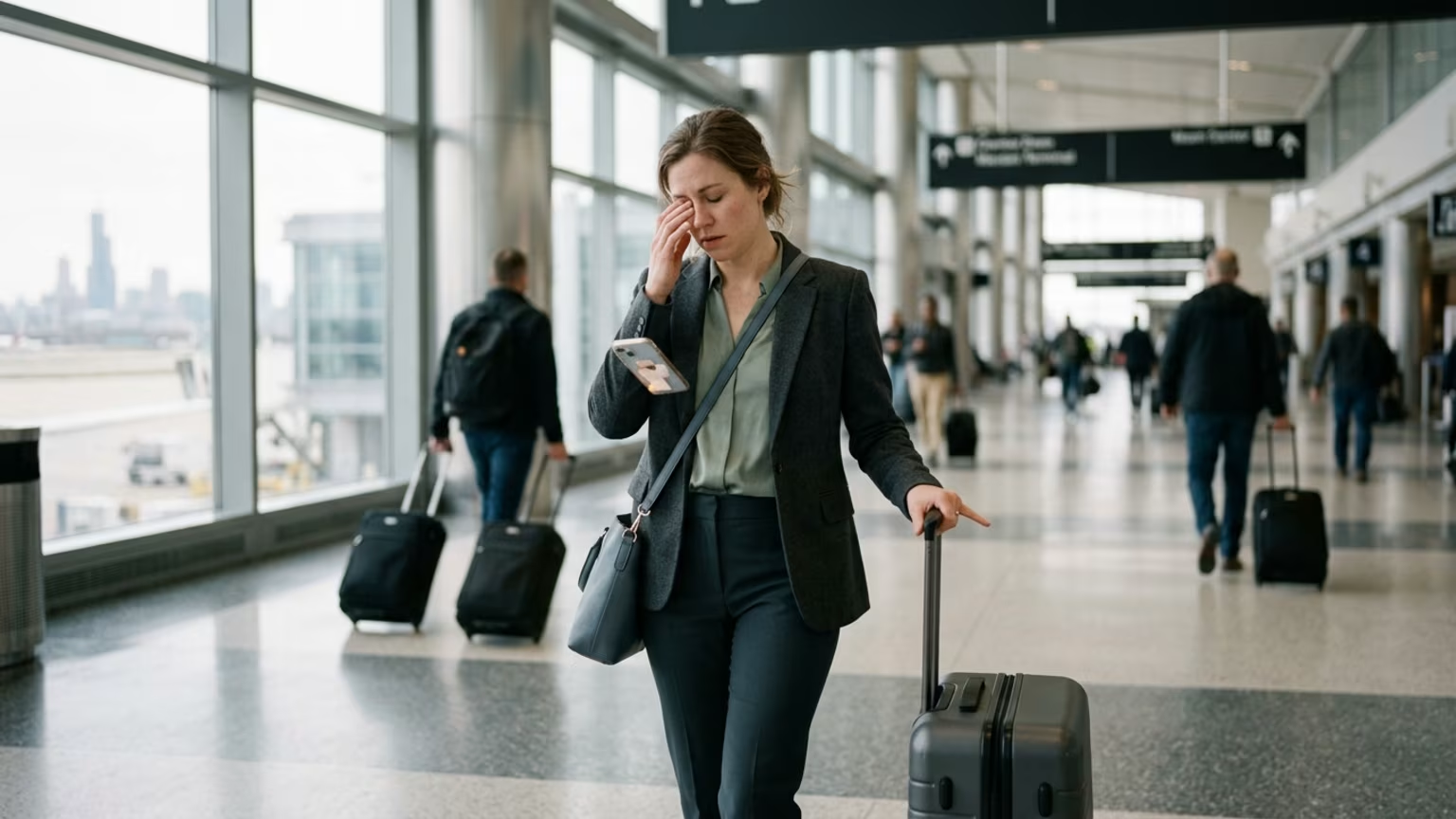

A 2026 Frontiers in Sleep study links daytime sleepiness to lower cognitive proxy scores. Review the data on screen time and executive focus.





On September 8, 2026, Frontiers in Sleep published findings on the relationship between electronic gadget use, sleep quality, daytime sleepiness and working memory in Indian young adults. The study examined how late-night device exposure relates to cognitive outputs. Knowledge workers constantly seek clear protocols for managing evening routines and device habits. This cross-sectional research provides concrete data on how daytime alertness and gadget use correlate with cognitive metrics.
Professionals often struggle to balance connectivity demands with restful recovery. This study addresses that tension by measuring specific academic outcomes against behavioral variables. The results challenge some conventional assumptions about screen exposure and direct cognitive decline. Readers can use these findings to refine their personal performance strategies.
The research was conducted by Ishan Gupta and Nasreen Akhtar of the All India Institute of Medical Sciences in New Delhi. The researchers recruited 119 people initially. They analyzed data from 114 participants after excluding five students from the final dataset. The study focused entirely on a young adult demographic.
Participants were aged 18 to 30, with a mean age of 22.3 years. Out of the 114 analyzed subjects, 61 participants were male. The sample included 91 medical students who provided self-reported data. Sleep quality was assessed using the Pittsburgh Sleep Quality Index.
Daytime sleepiness was measured using the Epworth Sleepiness Scale. The researchers did not directly administer a conventional working memory test. They used self-reported academic performance from recent internal university examinations as a surrogate measure. This methodological choice fundamentally shaped how they interpreted the cognitive data.
Academic scores served as a proxy for executive function and working memory capacity. The research design was observational rather than experimental. Researchers captured behavioral data at a single point in time. This approach identifies patterns without proving direct causation between the measured variables.
The convenience sampling method allowed researchers to gather data quickly from available students. However, this approach inherently restricts the broader applicability of the findings. The medical student demographic often experiences unique academic pressures and irregular schedules. These unique stressors might interact with screen habits in ways that alter cognitive performance.
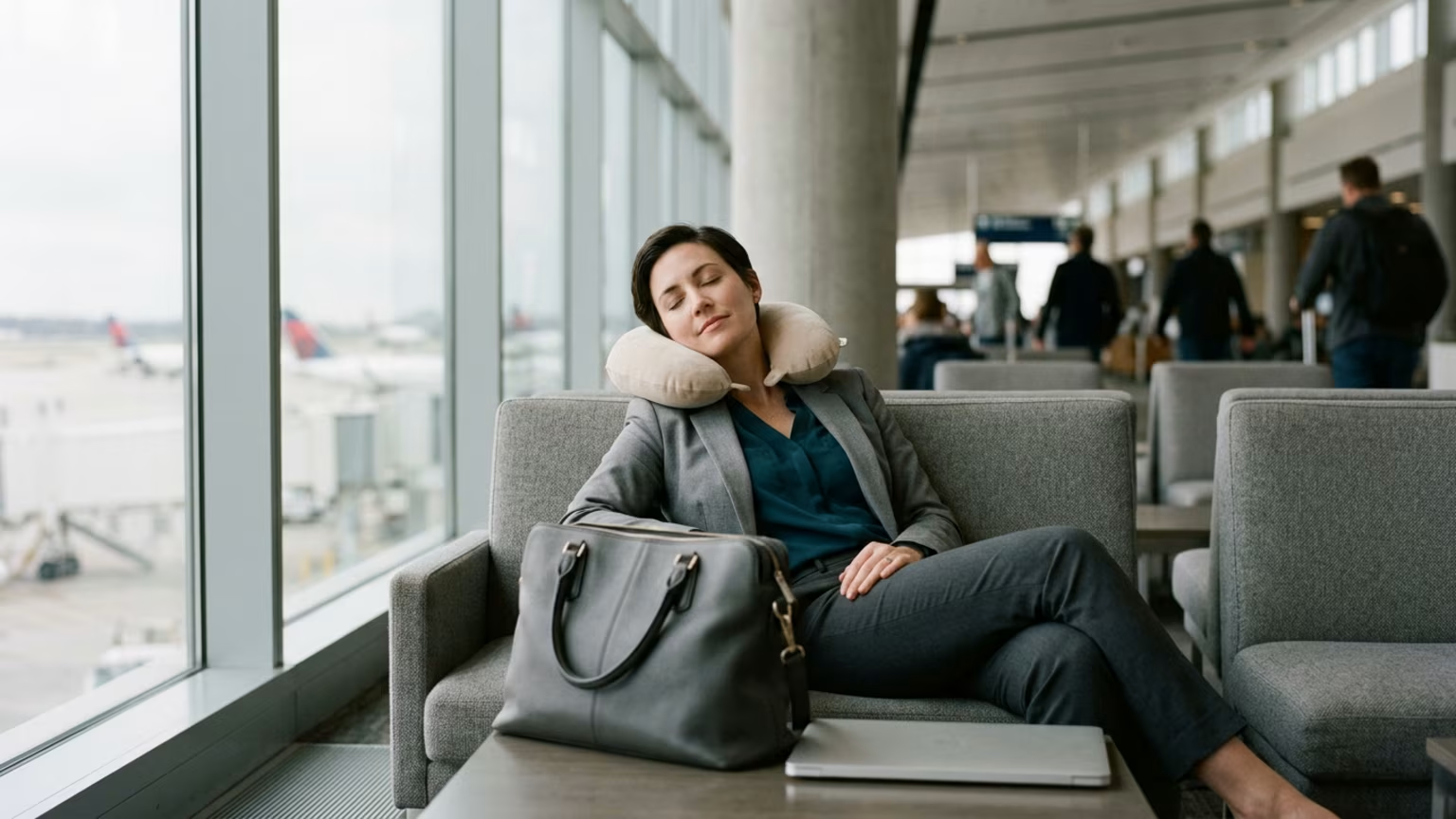
Operators and founders face distinct challenges regarding late evening device use and next day focus. Demanding professional lives rarely allow for perfect environmental control. I remember landing at Heathrow after a brutal overnight flight from New York. I had a board meeting in three hours.
The standard advice of getting eight hours of sleep felt like a cruel joke. That was the exact moment I realized our readers do not need perfect scenarios. They need triage protocols. They need to know what the science says about recovering cognitive function when you only managed three hours of terrible sleep at high altitude.
This study underscores the value of monitoring daytime sleepiness carefully. A practical executive routine would distinguish between total screen time and interactive use near bedtime. Leaders should track morning alertness and next day cognitive performance alongside evening device exposure. Professionals building sustainable executive performance frameworks should treat daytime sleepiness as a critical metric.
Protecting sleep opportunity remains a cornerstone of professional longevity. However, total screen time alone may not dictate cognitive outcomes universally. Context and timing likely dictate how devices affect daytime alertness. Executives should focus on behavioral changes that directly reduce their daytime fatigue levels.
Leaders cannot eliminate screens from their evening routines entirely. Global communication demands require executives to remain accessible across multiple time zones. The goal is building a reliable evening structure rather than chasing impossible digital abstinence. The data suggests that managing fatigue is more crucial than tracking total screen hours.
The study recorded an average daily screen time of 5.8 hours. The reported range spanned from one to 14 hours per day. Fourteen participants reported at least nine hours of screen use per day. This high usage group represented 13.2 percent of the analyzed sample.
Bedtime habits showed significant variation among the study participants. Twenty-nine subjects reported going to bed after 2:00 a.m. during the research period. Meanwhile, 10 participants reported getting up after 10:00 a.m. The mean score on the Pittsburgh Sleep Quality Index was 6.9.
Seventy-two of the 114 participants met the threshold for poor sleep quality. This finding means 63 percent of the sample recorded a global score above 5. The mean score on the Epworth Sleepiness Scale was 7.0. Nine participants had scores above 14.
This subset of 7.9 percent experienced moderate to severe daytime sleepiness under the study classification. Academic performance scores ranged from 40 percent to 83.5 percent. The median academic score across the sample was 65 percent. Higher daytime sleepiness was associated with lower academic performance in Spearman correlation analysis.
This negative correlation was statistically significant, with a rho of -0.2607 and a p-value of 0.0051. Daily screen time also showed a negative correlation with the working memory proxy. However, this simple association did not reach statistical significance in the initial analysis. The rho for this unadjusted relationship was -0.1599, with a p-value of 0.0892.
The study reported a statistically significant difference in academic performance between phone ringer settings. Participants who kept their phone ringer on performed differently than those who kept it off. This specific comparison yielded a t-value of 2.18 with 112 degrees of freedom. The resulting p-value was 0.0314.
Researchers then built a multiple linear regression model to examine combined effects. This adjusted model included screen time, sleep quality scores and daytime sleepiness scores. Average daily screen time was independently associated with lower academic performance in this framework. The coefficient was -0.77, with a p-value of 0.044.
The 95 percent confidence interval for this coefficient ranged from -1.52 to -0.02. The overall regression model achieved statistical significance. However, its explanatory power was quite limited overall. The R-squared value was 0.073, while the adjusted R-squared was 0.047.
ExecuFuel values intellectual honesty over exaggerated wellness claims. This study cannot establish that late-night screen use directly causes poorer working memory. The research utilized a cross-sectional design and convenience sampling. It identified associations at one point in time rather than tracking changes sequentially.
The authors explicitly cautioned against interpreting the regression findings as proof of independent causal effects. The sample size was relatively small at just 114 analyzed participants. Nearly 80 percent of the participants were medical students in India. This demographic concentration limits how confidently findings translate to broader professional populations.
Screen exposure and sleep variables were completely self-reported by the subjects. This methodology creates potential recall bias and social desirability bias. The study did not use a direct objective working memory assessment. It relied on self-declared marks from two internal examinations as a surrogate proxy.
Furthermore, the surrogate measure of internal examination marks presents specific validation challenges. Grading criteria and testing conditions vary widely across different academic departments and universities. A true working memory test isolates short-term cognitive capacity from general knowledge retention. The lack of this specialized testing leaves a significant gap in the cognitive evidence.
Academic performance is heavily influenced by motivation, study strategy and course difficulty. Therefore, this proxy should not be presented as equivalent to measured cognitive capacity. The adjusted regression model identified screen time as a significant predictor initially. However, the model explained only 4.7 percent of the variance after adjustment.
In that adjusted model, the sleep quality score was not statistically significant. Its p-value was 0.158, and the daytime sleepiness score was also not statistically significant with a p-value of 0.116. The sleep quality correlation with the working memory proxy was not significant in the simple analysis either. The rho was 0.0135, and the p-value was 0.8866.
The authors described the positive adjusted coefficient for sleep quality as unexpected. They specifically warned against interpreting this as evidence that poorer sleep improves academic performance. The paper suggested that residual confounding or shared variance might explain this unexpected direction. The study completely omitted any device curfew interventions or bedtime protocols.
The science surrounding cognitive function and device habits continues to mature rapidly. The most defensible trend context indicates that screen exposure and daytime sleepiness are distinct variables. They should not be treated as interchangeable measures when building consistent sleep and recovery routines. The paper firmly calls for larger and more representative studies in the future.
Future research must incorporate chronotype assessments and longitudinal follow-up periods. It is also crucial for future trials to utilize direct cognitive evaluations instead of academic proxies. The specific timing and context of device use likely matter more than simple duration. Protecting sleep opportunity remains a reasonable risk management practice for busy operators.
We expect industry analysts to closely monitor subsequent publications addressing these behavioral variables. As measurement technologies improve, researchers will capture device interactions with much greater precision. Future methodologies will likely deploy wearable sensors to objectively quantify sleep architecture and timing. This shift toward biometric tracking will finally move the conversation beyond self-reported surveys.
High performance audiences should track their own alertness metrics methodically over time. Evaluating how evening choices impact maintaining cognitive performance and mental clarity requires objective personal data. Cautious workplace experiments might compare weeks with consistent bedtimes against unstructured periods. We anticipate upcoming clinical trials will isolate specific digital behaviors and their actual neurological consequences.
Stay connected for research and practical guidance on executive performance, energy, focus, sleep, recovery and longevity. Ideas built for people who want to stay sharp, capable and effective for the long run.


Build habits and systems that support clear thinking, steady energy and long term capacity throughout a demanding career.
explore the Blog