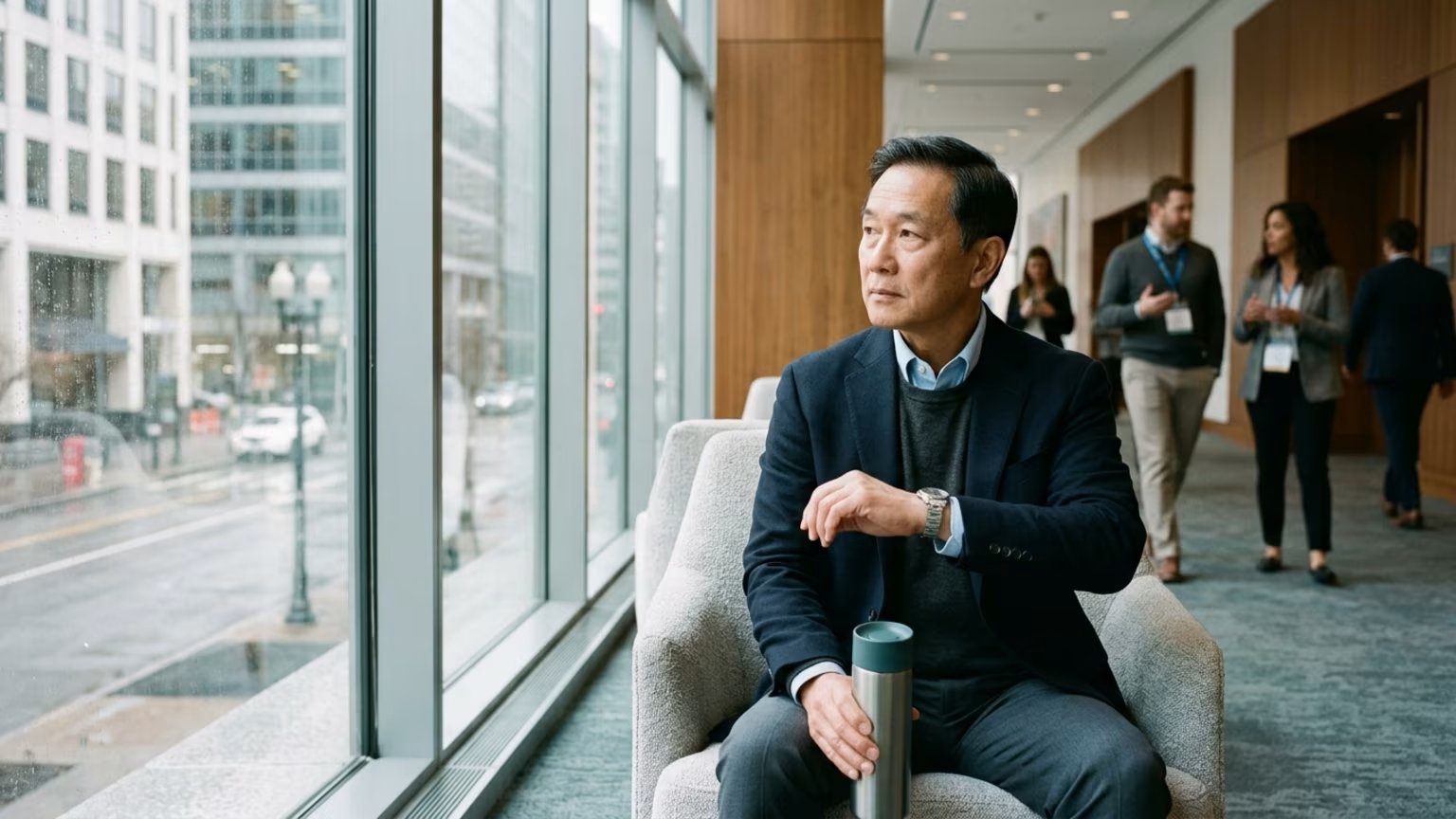

A new Science study reveals remote workers spend an extra hour alone daily, facing higher mental distress. Learn how leaders can design better work structures.





On September 14, 2026, Scripps News reported on a new study published in the journal Science. The research examined the relationship between remote work and mental distress. Findings indicate a clear pattern of increased social isolation among employees working outside traditional offices. This study provides concrete data on the structural tradeoffs of flexible work schedules.
The conversation around remote work often centers on productivity and commute times. This new analysis shifts the focus to psychological outcomes and daily social contact. Researchers found that remote workers spend significantly more time alone than their in-person counterparts. For leaders managing distributed teams, these findings present a distinct operational challenge.
The researchers analyzed five nationally representative surveys of United States workers. These surveys were conducted between 2011 and 2024. The study intentionally excluded the peak pandemic years to avoid exceptional lockdown conditions. This methodology helped distinguish longer-term work patterns from temporary crisis behaviors.
The study compared workers in jobs that can be performed remotely with similar workers in strictly in-person roles. This comparison is vital for understanding modern knowledge work. Researchers measured the average hours spent alone each workday. They also tracked the likelihood of an employee spending an entire day without any social contact. The goal was to quantify the exact reduction in human interaction.
Beyond measuring solitude, the team evaluated psychological impacts using a standardized statistical measure. They recorded mental distress levels across different work arrangements. The researchers even tested whether differences in health care access could explain the results. They found no comparable increases in unrelated medical visits or prescriptions.
A broader systematic review of 47 studies further supports these inquiries. This review evaluated data published between 2021 and 2025. It found associations between hybrid or remote work and elevated stress or psychological distress. However, the review also stated that these effects were neither uniform nor universal.
The data highlights a pronounced increase in solitary time for distributed teams. The Science study found that people working remotely spent approximately one additional hour alone per workday. This isolation was measured against similar workers who worked in person. Remote workers also reported significantly less socializing after their shifts concluded.
The effects were especially strong among employees who lived alone. Their likelihood of going an entire day without social contact increased by 7 percentage points. This represents an 83 percent increase from pre-pandemic levels. CNN reported that solo dwellers in remote-friendly jobs spent 25 percent of days without social contact.
This isolation rate was more than twice the rate reported among workers in non-remote-friendly jobs. Consequently, the study recorded a measurable shift in mental well-being. Mental distress among remote workers increased by 0.1 standard deviations relative to comparable in-person workers. These figures underline a serious shift in daily behavioral patterns.
Remote work is no longer a temporary adjustment. Scripps News reported that more than 20 percent of workers teleworked or worked from home in March 2026. They cited data from the Bureau of Labor Statistics. The Bureau of Labor Statistics 2025 state telework table confirms working from home remains a measurable labor market category. This persistent adoption means these isolation statistics reflect long-term structural changes.
Founders and executives must view social connection as a critical component of work design. The absence of a physical office removes the friction that naturally forces human interaction. Leaders cannot treat team camaraderie as an optional perk. It is a necessary mechanism for building stress resilience and sustainable performance.
I spent a week at a popular health conference recently. I left completely exhausted by the complexity of the advice offered there. Everyone was pushing a complicated gadget or a rigid daily routine. It struck me that true high performers do not have time to make health a full-time job.
They need maximum return on minimum viable effort. That observation became the filter for every piece of research we evaluate at ExecuFuel. Leaders should not combat remote isolation by adding complex wellness mandates to a busy calendar. Forcing rigid protocols onto an already tired team creates unnecessary friction.
The objective is to design social contact directly into the existing workflow. Leaders must intentionally build natural collisions into the daily structure. This might look like a dedicated time for unscripted problem solving. It could also take the form of quiet work blocks designed to provide presence without performance pressure.
Managers should pay particular attention to employees who live alone. Design transition rituals like a short morning connection or an end-of-day conversation. These small interventions help prevent the workday from becoming an uninterrupted block of solitary time. Consistent daily structure builds long-term psychological endurance.
Furthermore, leaders must actively protect recovery periods for their teams. The study noted that remote workers reported less socializing after hours. Executives should not assume that employees will automatically restore social contact in the evening. Structuring clear boundaries prevents prolonged isolation from compounding into reduced cognitive performance and mental clarity.
Filling every remote day with video meetings is an ineffective solution. Constant on-camera time drains energy without necessarily providing meaningful connection. Work arrangements must include informal check-ins and peer conversations. Small structural adjustments yield much better emotional returns than mandatory digital social hours.
Intellectual honesty requires clear boundaries around what this data actually proves. The reported findings are comparative associations rather than strict causal evidence. The available coverage does not establish that remote work alone directly caused each individual increase in distress. We must distinguish between an overlapping trend and an isolated trigger.
The study does not establish that remote work is harmful for every professional. Remote setups provide immense flexibility and convenience for many operators. Scripps News noted that previous research has actually found productivity benefits in some settings. The context of each individual household plays a massive role in the outcome.
Furthermore, readers should carefully interpret the psychological metrics. The 0.1 standard deviation increase in mental distress is a standardized statistical measure. This figure should not be presented as a percentage increase in diagnosed mental illness. It indicates a subtle shift in population averages rather than an acute clinical crisis.
We also need to recognize differences in terminology across the coverage. CNN referenced workers in remote-friendly jobs while Scripps News discussed remote workers directly. These two categories overlap significantly but are not perfectly interchangeable. Accurate workforce planning requires executives to understand these subtle data distinctions.
Finally, the exclusion of peak pandemic years helps narrow the focus. However, it does not completely eliminate all period or selection effects. The lack of similar increases in unrelated medical visits strengthens the findings. It does not absolutely eliminate the possibility of underlying health care access differences.
The debate around physical office attendance will likely mature in the coming quarters. Companies will stop treating remote work as a monolithic policy. The future of workforce planning requires segmenting employee needs based on household composition and social context. We expect to see more targeted frameworks for distributed operations.
Industry leaders will likely move away from broad mandates. They will adopt highly specific interventions to support mental resilience. Measuring workforce well-being through privacy-conscious methods will become standard practice. Identifying operational isolation early will prevent long-term performance degradation.
Future clinical studies will likely test specific social interventions within distributed teams. Researchers will look for the exact dose of interaction required to maintain cognitive health. Until then, operators must remain vigilant about their own daily structures. Managing solitary time is now a fundamental pillar of executive performance.
Organizations that master this balance will hold a distinct advantage. They will retain top talent by offering flexibility without sacrificing human connection. The future belongs to companies that treat social isolation as a correctable design flaw. Thoughtful structural design will always outperform reactionary policy shifts.
Stay connected for research and practical guidance on executive performance, energy, focus, sleep, recovery and longevity. Ideas built for people who want to stay sharp, capable and effective for the long run.





Build habits and systems that support clear thinking, steady energy and long term capacity throughout a demanding career.
explore the Blog