
A McGill-led PNAS study reveals that 20 minutes of exercise or a 90-minute nap can improve memory performance by 22% after 30 hours of sleep deprivation.





In September 2026, the Proceedings of the National Academy of Sciences published findings on preserving cognitive capacity during severe fatigue. A McGill University-led research team examined whether a brief bout of physical activity or a nap could protect memory after prolonged wakefulness. The resulting paper outlined similar benefits of exercise and naps via distinct neural contributions. Authors Madhura Lotlikar and Marc Roig presented specific, tested countermeasures for scenarios where sleep debt is unavoidable.
The findings offer a highly relevant framework for founders and operators who regularly navigate demanding professional lives. Many business leaders rely on caffeine or willpower to push through extended periods of wakefulness. This new research quantifies two practical recovery tools that can salvage memory performance under intense pressure. ExecuFuel examines how these interventions function and how professionals can apply them strategically to their daily executive performance.
The laboratory experiment involved 54 healthy young adults who remained awake for 30 consecutive hours. The McGill researchers maintained strict laboratory supervision to model an acute sleep deprivation scenario. Participants were assigned to one of three specific conditions to test recovery mechanisms. These interventions included 20 minutes of cycling, a 90-minute nap, or a control condition involving no active recovery effort.
The study participants were healthy young adults tested strictly under controlled conditions. Researchers ensured that no other variables interfered with the final outcomes during the wakefulness period. The control group received no active intervention to establish a clear baseline for typical severe fatigue. This structure provided a rigorous comparison point for measuring the true efficacy of both cycling and napping.
After completing their assigned intervention, participants viewed a series of images. The researchers then tested their ability to remember those visual assets three days later. Both the active exercise group and the nap group remembered significantly more images than the control group. The exercise and nap interventions produced statistically similar memory outcomes across the board.
These interventions appeared to work through completely different neural pathways. EEG recordings suggested that napping directly reduced sleep pressure and neural fatigue. This specific reduction created a brain state that was far more conducive to learning. Exercise did not eliminate the underlying sleep deprivation itself.
Instead, exercise appeared to support more efficient use of remaining cognitive resources during memory encoding. The McGill researchers described the exercise intervention as moderate-to-vigorous cycling. One account reported that participants in the active group exercised at approximately 80% of their maximum heart rate. This physical exertion allowed the brain to process information effectively despite the severe lack of rest.
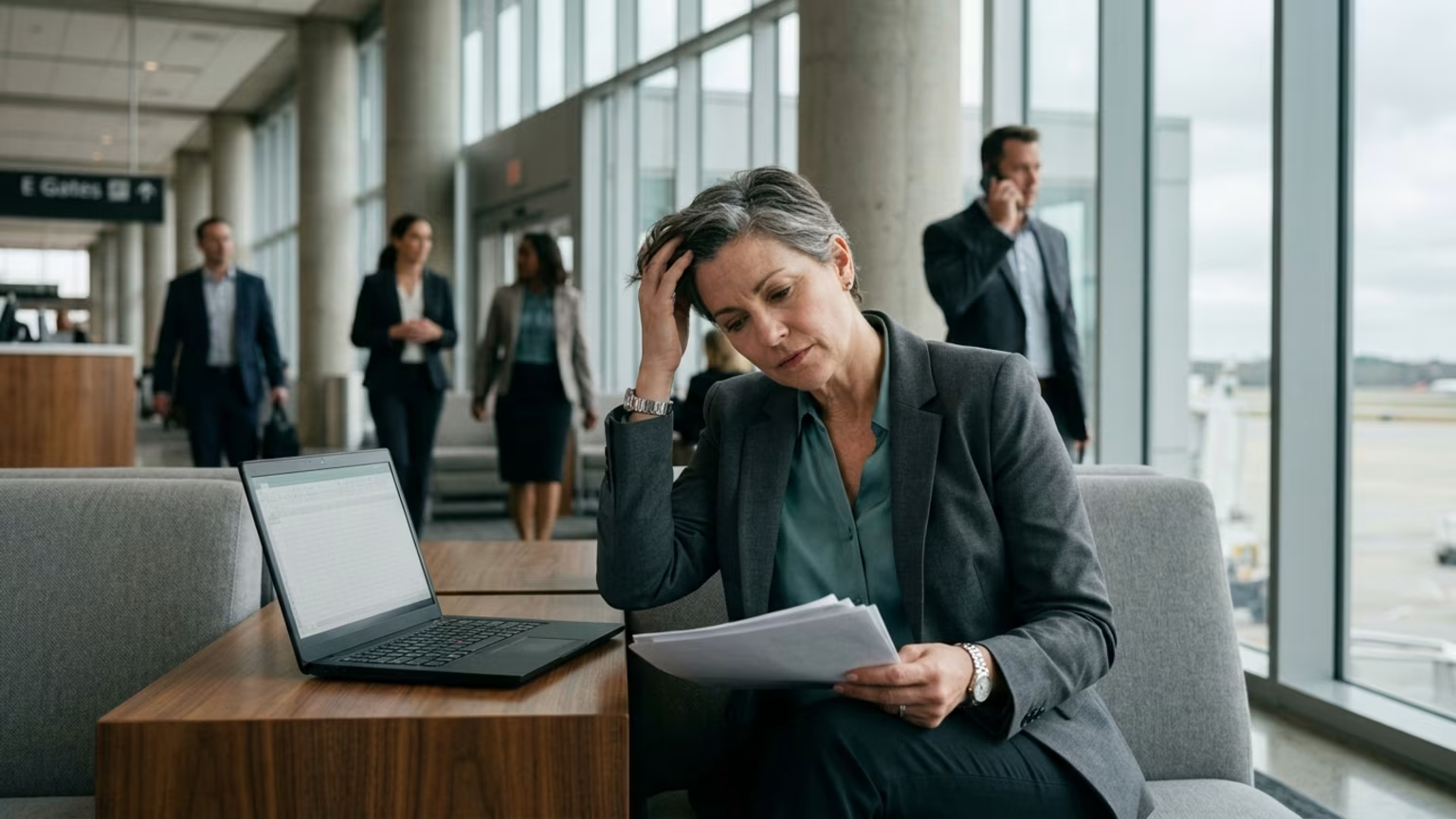
Sleep loss heavily impacts nearly every aspect of thinking and functioning for high-performing professionals. Marc Roig noted that many individuals cannot simply stop working and obtain more sleep during critical periods. These high-stakes periods often involve complex travel, overnight work, crisis response, or compressed decision windows. This research provides a structured approach to maintaining cognitive capacity when a full night of rest is impossible.
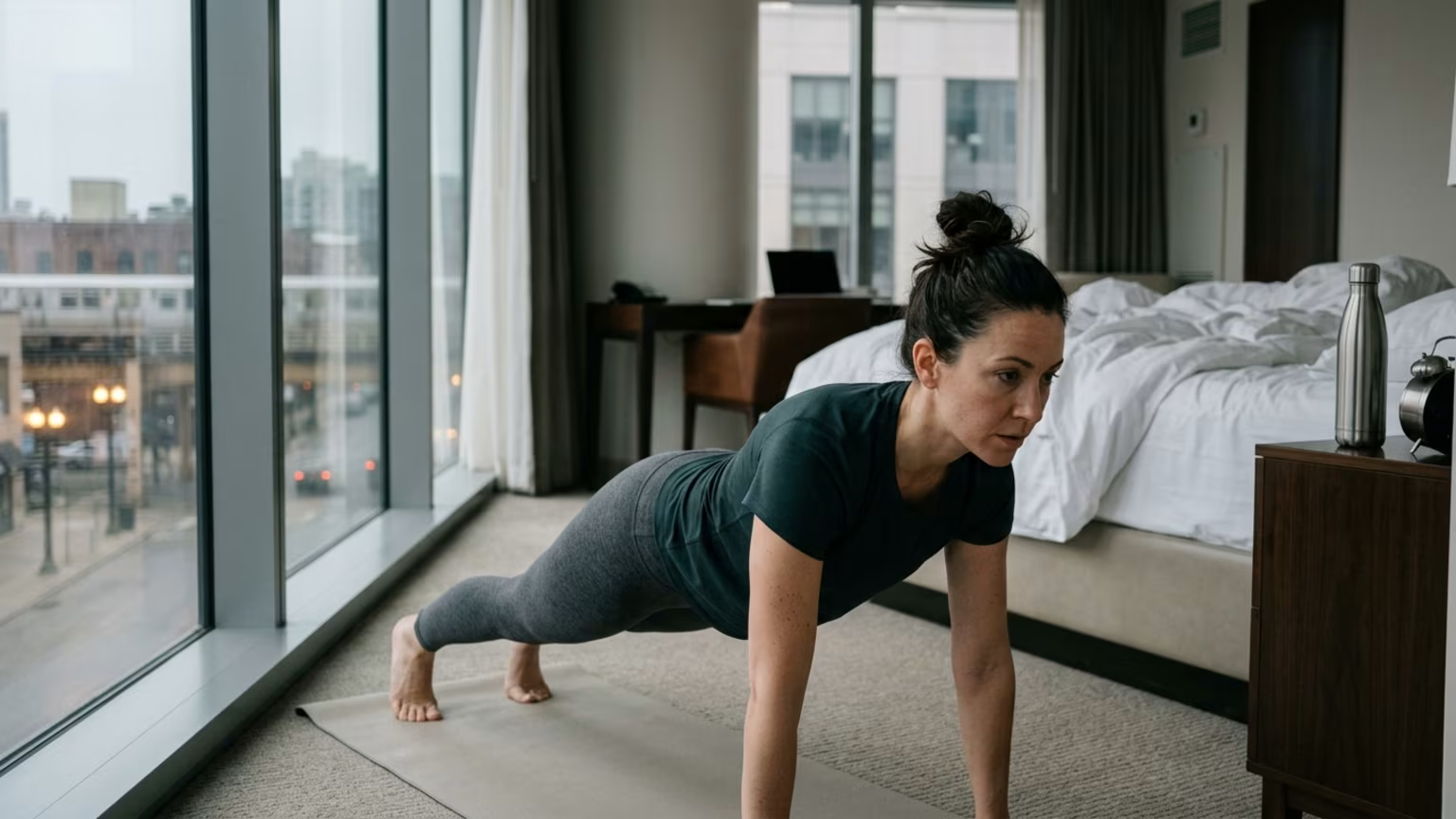
Professionals should use exercise strictly as a contingency tool rather than a sleep substitute. When an unavoidable period of acute sleep loss occurs, a short workout can serve as a practical countermeasure. Madhura Lotlikar described exercise as accessible, inexpensive, and easy to implement. A quick cycling session becomes highly valuable in situations where taking a 90-minute nap is entirely impractical.
Building a reliable structure for fatigue management requires more than isolated tactics. The McGill researchers characterized exercise as highly accessible for immediate deployment when formal rest is impossible. A proactive operator can keep basic equipment or a stationary bike available near their primary workspace. This simple preparation ensures that the cognitive countermeasure is ready the moment acute sleep debt occurs.
The operating environment should dictate the choice of your selected recovery tool. A 90-minute nap may reduce neural fatigue more directly than exercise if a protected time block exists. Furthermore, leaders should reserve critical learning and information intake for periods after a recovery opportunity. Placing important briefings and technical reviews after a short workout can help preserve episodic memory effectively.
Executives must also track the critical difference between subjective energy and actual performance. The exercise group did not report feeling more tired than the control group. Coverage of the study indicated that napping reduced tiredness more clearly. Feeling less impaired should never be treated as absolute proof that every cognitive function has fully recovered during focus and cognition tasks.
The McGill study delivered concrete statistical outcomes regarding memory preservation under stress. The headline result showed that participants who either exercised for 20 minutes or napped for 90 minutes performed notably better. These active groups achieved approximately 22% better results on memory tests than participants who received neither intervention. This quantified improvement highlights the significant value of structured countermeasures during severe physiological fatigue.
The consistency of these results provides a strong foundation for updated workplace protocols. Achieving a 22% improvement in memory function can mean the difference between recalling a critical data point or missing it entirely. These figures demonstrate that physiological interventions provide measurable defense against cognitive decline. The identical statistical standing of both groups proves that flexibility in recovery choices is entirely viable.
A separate report of the study provided specific average recognition rates for the visual tests. The exercise group demonstrated an average recognition rate of approximately 56%. The nap group achieved a 57% recognition rate, while the control group recorded only a 46% success rate. These figures confirm that both interventions provide a measurable advantage over simply enduring the fatigue.
The data also confirmed that neither active intervention was clearly superior to the other for this task. The exercise group secured a hit rate that was reported as 21% higher than the control baseline. Similarly, the nap group achieved a hit rate that was 23% higher than the control group. Both options offer a viable path to improved information retention during acute sleep deprivation.
ExecuFuel values intellectual honesty and clear boundaries around scientific research claims. The McGill researchers specifically cautioned that exercise cannot completely replace sleep. Their findings support a damage-control interpretation focused on preserving some memory performance during acute sleep deprivation. The study does not claim that a short workout restores normal alertness or complex judgment.
The experiment sample consisted entirely of healthy young adults rather than a representative executive population. This acute laboratory deprivation model differs materially from the chronic partial sleep loss experienced by many operators. Professionals dealing with irregular schedules, severe jet lag, and repeated early-morning commitments face different physiological challenges. The findings cannot automatically be generalized to older adults or people working under sustained sleep restriction.
The study exclusively measured memory for images, not the full range of abilities required for leadership. It did not establish that exercise or napping restores reaction time, emotional regulation, creativity, or negotiation skill. A professional might remember information better after exercising yet remain impaired in safety-critical decisions. The underlying physiological sleep deprivation remains a significant risk factor for sustained attention and risk assessment.
Finally, the two active interventions were not matched in total duration. The exercise session lasted 20 minutes, while the scheduled nap opportunity lasted 90 minutes. The researchers noted that equalizing these periods might have created an insufficient sleep opportunity or excessive exercise-related fatigue. The study also lacked a separate nap-control group, which highlights the need to validate these findings in real-world settings.
The scientific understanding of fatigue management continues to expand across different cognitive pathways. A separate study reported in the journal SLEEP found that moderate-intensity exercise improved delayed memory retrieval after shortened sleep. That distinct research examined slow-wave sleep as a possible explanatory pathway for these cognitive benefits. The broader implication is that physical activity may influence cognition through multiple physiological mechanisms.
This separate research found that sleep-restricted participants who exercised performed better on delayed memory retrieval. It reported that the exercise group achieved memory performance statistically comparable to participants given a full 8.5-hour sleep opportunity. However, executives should avoid collapsing these distinct cognitive outcomes into a single blanket claim. Future clinical trials will likely investigate how different workout intensities impact various types of cognitive tasks.
The broader scientific community will continue to investigate the boundaries of acute fatigue countermeasures. Future studies must determine whether these memory benefits apply equally to older professionals or those with medical conditions. Operators require clear data on how chronic partial sleep loss responds to similar physical interventions. Until that specific evidence emerges, these current findings serve as a specialized tool rather than a comprehensive solution.
Workplace fatigue-management systems will increasingly integrate these targeted, research-backed interventions. McGill researchers specifically identified health care, transportation, and emergency response as possible applications for these strategies. Executives can expect to see these protocols formalized into broader systems combining workload reduction, handoffs, and short recovery breaks. Operators should monitor this developing science to build reliable structures for sleep and recovery protocols over the long term.
Stay connected for research and practical guidance on executive performance, energy, focus, sleep, recovery and longevity. Ideas built for people who want to stay sharp, capable and effective for the long run.




Build habits and systems that support clear thinking, steady energy and long term capacity throughout a demanding career.
explore the Blog