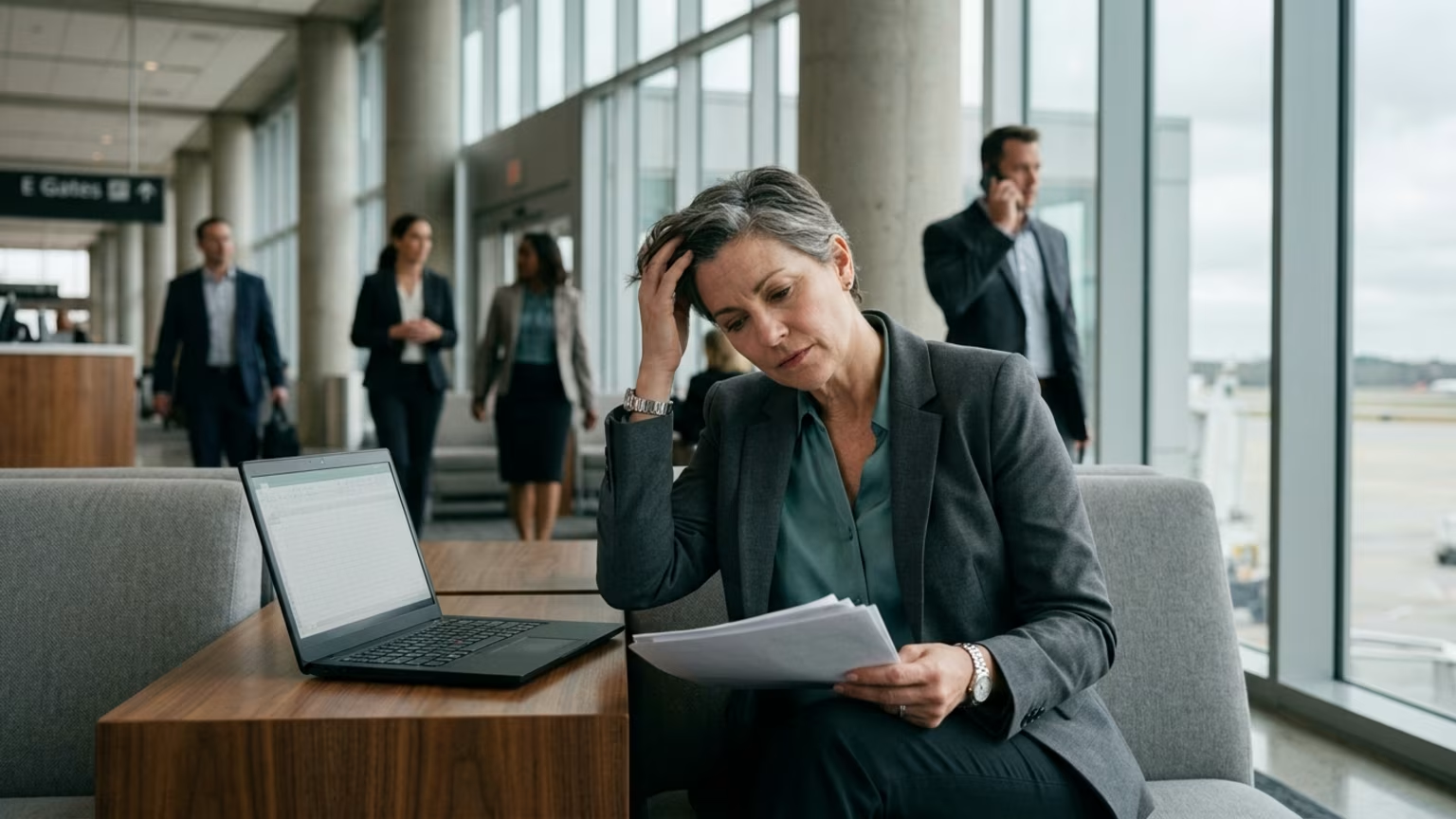

A recent controlled trial reveals that a 300 mg morning caffeine dose fails to improve complex cognition or reactive agility in healthy professionals.





A large cup of coffee will not fix a broken sleep architecture. High performance culture operates on the assumption that chemical stimulation guarantees sharper morning thinking. A recent clinical trial indicates this reliance is largely misplaced. We constantly see professionals trying to force cognitive output through sheer volume of stimulants. When an intervention fails to move the needle on objective metrics, it is time to reevaluate the strategy.
According to a recent article in News-Medical, researchers published a study in Nutrients examining morning caffeine ingestion. The study was a secondary analysis from a broader research program. They tested 51 healthy men aged 18 to 30. These recreationally active participants habitually consumed less than 150 mg of caffeine per day.
The researchers compared a 300 mg caffeine dose against a maltodextrin placebo and an open label control. They used a counterbalanced crossover design for the trial. Experimental sessions were separated by at least 72 hours. Participants followed strict controls involving standardized sleep, fasting, diet replication and intense exercise avoidance.
Participants ingested the caffeine or placebo at approximately 06:30. Testing was conducted about 60 minutes later under tightly controlled early morning laboratory conditions. The cognitive battery included the Trail Making Test, Rey's Auditory Verbal Learning Test and the Stroop word color interference test. None of those cognitive measures showed a clear difference between the caffeine and control conditions.
Reactive agility was assessed in a subgroup of 27 participants. This testing measured total contacts, mean movement time, cognitive motor efficiency and movement time variability. Caffeine did not significantly improve any of the reported reactive agility outcomes. It also failed to improve reported energy, physical tiredness, sleepiness and mood state scores.
The article notes that the study did not provide exact means, standard deviations, confidence intervals or specific effect sizes. Therefore, the result is best described as a failure to detect a meaningful benefit. Researchers noted that rectal temperature and mean skin temperature did not differ meaningfully among the three conditions. Despite these null findings, caffeine still has established uses in specific contexts.
Other research summarized in PubMed Central notes that 200 mg of caffeine did improve alertness and sustained attention. However, it found no improvement in memory, handgrip strength or wall sit endurance. A separate 2026 Nutrients study tested 300 mg of caffeine during standardized morning exercise. The intervention reduced perceived exertion but did not produce a clear improvement in repeated sprint performance.
Rather than relying on acute chemical stimulation, operators should build stable physiological baselines. A chief executive recently told me she was drinking six espressos a day just to get through her afternoon strategy sessions. When we looked at the half life of caffeine and her sleep data, the problem was glaringly obvious. Her solution for energy was destroying her deep sleep, which in turn destroyed her energy the next day.
We focus on these vicious cycles because breaking them is the fastest way to restore baseline performance. True cognitive capacity relies on restorative sleep and consistent circadian alignment. Relying entirely on stimulants masks the underlying deficit rather than resolving it. A well structured morning routine supports the biological systems that drive sustained mental endurance.
Environmental factors play a massive role in shaping daily alertness. Secondary reporting on a study involving more than 400,000 adults linked greater daytime natural light exposure with fewer insomnia symptoms. The same study associated natural light with less tiredness and greater ease of waking. While this does not provide a precise light prescription, it highlights the immense power of environmental inputs.
Consistent sleep opportunity, daylight exposure and targeted recovery protocols create a resilient foundation. These behavioral systems do not require precise dosing or artificial compounds. They leverage the natural rhythms of the body to support reliable daily output. Operators who master these basics rarely need extreme interventions to function.
The failure of the 300 mg dose to improve cognition in the recent trial underscores this reality. The study tested young men under unusually controlled conditions while they were fasting. If a massive chemical dose cannot reliably enhance cognition in a healthy sample, tired executives should look elsewhere. Foundational sleep health remains the absolute prerequisite for elite mental performance.
Professionals often attempt to stack massive caffeine doses on top of severe sleep deficits. This creates a direct biological conflict that damages long term output. An overnight work study involving 16 astronaut-aged volunteers demonstrated this exact tension. Low dose caffeine improved vigilance and reduced attention lapses during the active work period.
However, the intervention severely degraded subsequent recovery sleep. Wakefulness during the later sleep episode increased from 8.6 percent at baseline to 22.1 percent with caffeine under standard light. It reached 26.4 percent with caffeine plus blue enriched light. Slow wave sleep fell from 24.9 percent at baseline to 14.5 percent under standard light conditions.
This data proves that chemical interventions borrow energy from tomorrow rather than creating it today. Complex leadership capability requires both basic alertness and advanced working memory. The research shows caffeine might elevate simple vigilance without improving verbal learning or critical thinking. Therefore, using it to replace lost rest simply produces a fast but deeply impaired brain.
Furthermore, the News-Medical report confirms that the 300 mg dose failed to improve hunger, fullness or caffeine withdrawal symptoms. The assumption that morning coffee will cure physical sluggishness is not fully supported by the data. Executives must balance the brief subjective activation against the severe cost of disrupted sleep architecture.
Executives should treat a 300 mg morning caffeine dose as a personal preference rather than a guaranteed performance tool. Do not use coffee to compensate for overloaded schedules, inconsistent wake times or chronic fatigue. The controlled trial found no measurable advantage on complex cognitive batteries or subjective tiredness ratings. The study does not establish that caffeine is universally ineffective, but it proves that benefits are highly specific.
If you choose to use caffeine, track its impact through objective metrics. Monitor your error rates, writing quality or response times rather than relying on perceived sharpness. Avoid escalating your dose simply because the first cup feels ineffective. The recent study utilized a robust 300 mg dose and still found no meaningful cognitive improvement across its primary tests.
Protect your recovery sleep fiercely when using stimulants to manage travel or mandatory late hours. Build your morning around stable routines, adequate hydration and clearly prioritized first work blocks. For those focused on enduring mental clarity, structured habits offer a vastly superior return on investment.
The physical reality of human biology remains stubbornly consistent. No amount of morning stimulation can outmaneuver the basic requirements of a well rested mind.
Stay connected for research and practical guidance on executive performance, energy, focus, sleep, recovery and longevity. Ideas built for people who want to stay sharp, capable and effective for the long run.




Build habits and systems that support clear thinking, steady energy and long term capacity throughout a demanding career.
explore the Blog