
A new study reveals that middle-aged adults using a home HEPA air purifier performed 12% faster on cognitive tests. Learn how to implement this protocol.





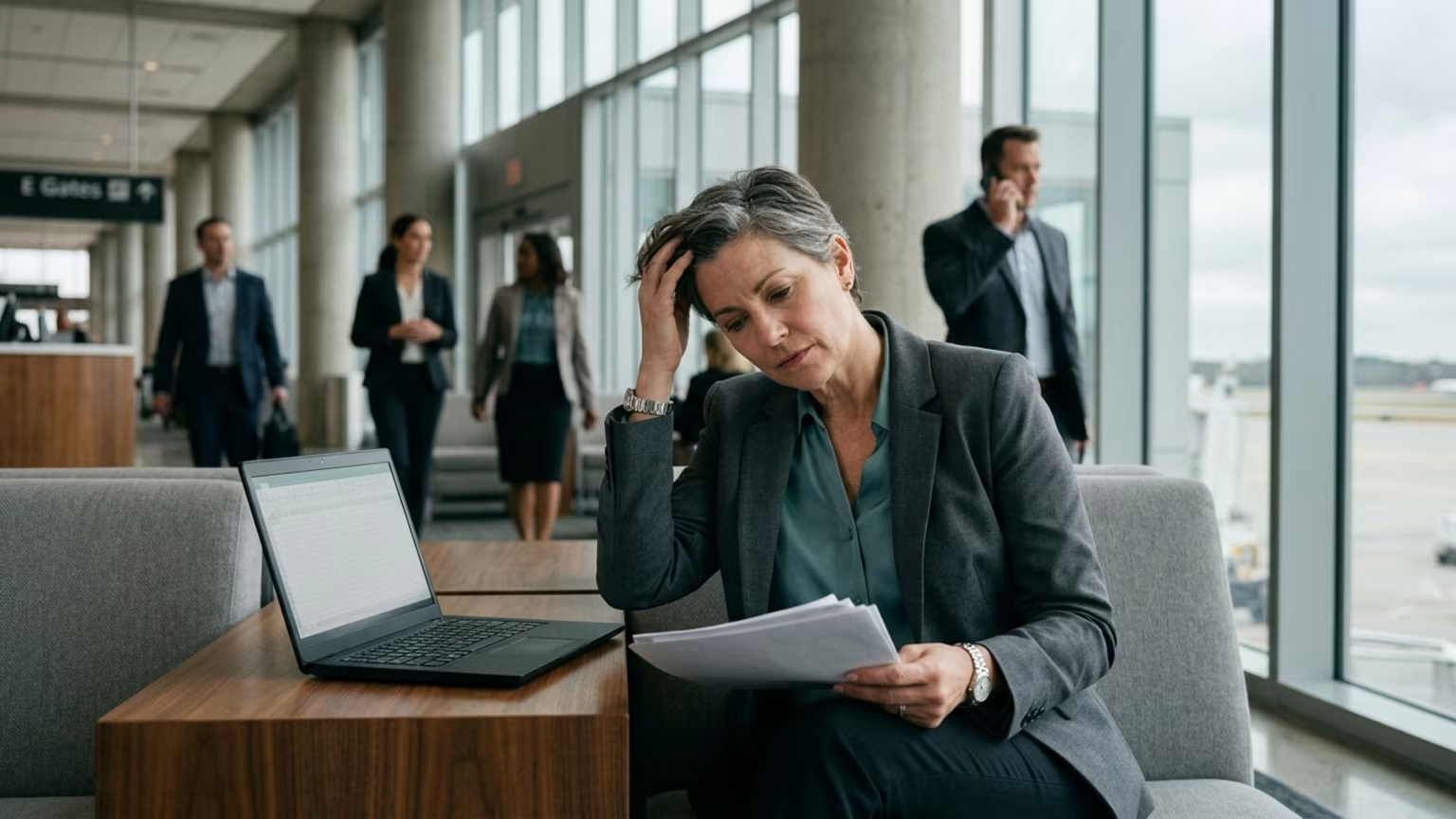
You are preparing for an afternoon board presentation with high stakes and tight margins. Your mental processing speed feels completely stalled as you review the final financial models. Sometimes, poor cognitive endurance stems from the very air you breathe.
A chief executive recently told me she was drinking six espressos a day just to get through her afternoon strategy sessions. When we looked at the half life of caffeine and her sleep data, the problem was glaringly obvious. Her solution for energy was destroying her deep sleep, which in turn destroyed her energy the next day. We focus on these vicious cycles because breaking them is the fastest way to restore baseline performance.
A new study published in Scientific Reports reveals a compelling link between indoor air quality and mental processing. The research suggests that reducing particulate exposure could offer a straightforward environmental intervention. This is particularly relevant for professionals in polluted urban centers where traffic density remains high. Improving the physical workspace can directly support clear thinking and mental agility during long hours.
The biological relationship between inhaled particles and brain function is increasingly well documented. A 2026 systematic review summarized by Frontiers in Environmental Health reported negative associations between air pollution and cognitive function. This review also found negative associations with decision-making ability and overall well-being. Addressing these factors is vital for anyone prioritizing their focus and cognition over the long term.
Another review summarized by CogBites analyzed data from nearly 7,000 adults. It found that higher exposure to PM2.5 and nitrogen dioxide was associated with lower scores on the Montreal Cognitive Assessment. The analysis also showed lower scores on the Digit Symbol Substitution Test. The report noted that each 5-microgram-per-cubic-meter increase in exposure was associated with lower scores on those specific tests.
The broader regulatory landscape reflects these growing health concerns. In 2021, the World Health Organization lowered its recommended annual PM2.5 guideline level from 10 to 5 micrograms per cubic meter. This aggressive reduction underscores the mounting scientific consensus regarding fine particulate exposure. Meeting these stringent targets indoors has become a major focus for performance-minded professionals.
These findings establish a strong foundation for the recent Scientific Reports study. Researchers analyzed data from 119 adults between the ages of 30 and 74. These participants lived within approximately 650 feet of highways in Somerville, Massachusetts. Living near major roads exposes residents to substantial traffic-related pollution on a daily basis.
The research team utilized a strict crossover design for the trial. Participants used either a functioning HEPA purifier or a sham purifier for a set period. The sham device looked and operated exactly like the real unit but did not filter the air. Participants then switched devices after a monthlong break to serve as their own comparison group.
After one month with the functioning HEPA purifier, a specific subgroup showed measurable changes. Adults aged 40 and older completed the relevant executive function and mental flexibility test about 12% faster. They achieved this faster completion time compared to their results after using the sham device. Adults aged 40 and older represented approximately 42% of the study sample.
Interestingly, this improvement was not observed among participants younger than 40. The researchers described the findings as a small but statistically significant improvement. They emphasized that participants used the purifier for only one month during the active phase. The researchers said that longer periods of air purification might sustain or increase the observed improvement, but that remains untested.
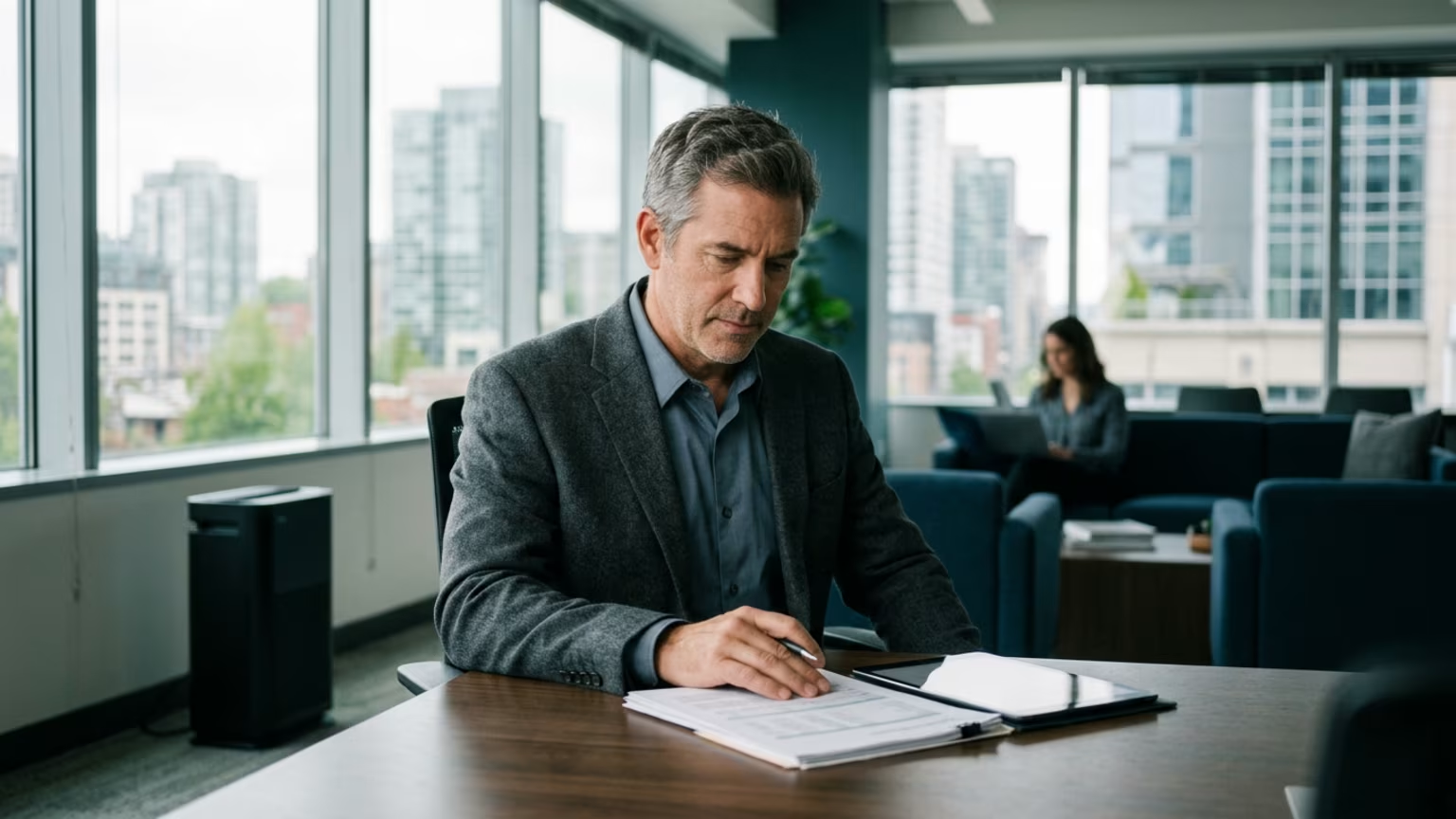
Professionals can apply these findings to build a reliable structure for mental clarity. The first step is to focus on high value cognitive zones. Prioritize the rooms where sustained attention, planning, analysis, and rapid task switching occur most frequently. If you work in a home office near a busy road, treat that room as your primary target.
Next, measure your baseline environment to avoid relying on assumptions. The recent trial compared a real device to a sham unit to ensure accurate data. Use a reliable particle monitor to determine whether indoor PM2.5 actually falls when your device operates. Real-world devices differ significantly in airflow, room size capacity, and filter condition.
You should then run a personal thirty day trial. The participants in the Massachusetts study used the HEPA purifier for only one month. You can run a similar one-month experiment while tracking your indoor PM2.5 levels. During this trial, monitor your perceived focus and objective work output closely.
Documenting your subjective experience provides valuable context during this trial phase. Write down your daily energy levels and note any shifts in your mid-afternoon concentration span. Small improvements in mental flexibility can yield significant compounding returns over a fiscal quarter. Consistent tracking prevents you from abandoning the protocol prematurely when immediate results fail to materialize.
Finally, ensure this intervention aligns with a comprehensive approach to health. Better air quality cannot replace fundamental physiological needs. Treat air filtration as one component alongside adequate rest and targeted noise management. Those seeking better sleep and recovery must also address these overlapping environmental factors.
Implementing any new protocol introduces potential friction points for busy operators. A HEPA purifier is not a complete indoor air strategy by itself. It does not address other indoor pollutants like carbon dioxide, volatile organic compounds, mold, or allergens. It also cannot replace adequate source control and proper building ventilation.
The realities of executive travel complicate environmental control significantly. Commuting, constant flights, and poorly filtered corporate buildings introduce variables that a home filter cannot mitigate. High-level schedules often force professionals into transit lounges where environmental control is essentially zero. You cannot carry a heavy filtration unit onto a commercial flight.
Maintaining this protocol requires realistic expectations about external environments. A personal purifier will not compensate for outdoor exposure during your daily commute or outdoor exercise. You will inevitably encounter high pollution levels the moment you step outside your controlled workspace. Executives must accept this limitation rather than chasing an impossible state of perfect environmental isolation.
Furthermore, single interventions often fail when foundational habits collapse. When schedules intensify, professionals sometimes abandon their baseline recovery routines. You cannot rely on a HEPA filter to mask the effects of severe sleep deprivation. Maintaining high levels of cognitive performance and mental clarity demands a holistic approach to physiological stress.
Deploying this protocol requires specific equipment to ensure actual particulate reduction. The recent trial utilized a functioning HEPA purifier capable of capturing microscopic traffic pollution. When selecting a device, confirm that the clean air delivery rate matches the square footage of your workspace. An undersized unit will simply move stale air around the room without cleaning it.
You should also invest in a standalone indoor air quality monitor. A dedicated sensor allows you to verify that the filtration system actually works. Place the monitor near your desk to track PM2.5 levels throughout the workday. This data helps you determine exactly when to replace the HEPA filters.
Neglected equipment quickly becomes a liability rather than a performance asset. Clogged filters force the machine to work harder while delivering a lower clean air delivery rate. Establish a recurring calendar reminder to inspect your filtration media every three months. Building strong stress resilience and sustainable performance means eliminating these small points of friction in advance.
Employers testing these systems should evaluate indoor air quality in traffic-exposed offices systematically. Compare cognitive outcomes or comfort levels before and after deploying filtration units. Account for confounders such as background noise, temperature, ventilation, and seasonal workload changes. The current study alone is not sufficient to justify a universal corporate mandate without local testing.
Understanding these biological pathways reinforces why the right tools matter. A separate 2026 review described possible biological pathways connecting inhaled particles with brain effects. These included oxidative stress, neuroinflammation, and mitochondrial dysfunction. Other proposed mechanisms involve vascular injury and disruption of the blood brain barrier.
When your schedule blows up, complex environmental protocols are often the first thing to break. The most sustainable approach focuses entirely on your primary deep-work location. Ignore the rest of the house and isolate the one space where demanding analytical work happens. This localized strategy drastically reduces the time and money required to see potential benefits.
At ExecuFuel, we emphasize interventions that require zero daily willpower. An air filtration unit operates automatically in the background while you focus on pressing business priorities. Set the device to run continuously during your normal working hours. This ensures the air is consistently filtered without adding another task to your daily checklist.
The evidence suggests a practical starting point for middle aged professionals in urban settings. If you live near major roads, cleaner indoor air may support certain cognitive functions. Treat filtration as a low-risk environmental experiment rather than a guaranteed productivity multiplier. Do not expect it to increase company revenue or overhaul poor leadership decisions.
Start by improving the exact location where your most critical thinking occurs. Identify the room where you make your most important decisions and place a functioning HEPA purifier there today.
Stay connected for research and practical guidance on executive performance, energy, focus, sleep, recovery and longevity. Ideas built for people who want to stay sharp, capable and effective for the long run.




Build habits and systems that support clear thinking, steady energy and long term capacity throughout a demanding career.
explore the Blog