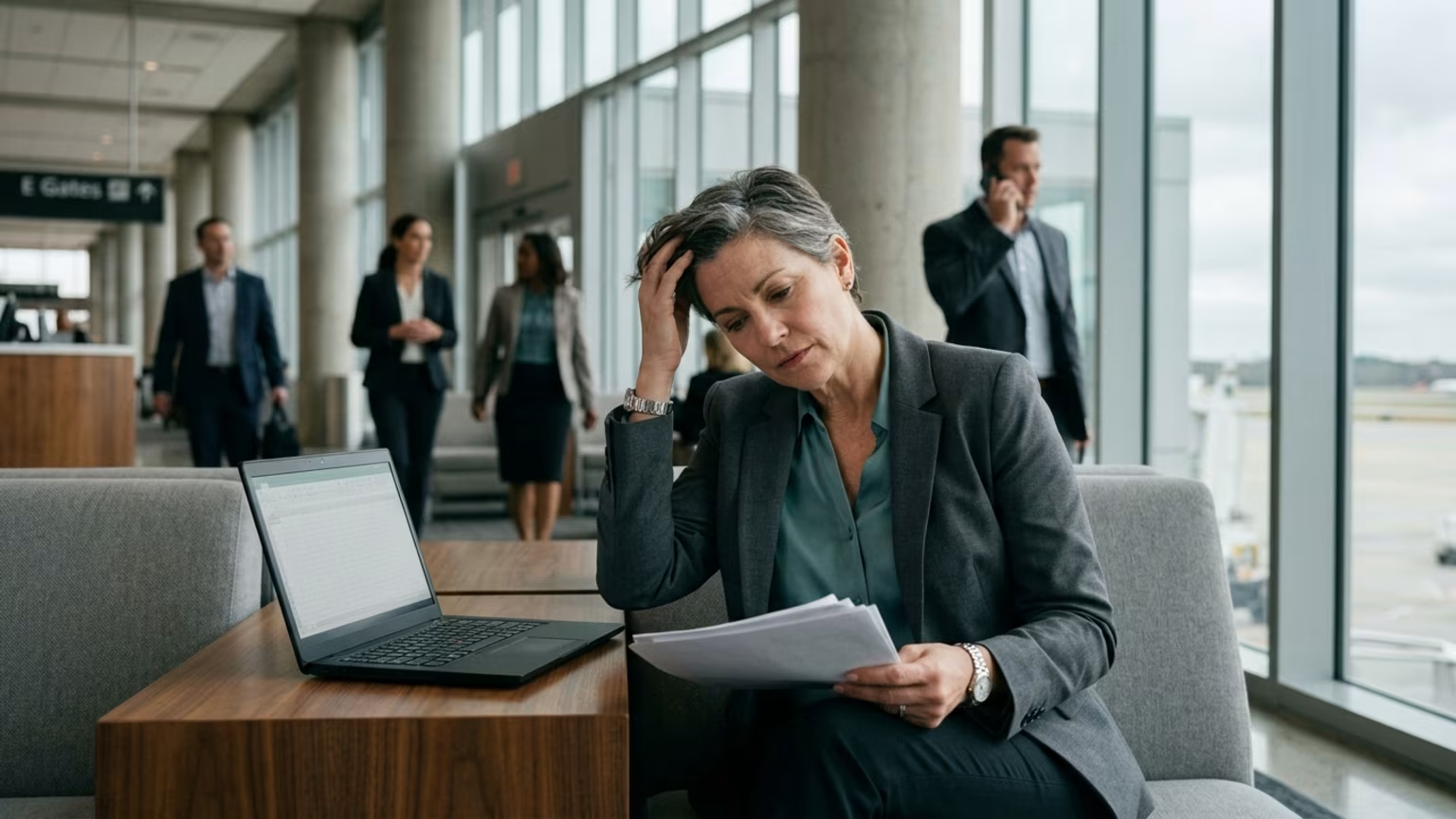

A Harvard-recommended morning routine for executives highlights delaying phone use, adding early movement, and seeking natural light to boost daily focus.





An executive wakes at 5:30 AM to a completely quiet house. Her very first action is reaching blindly for the glowing screen on her nightstand. Within seconds, urgent operational emails hijack her attention before she even sits up.
A resilient morning structure is the deliberate management of cognitive and physiological inputs during the first waking hour to establish a reliable performance baseline. It is the body's ability to switch efficiently from deep rest to high cognitive output. Many professionals mistakenly treat this transition as an immediate toggle switch. They rely on caffeine and adrenaline to force the system online.
However, human biology requires specific environmental and physical cues to sustain focus. Deliberately sequencing your morning inputs protects your attention for the demanding hours ahead. Managing these early variables creates a sturdy foundation for daily resilience. This approach replaces chaotic reactivity with a controlled launch sequence.
The underlying event is a lifestyle article published by SoSoir on August 30, 2026. This feature described a morning routine attributed to Harvard. The reported protocol was intended to improve everyday energy, productivity, and performance. The article’s three central recommendations are highly specific.
They advise readers to delay phone use after waking, begin the day with physical activity, and spend approximately 30 minutes in natural sunlight. The biological reality of this routine centers on how external cues regulate internal clocks. Light affects circadian timing depending heavily on exactly when it is received. Morning light generally advances circadian timing, which supports earlier and more robust wakefulness.
In contrast, light in the biological evening can delay the internal clock. The SoSoir article notes that morning light reduces melatonin activity. This precise mechanism helps reset the biological clock for the new day. Natural light exposure serves as a powerful anchor for your entire schedule.
Physical activity adds another critical layer of physiological readiness. SoSoir refers to a study published in December 2024 in the International Journal of Behavioral Nutrition and Physical Activity. This research examined the effects of morning movement on cognitive function. The study claimed that moderate-to-vigorous morning exercise was associated with notable cognitive benefits.
Researchers noted improvements in working memory, episodic memory, perceived energy, and cerebral blood flow. The scientific understanding of exercise is also moving beyond grueling, hour-long workouts. A 2026 peer-reviewed study reported that just 10 minutes of very slow running generated measurable benefits. This brief session improved mood and reduced Stroop interference time, which is a key measure related to executive function.
The researchers also observed that this short run produced activation in the left lateral prefrontal cortex. This brain region is vital for complex decision making and sustained attention. Harvard Health provides broader context for these movement and attention guidelines. Their experts recommend at least 150 minutes of moderate-intensity aerobic exercise per week.
They note that aerobic exercise increases blood flow to the prefrontal cortex, which directly supports focus. Furthermore, Harvard Health specifically recommends limiting digital distractions to preserve this focus. They advise silencing smartphone notifications and avoiding multitasking when deep concentration is required. This guidance treats sleep regularity, exercise, circadian alignment, and cognitive workload as deeply connected variables.
I remember landing at Heathrow after a brutal overnight flight from New York. I had a board meeting in three hours. The standard advice of getting eight hours of sleep felt like a cruel joke. That was the exact moment I realized our readers do not need perfect scenarios.
They need triage protocols. They need to know what the science says about recovering cognitive function when you only managed three hours of terrible sleep at high altitude. This tension explains exactly why demanding professionals reach for their devices immediately. When sleep is compromised, executives seek a rapid sense of control over chaotic schedules.
Unfortunately, grabbing a phone floods the brain with reactive demands before the body is fully awake. A founder might start the day reacting to messages, news, and operational alerts. This immediate digital immersion directly contradicts Harvard Health’s guidance on distraction reduction. Founders frequently ignore morning light because they prioritize clearing their inbox immediately.
They mistakenly believe that starting work earlier yields a higher volume of productive output. In reality, skipping physical activation and light exposure limits vital blood flow to the brain. This habit systematically undermines the very cognitive performance and mental clarity required to lead effectively. Without morning movement, the body remains sluggish and reliant on artificial stimulants.
The executive lifestyle systematically creates conditions that ruin natural morning rhythms. Late dinners, evening client calls, and international travel consistently push sleep timing out of alignment. When the alarm rings, founders often feel they are already behind schedule. This manufactured urgency makes taking thirty minutes for a walk feel entirely irresponsible.
Ambitious professionals often view health protocols as all-or-nothing endeavors. If they cannot manage a full workout, they abandon the morning routine entirely. The primary article explicitly warns that imposing a rigid ritual can become a source of pressure. Treating a morning structure as a mandatory performance burden misses the point entirely.
The objective is to build an adaptable executive performance system, not to add another stressful task. Rigid rules often break under the reality of travel schedules and late evening meetings. A sustainable approach focuses on minimum effective habits rather than absolute perfection. Professionals must learn to protect their cognitive space even during highly demanding weeks.
You do not need to follow a rigid, inflexible script to see measurable benefits. Executives can translate these concepts into a low-friction first-hour experiment. The goal is to establish realistic habits rather than extreme, unsustainable interventions. By restructuring your initial waking hour, you can create a protected zone for physiological activation.
The SoSoir article advises readers not to make the smartphone their first point of contact. The most immediate change requires zero extra time or special equipment. Keep your phone outside immediate reach, or use a separate alarm clock where practical. Delaying nonessential digital inputs allows your nervous system to boot up naturally.
Essential emergency contacts can remain available while you postpone checking social feeds and emails. The goal is to reduce unnecessary reactive input, not to impose an absolute ban. Some individuals genuinely need a phone for health monitoring, caregiving, or transportation. You must adapt this delay to fit your specific professional and personal responsibilities.
Morning movement does not require a grueling hour at an expensive gym. The routine recommends beginning the day with physical activity like running, yoga, or strength training. As the 2026 study demonstrated, even 10 minutes of very slow running can activate your prefrontal cortex. Use a simple walk, a short mobility sequence, or a brief yoga session.
The primary goal is achieving consistency, not chasing maximum physical intensity. Short exercise is not a substitute for adequate sleep, but it provides a critical activation signal. This physical engagement helps clear residual grogginess before you tackle complex strategic problems. Routine movement establishes a reliable transition between rest and active work.
Combine your physical activity with outdoor exposure whenever it is practically possible. The article recommends approximately 30 minutes of natural sunlight after waking. Outdoor brightness varies substantially with weather, season, geography, and time of day. Even if you cannot manage a full half hour, stepping outside provides a valuable circadian signal.
This simple energy and productivity habit helps regulate your internal timing. Morning light exposure acts as a powerful counterbalance to late-night screen time. It sends a clear biological message that the active phase of your day has begun. Consistent light exposure supports a more robust and predictable energy curve.
Harvard Health advises removing distractions, avoiding multitasking, and working in focused blocks. You can apply this logic directly to your protected morning window. Use the post-movement period for one high-value cognitive task before checking your inbox. This might involve strategic thinking, creative problem solving, or reviewing your most important decision.
Instead of assuming the routine works, test it against your actual daily performance. For two to four weeks, track your perceived energy, mood, and sleep quality. Monitor the number of reactive interruptions you experience and your ability to complete critical tasks. This evidence-based approach aligns with the core principles of stress resilience and sustainable performance.
Protecting your first waking hour is a fundamental investment in your career longevity. By controlling initial inputs, you preserve mental stamina for critical afternoon decisions. You are actively managing your cognitive capacity rather than surrendering it to external operational demands. Consistent routines effectively align your circadian rhythms with your demanding professional obligations.
Consistent routines also compound their benefits over weeks and months. As your circadian alignment improves, you will likely notice higher quality sleep at night. Better sleep naturally reduces the friction of waking up the following morning. This positive feedback loop eventually eliminates the need for heavy caffeine consumption.
Over time, this biological alignment prevents the accumulated fatigue that frequently derails promising careers. A structured start protects your most valuable executive asset, which is your capacity for clear judgment. This daily practice transforms a chaotic morning into a deliberate launchpad for sustained success. Relying on environmental cues creates an automatic baseline of resilience.
For your next workday, leave your phone charging in the kitchen instead of on your nightstand.
Stay connected for research and practical guidance on executive performance, energy, focus, sleep, recovery and longevity. Ideas built for people who want to stay sharp, capable and effective for the long run.





Build habits and systems that support clear thinking, steady energy and long term capacity throughout a demanding career.
explore the Blog