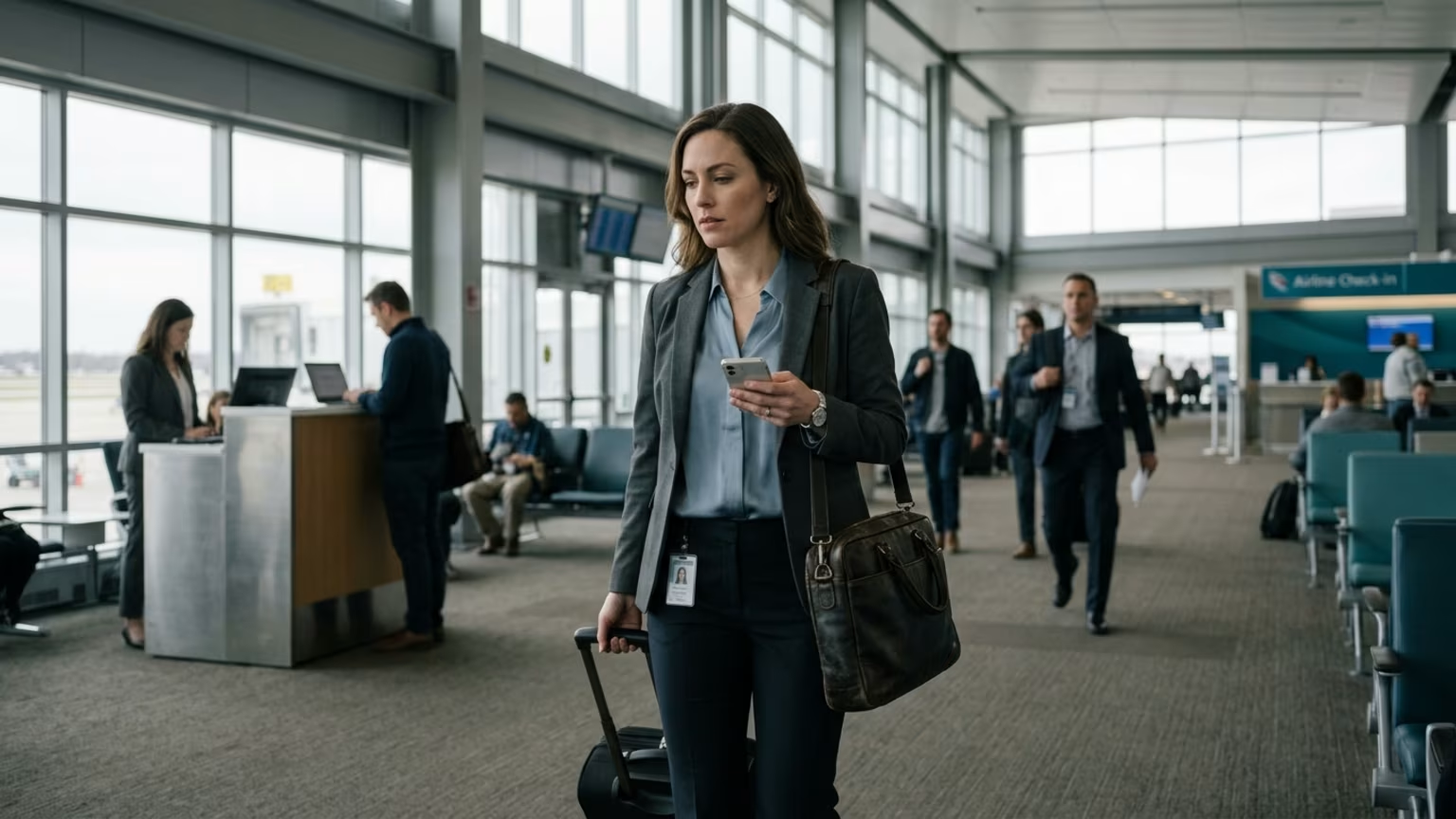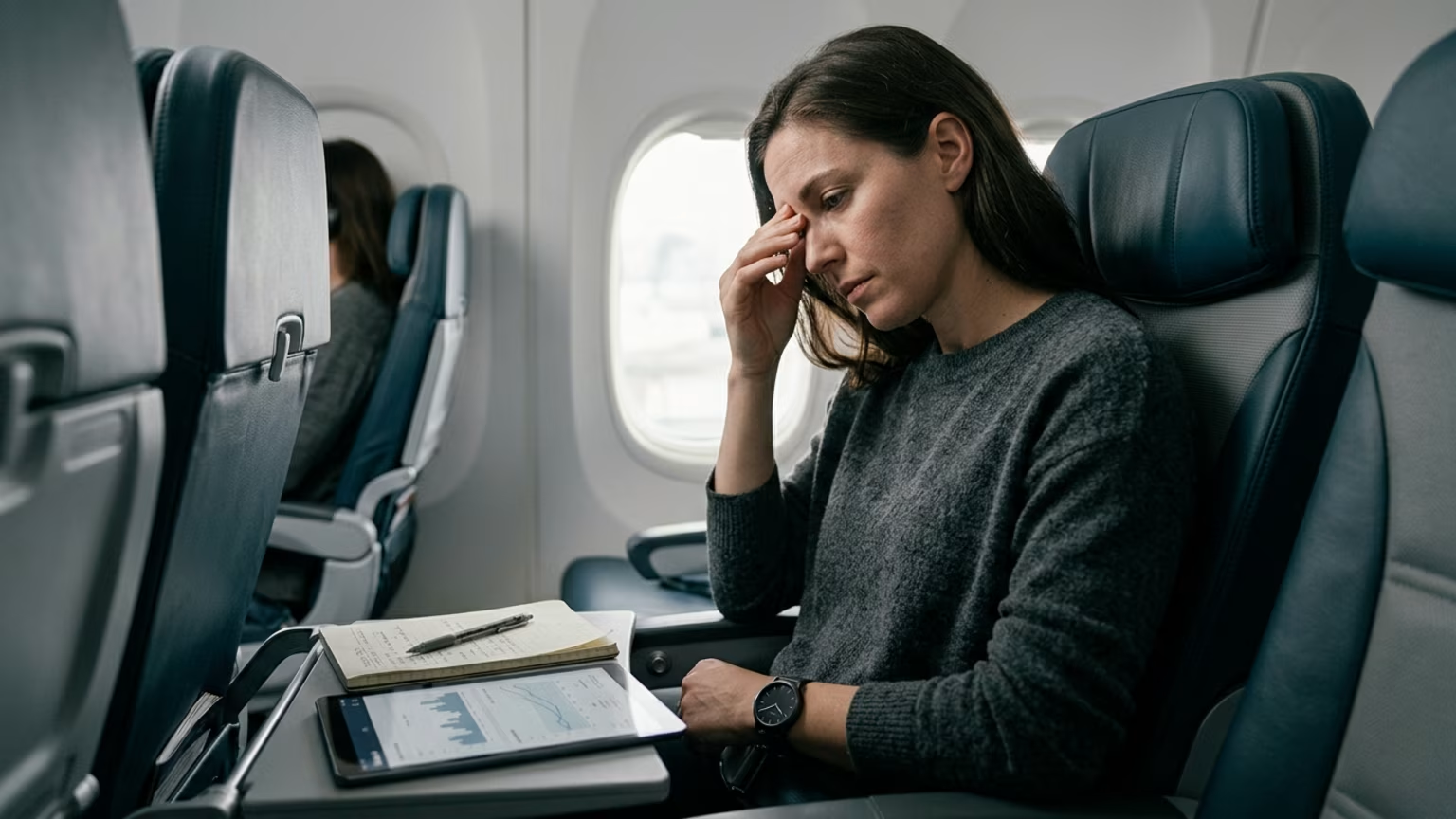

An analysis argues that matching evening exercise to a personal fatigue threshold builds sleep pressure without causing overnight hyper-arousal for executives.





On September 22, 2026, Business Today Malaysia published a detailed analysis regarding physical exhaustion and sleep. The article was authored by physiotherapist Alif Azman Bin Zainal Azman and published under the title "Beyond Sleep Hygiene: Why the Real ‘Off-Switch’ For Rest Is Somatic". It examines how bodily discomfort directly limits sleep onset for active individuals. The central premise is that achieving true rest requires more than just clearing the mind or putting away screens.
The publication argues that physical pain, joint irritation, and muscle tension act as constant threat signals. These persistent signals prevent the nervous system from fully settling into a restorative state. For professionals managing high workloads, cognitive relaxation techniques often fail if the body remains physically activated. The analysis points toward physical tension as a primary, overlooked barrier to deep rest.
To address this physical barrier, the author introduces the concept of precisely dosed movement. Exercise builds homeostatic sleep pressure, which is biologically necessary for falling asleep quickly. However, the analysis notes that pushing physical exertion too far in the evening can easily backfire. Vigorous late-evening training can raise cortisol levels and increase core body temperature exactly when the body needs to cool down.
This dynamic creates a delicate physiological balance for anyone relying on late workouts to manage daily stress. The ultimate goal is to accumulate enough physical tiredness to support sleep onset without provoking excessive arousal. Standard sleep advice often ignores this physical balancing act in favor of mental relaxation. The new analysis brings somatic awareness and bodily comfort to the forefront of executive recovery planning.
The core of this analysis rests on managing physiological arousal rather than simply following a rigid clock. It is important to note that this is an expert analysis from a clinical physiotherapy perspective. It is not a newly published controlled clinical trial, nor does it present original patient data. Instead, the author deconstructs the physical mechanics of autonomic regulation, airway function, and evening exercise timing.
A significant portion of the article focuses on the required transition between distinct nervous system states. Successful sleep onset requires a decisive shift from sympathetic activation toward parasympathetic activity. The analysis argues that lingering physical discomfort can stall this necessary transition, keeping the body on high alert. When nociceptive signals continually reach the brain, they can contribute directly to frustrating nighttime arousals. In turn, insufficient sleep steadily reduces a person's pain tolerance the following day.
The analysis frames daily exercise as a powerful tool that must respect an individual fatigue threshold. The operational concept here is that movement should create useful sleep pressure without causing overnight hyper-arousal. Finding this threshold requires understanding how specific, high intensity exercise affects core body temperature over time. Elevated body heat from a vigorous workout delays the natural cooling process required for cellular repair and sleep.
To help individuals cross the threshold into rest, the author outlines several physical interventions. These targeted methods include extended-exhalation breathing, soft-tissue work, careful spinal positioning, and broad postural alignment. Respiratory-muscle training and myofunctional therapy are also discussed as potential methods to address somatic barriers. These structural techniques aim to physically signal safety to a chronically activated nervous system.
Translating these clinical findings into the reality of a demanding career requires careful workload management. Many founders and operators rely heavily on intense evening workouts to clear their heads after deeply stressful days. According to this somatic framework, that late habit might actually compound physiological stress. A hard workout layered on top of a highly demanding day can leave a professional far too activated to sleep.
This situation creates a practical recovery question rather than a strict, unbreakable scheduling rule. Ambitious professionals must decide if a planned evening workout will successfully discharge their accumulated physical tension. If the training session merely adds another activating demand, it will likely delay their evening recovery. The overarching goal is to build a reliable recovery structure that accurately respects the body's current physiological state.
This philosophy directly reflects our own foundational experiences in the industry. "I spent a week at a popular health optimization conference and left completely exhausted by the complexity," our team recalls regarding the early days of ExecuFuel. "Everyone was pushing a new supplement protocol, a complicated gadget, or a rigid daily routine. It struck me that true high performers do not have time to make health a full time job."
That realization fundamentally shifted our approach to executive health. "They need maximum return on minimum viable effort," we concluded. "That observation became the filter for every piece of research we publish."
Applying a minimum viable effort approach to exercise timing means focusing on a simple dose and response. Rather than following rigid online advice, busy professionals should track their own personal reactions to evening exertion. Notice exactly how workout intensity, finish time, and perceived exertion impact sleep onset and next-day energy. This localized, personal data provides a much clearer picture of your actual fatigue threshold.
When a demanding workday has already produced substantial cognitive and physiological strain, adjust the evening physical load. Preserve hard, exhaustive training for periods with a sufficient, protected recovery margin. Substitute walking, dedicated mobility work, or gentle cycling on days with unusually high occupational stress. This adaptable strategy supports consistent energy and physical performance without risking overnight hyper-arousal.
While the somatic analysis advises significant caution around late exercise, the broader scientific literature offers specific counterweights. Vigorous evening exercise is not uniformly harmful to long term sleep quality. The Sleep Foundation highlights a 2019 systematic review and meta-analysis of 23 distinct studies on this topic. This extensive research review found that evening exercise generally did not damage sleep in healthy participants.
The 2019 meta-analysis recorded specific, modest changes in human sleep architecture following evening workouts. Researchers noted a precise 7.7-minute increase in the time before the first REM period. The compiled data also showed a 1.3-percentage-point increase in deep, restorative slow-wave sleep. Additionally, there was a minor 0.9-percentage-point reduction in lighter stage-one sleep across the studied subjects.
These clearly recorded metrics challenge the widely repeated internet rule that all late exercise ruins rest. The clinical evidence supports a conditional interpretation where exercise timing and movement intensity dictate the final outcome. A sweeping, blanket prohibition on evening workouts is simply not supported by the available data on healthy adults. For many driven professionals, moderate evening activity is perfectly compatible with high quality sleep and recovery.
The main physiological factor to monitor is the proximity of vigorous, high heart rate exertion to bedtime. The Sleep Foundation notes that some people become noticeably more alert after exercising late at night. Consequently, experts commonly recommend leaving at least two hours before bed for exercise-related activation to properly settle. Furthermore, they advise building toward 150 minutes of general weekly activity to support long term health.
At ExecuFuel, we consistently prioritize intellectual honesty over absolute claims or viral health trends. It is critical to recognize the genuine limitations of both the recent somatic analysis and the historical meta-analysis data. The concept of an individual fatigue threshold is an undeniably useful analytical framework for tired professionals. However, it is not an established clinical protocol backed by large scale, universally verified outcomes.
The recent article does not provide a controlled, peer reviewed comparison of different exercise loads. It lacks quantified fatigue threshold tests and offers absolutely no specific outcome data from high-demand corporate workers. Furthermore, the 2019 meta-analysis exclusively examined healthy participants engaging in acute, temporary evening exercise. Those generally positive results may not safely generalize to executives suffering from chronic pain, clinical insomnia, or extreme occupational burnout.
We must also be incredibly careful regarding the modern use of technology to measure these personal thresholds. The available scientific sources do not establish a validated, universal fatigue metric for active executives. Current wearable devices cannot reliably determine the ideal evening training load for every person based on heart rate variability alone. Any wearable-based physical experiment should be treated strictly as a personal tracking aid, not a definitive diagnostic system.
Finally, the physical interventions discussed in the analysis have distinct, legally defined clinical boundaries. Basic breathing exercises and general postural alignment are not safe substitutes for professional medical evaluation. Snoring, severe daytime sleepiness, witnessed breathing pauses, and persistent localized pain require thorough clinical assessment. Attempting to solve suspected obstructive sleep apnea with minor exercise timing adjustments is completely unsupported by current medical guidance.
The conversation surrounding executive recovery is clearly moving far beyond generic, outdated sleep hygiene checklists. The rigid instruction to simply avoid glowing screens and slightly lower the room temperature is no longer sufficient. Future professional recommendations will likely focus heavily on highly individualized, flexible workload management. This necessary evolution includes balancing daily cognitive stress with the appropriate physical exertion to achieve true, restorative rest.
We expect to see significantly more nuanced clinical guidance regarding the distinction between moderate movement and vigorous training. The health industry is beginning to recognize that gentle evening activity can actually facilitate vital autonomic down-regulation. Conversely, aggressive late night training will continue to be heavily studied for its potential to severely delay core temperature cooling. Leading professionals will need to continuously adapt their stress resilience strategies based on these emerging, highly specific distinctions.
Looking ahead, long term recovery planning for high performing leadership teams must become a comprehensive discipline. It should carefully account for existing pain, physical tension, daily environmental conditions, and the precise timing of work demands. A fully customized approach to systemic fatigue management will eventually replace most generalized, one size fits all rules. Until then, careful personal self-observation remains the most effective tool for navigating the physical demands of high level performance.
Stay connected for research and practical guidance on executive performance, energy, focus, sleep, recovery and longevity. Ideas built for people who want to stay sharp, capable and effective for the long run.



Build habits and systems that support clear thinking, steady energy and long term capacity throughout a demanding career.
explore the Blog