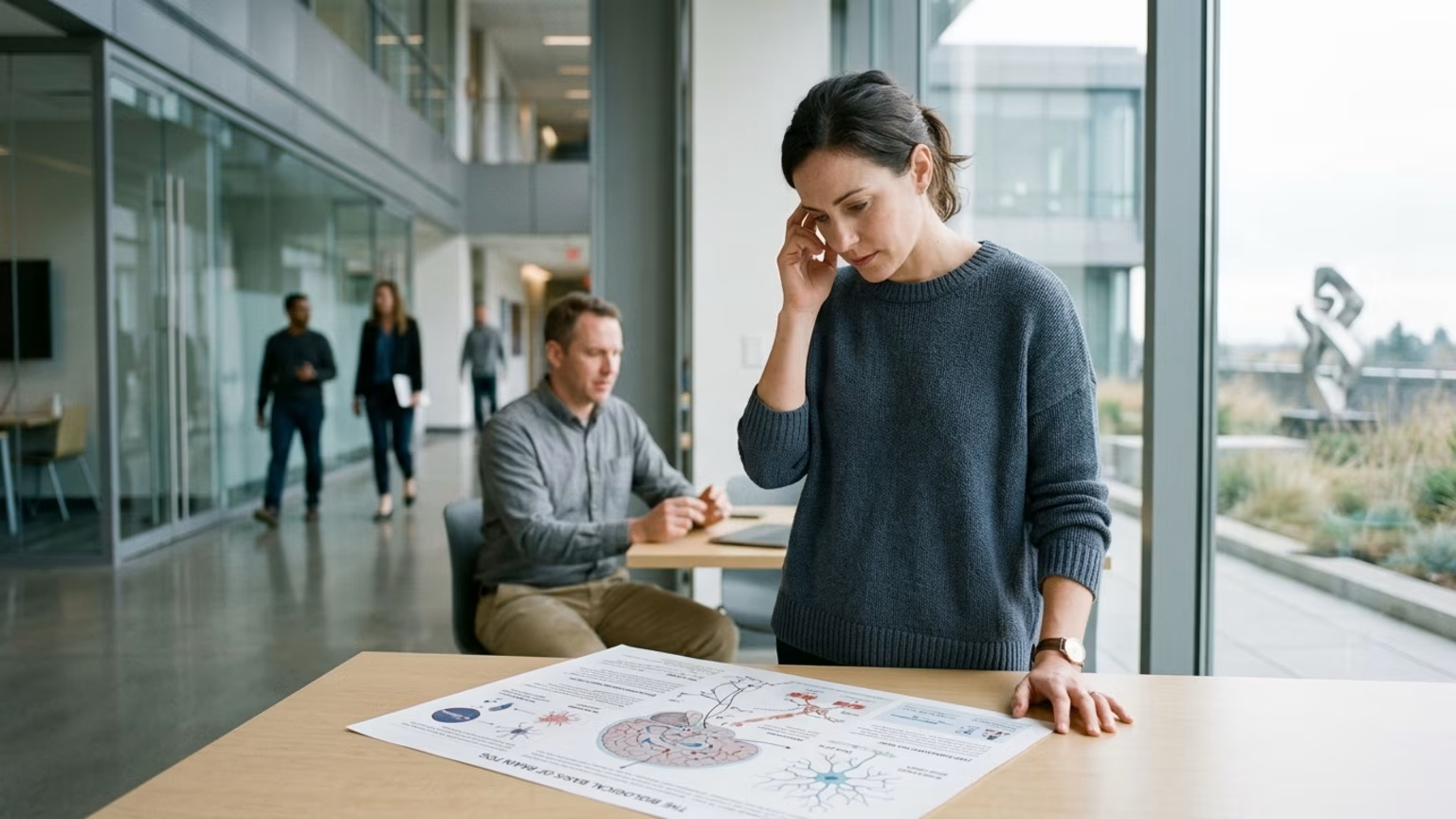

Technology Networks released a new scientific explainer detailing the biological mechanisms of brain fog, neuroinflammation, and cognitive clouding.





On September 2, 2026, Technology Networks published a new explainer video detailing the biological mechanisms behind cognitive clouding. The release, titled What Is Brain Fog, Biologically?, is part of the publisher's "Teach Me in 10" series. Produced by Laura Hemmingham, PhD, the piece features insights from Michael VanElzakker, PhD. VanElzakker serves as an assistant professor at Harvard Medical School and directs the Neuroinflammation Research Laboratory at Massachusetts General Hospital.
He also teaches as an instructor at Tufts University and co-founded the PolyBio Research Foundation. The explainer synthesizes current evidence on neuroinflammation, neurotransmitter changes, and network-level disruptions. It outlines how immune signals communicate with the nervous system. The primary focus rests on giving professionals a science-grounded vocabulary for assessing cognitive symptoms.
Technology Networks frames brain fog as a variable constellation of symptoms rather than a single recognized disease. These symptoms often include poor concentration, forgetfulness, and general mental fatigue. The core scientific message is that cognitive clouding can arise from complex communication between the immune and nervous systems. However, the exact mechanisms and root causes differ significantly among individuals.
VanElzakker's contribution highlights how immune signals can influence brain function and contribute to performance deficits. The explainer addresses three specific questions relevant to cognitive function. First, it reviews how immune-brain signaling may influence cognition. Second, it explains why brain fog remains difficult to define and measure objectively.
Third, it outlines why identifying an individual's underlying physiological causes can improve subsequent interventions. The video acts as a science-literacy tool rather than a diagnostic framework. It does not present a single biomarker, a universal mechanism, or a generalized intervention. The biological basis of these symptoms requires individualized investigation.
Neuroinflammation and immune-brain signaling play central roles in current cognitive research. The explainer emphasizes that peripheral immune activity and central nervous system communication can affect complex brain functions. VanElzakker investigates these interactions specifically in infection-associated chronic illness and related neurological symptoms. His work provides a rigorous methodological framework for understanding subjective cognitive complaints.
Research suggests that cognitive symptoms can involve interactions among immune, endocrine, metabolic, mitochondrial, and neurotransmitter systems. This complexity means that neurotransmitter changes are part of a broader physiological network rather than a standalone issue. Simple deficiency models do not accurately reflect the coordinated activity required for high-level mental tasks. Attention, working memory, processing speed, and cognitive control depend on coordinated activity across multiple systems.
They do not rely on one isolated brain region. A 2026 study of non-severe traumatic brain injury reported altered functional connectivity involving visual, limbic, and cognitive-control regions. This context illustrates how disrupted connectivity can affect complex brain functions. Apparent cognitive clouding may have multiple underlying causes, including sleep disruption, illness, stress, medication effects, or mood symptoms.
A 2026 preprint examining persistent neurological symptoms after COVID-19 adds crucial context to this discussion. The research reported cognitive and fatigue differences between participants but found no evidence of disease-specific adaptive immune activation in cerebrospinal fluid. This finding underscores the necessity of precise, individualized evaluation rather than blanket biological assumptions. The more defensible conclusion is that immune-brain signaling represents an important research hypothesis rather than a universal explanation for mental clouding.
This scientific framework offers immense practical value for demanding professional environments. Leaders must distinguish transient tiredness from clinically meaningful cognitive clouding. Transient tiredness is merely a short-lived reduction in energy or alertness. Cognitive symptoms involve specific difficulties with concentration, memory, processing speed, word retrieval, or task switching.
Persistent cognitive dysfunction refers to recurring symptoms that interfere with work and merit formal clinical evaluation. This vocabulary is much more precise than labeling every dip in energy as brain fog. Instead of making vague assessments about productivity, executives should track specific cognitive domains. Observing changes in sustained attention, working memory, or decision speed provides far better operational data.
Leaders should also examine recovery inputs before drawing any broad conclusions about performance. Sleep quality, illness, workload, and stress heavily influence daily cognitive performance. Managing these inputs is a core component of sustainable leadership. Executives must build structured routines that account for physiological reality.
When a team member reports cognitive clouding, building reversible flexibility into their workload is a pragmatic step. Accommodations might include fewer simultaneous priorities, written decisions, shorter meeting blocks, and asynchronous follow-up. These adjustments function as performance management measures rather than medical treatments. They avoid assuming a particular biological cause while supporting the individual.
Recent clinical investigations provide specific data points regarding cognitive function and recovery inputs. A reported 2026 neurologic long-COVID study involving 62 participants combined immune profiling, sleep monitoring, standardized cognitive testing, and single-cell RNA sequencing. The report indicated that higher minimum nighttime oxygen saturation was associated with better processing speed among these participants. This finding highlights a potential relationship between sleep-related physiology and daytime cognitive capacity.
Sleep architecture is also emerging as a quantifiable variable for long-term brain health. A 2026 Sleep Advances study reported that higher sleep EEG-derived brain-health scores were associated with slower declines across multiple cognitive domains. The study recorded associations of 0.015 standard deviations per year for memory preservation. It also reported an association of 0.009 standard deviations for executive function and 0.011 for language.
These precise figures demonstrate how researchers are attempting to quantify cognitive preservation over time. A related Sleep study provided further context on this extended timeline. It reported that higher mid-to-late-life sleep brain-health scores were associated with better digital and traditional neuropsychological performance more than a decade later. These findings underscore the importance of consistent recovery habits.
They reinforce why busy professionals must protect sleep and recovery as part of their long-term career strategy. Consistent sleep quality supports sustained executive performance across demanding decades of work. Evaluating these specific metrics helps operators make informed decisions about their daily routines. Focusing on measurable inputs is far more effective than chasing vague symptom relief.
While the science of cognitive clouding is advancing rapidly, clear limitations remain. The term brain fog serves as a symptom label rather than a formal medical diagnosis. Available evidence does not establish one universal inflammatory pathway for all forms of cognitive fatigue. The underlying mechanism remains unsettled, and assuming a single cause for all productivity slumps is scientifically inaccurate.
A temporary lapse in focus after a demanding week should not automatically be treated as evidence of neurological disease. Subjective symptoms and objective performance are not identical. The Technology Networks explainer specifically highlights the difficulty of defining and measuring these symptoms objectively. Individuals can experience substantial cognitive difficulty even when standard tests do not capture every aspect of their daily functioning.
Furthermore, post-infectious cognitive dysfunction research should not be generalized to every tired professional. Ordinary tiredness, acute sleep loss, burnout, and medication effects do not necessarily share the same biology as post-viral conditions. Leaders must avoid amateur medical diagnosis in the workplace. Executives should not infer neuroinflammation, neurotransmitter deficiency, or sleep apnea from a single missed deadline.
The relationship between sleep measures and cognitive outcomes does not prove that a particular wearable will reverse all symptoms. Associations in clinical literature do not equate to direct, guaranteed workplace interventions. When cognitive problems persist or worsen significantly, the appropriate step is clinical assessment rather than unsupported self-treatment. This cautious approach aligns closely with VanElzakker's emphasis on individualized evaluation.
The scientific consensus is moving toward more structured and domain-specific cognitive endpoints. General subjective labels are gradually being replaced by precise clinical measurements. The NE3107 long-COVID trial illustrates this broader shift away from treating brain fog as a single undifferentiated outcome. The trial utilizes a composite Cogstate score based on standardized performance across several distinct cognitive tasks.
It incorporates separate computerized measures of attention, memory, psychomotor function, and processing speed. The clinical community recognizes that these new measurement frameworks are still developing. The researchers behind the NE3107 trial note that their primary outcome is intended for estimation and hypothesis generation rather than definitive hypothesis testing. This transparent acknowledgment of uncertainty is exactly what rigorous science demands.
It confirms that the field is still establishing the biological markers of cognitive fatigue. Executives must maintain a similarly objective stance when evaluating new health claims. This methodological evolution will likely influence how executive health programs assess cognitive stamina in the future. As researchers isolate the specific networks and physiological inputs that drive performance, workplace frameworks will need to adapt.
Future trials will continue to differentiate among distinct cognitive domains rather than treating mental fatigue as a single phenomenon. Leaders should anticipate a growing emphasis on objective clinical assessments over generalized symptom tracking. Understanding the biological basis of fatigue allows operators to implement targeted, structured management practices. This rigorous approach replaces guesswork with a clear framework for sustained performance over the long term.
Stay connected for research and practical guidance on executive performance, energy, focus, sleep, recovery and longevity. Ideas built for people who want to stay sharp, capable and effective for the long run.





Build habits and systems that support clear thinking, steady energy and long term capacity throughout a demanding career.
explore the Blog