

A systematic review reveals that using alcohol to fall asleep faster disrupts REM sleep and degrades next-day executive performance. Learn why the nightcap fails.





On September 25, 2026, Izvestia reported a clear warning regarding the common habit of using alcohol as a sleep aid. Neurologist Ekaterina Demyanovskaya of Hemotest Laboratory detailed how alcohol before bed creates initial relaxation and speeds sleep onset. However, this same practice simultaneously reduces overall sleep quality and causes significant next-day fatigue. The findings challenge the traditional executive nightcap routine directly.
The core issue involves a fundamental misunderstanding of how ethanol affects the central nervous system. Ethanol increases inhibitory processes that produce temporary relaxation and chemical drowsiness. Demyanovskaya cautioned that this chemically induced drowsiness does not mean the body is receiving restorative recovery. The distinction between sedation and actual rest is critical for long-term health.
The primary article distinguishes sharply between the different phases of rest required for daily functioning. Slow-wave sleep supports essential physical recovery after demanding days. Conversely, REM sleep contributes to processing daily information, managing complex emotions, and critical memory consolidation. When alcohol interferes with this delicate structure, the consequences echo throughout the next working day.
The mechanical effect of alcohol on rest changes drastically over the course of a single night. During the initial hours, the sedative effect of alcohol tends to dominate the nervous system. This sedation can easily trick a busy professional into believing they are recovering well. The reality beneath the surface is far more disruptive to sustained physical and mental performance.
A systematic review and meta-analysis of 27 studies examined subsequent sleep in healthy adults. The review found that alcohol delayed the onset of REM sleep in a directly dose-dependent way. It also reduced total REM sleep duration across the entire night. REM sleep is the specific phase responsible for processing daily information and consolidating complex memories.
Sammie Gill is a senior nutrition scientist at the British Nutrition Foundation. The Guardian quoted Gill describing alcohol strictly as a sedative rather than a natural sleep provider. She noted that alcohol triggers nighttime awakenings that contribute to severe tiredness the following day. As blood-alcohol concentration falls, sleep becomes lighter and highly fragmented during the second half of the night.
The systematic review delivered specific dose thresholds that complicate the traditional evening decompression routine. The review reported that measurable REM disruption appeared at doses of up to 0.50 grams of alcohol per kilogram of body weight. The source describes this measurement as approximately two standard drinks. At this relatively low dose, drinkers are already compromising the sleep stage most critical for cognitive function.
The data regarding sleep onset latency presents an even starker contrast for busy professionals. Measurable reductions in the time it takes to fall asleep appeared only at much higher doses. The review noted that sleep onset was reduced mainly at doses of at least 0.85 grams per kilogram of body weight. This higher threshold is described in the research as roughly five standard drinks.
The dose range associated with falling asleep faster was therefore also associated with the greatest disruption to sleep architecture. The math behind the nightcap simply fails to support sustained professional recovery. Drinking enough to speed sleep onset guarantees a heavily degraded rest cycle. This mathematical mismatch forces professionals to reevaluate their approach to evening relaxation entirely.
Founders and operators frequently treat rapid sleep onset as the primary marker of a successful rest strategy. This subjective feeling of falling asleep fast is highly misleading. We know the realities of demanding professional lives require pragmatic solutions rather than perfect routines. Sometimes the rigorous schedule simply does not allow for a full night of natural rest.
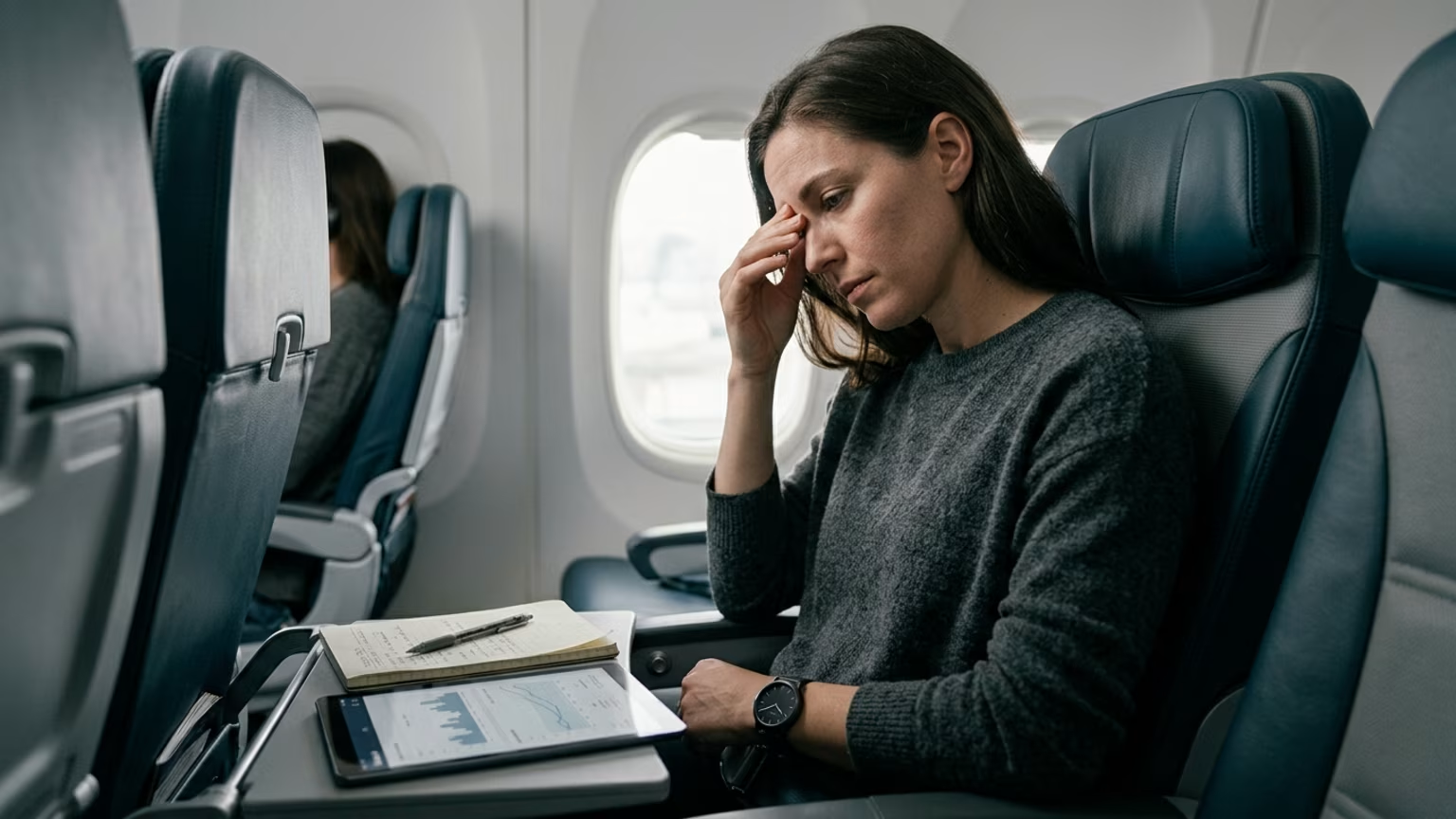
I remember landing at Heathrow after a brutal overnight flight from New York. I had a board meeting in three hours. The standard advice of getting eight hours of sleep felt like a cruel joke. That was the exact moment I realized our readers do not need perfect scenarios.
They need triage protocols. They need to know what the science says about recovering cognitive function when you only managed three hours of terrible sleep at high altitude. Reaching for alcohol to force sleep during these narrow recovery windows guarantees a poor outcome. The resulting delayed REM sleep directly degrades memory recall and emotional regulation for the critical hours ahead.
Founding a company or leading a division requires sustained mental endurance across multiple quarters. Relying on an evening drink to transition from work mode to rest mode is a common but flawed strategy. Operators often fail to connect their afternoon brain fog with their evening nightcap. When you measure performance objectively, the correlation between reduced REM sleep and daytime fatigue becomes undeniable.
We consistently observe that high performers underestimate the cognitive toll of fragmented rest. The brain relies on complete sleep cycles to clear metabolic waste and repair neural pathways. Interrupting this essential maintenance process with ethanol forces the brain to operate at a deficit. Over time, this cumulative deficit degrades executive function and emotional resilience.
Regular alcohol use as a way to fall asleep can lead to tolerance and physiological dependence. This creates a dangerous cycle where it becomes harder to relax without increasing the dose. Executives must also consider how alcohol interacts with underlying respiratory conditions. Alcohol physically relaxes the upper airway muscles during the night.
This muscular relaxation can worsen snoring and increase breathing interruptions for people with obstructive sleep apnea. Sleep health guidelines consistently recommend avoiding evening alcohol for anyone concerned about fragmented rest. Combining alcohol with sleeping pills or sedatives presents an even more severe safety risk. Demyanovskaya warned that this specific combination can intensify central nervous system depression.
This mixture may produce dangerous respiratory depression while a person is unconscious. Professionals building a reliable sleep and recovery system should strictly avoid mixing these substances. If business dinners or social routines involve drinking, timing matters greatly. Advisory Board reported guidance from sleep expert Matthew Grandner and specialist Fariha Abbasi-Feinberg on this specific scheduling challenge.
They recommend consuming an evening drink at least several hours before bed. This separation reduces the likelihood that sedative effects will directly overlap with the sleep period. Tracking morning alertness and focus will reveal the true cognitive cost of evening drinks. Professionals who track their cognitive performance and mental clarity quickly spot the negative trends.
For executives who feel unable to fall asleep without alcohol, the primary source identifies a deeper issue. This difficulty is a possible sign of an underlying sleep problem that requires clinical attention. Addressing the root cause of stress with a doctor is far more effective than increasing the evening dose. Masking professional burnout with a chemical sedative ensures the physiological problem will eventually compound.
A defensible executive performance message is not that one drink always ruins sleep. The true warning is that alcohol creates a highly misleading feeling of faster sleep onset. This false sense of security increases the risk of poorer sleep architecture and less effective next-day recovery. We urge readers to track their nighttime awakenings after evenings with and without alcohol.
The systematic review provides clear dose thresholds but comes with necessary scientific caveats. The 27 studies focused exclusively on healthy adults. These specific findings should not automatically be generalized to every population or underlying clinical condition. Individual metabolic rates and distinct drinking patterns can significantly alter how alcohol disrupts the night.
Furthermore, the definition of a standard drink varies greatly by country and beverage strength. The dose thresholds of two and five drinks are presented strictly as approximate figures. The cited sources clearly support claims about REM disruption and severe next-day tiredness. However, they do not prove that a single evening drink will inevitably cause measurable impairment in every single individual.
The underlying mechanisms of second-half sleep disruption are largely attributed to alcohol metabolism and sympathetic activation. This detailed mechanism serves as an expert explanation rather than a universally established outcome for all drinkers. ExecuFuel prioritizes intellectual honesty regarding these scientific limits. We refuse to state that one drink will completely ruin every night of sleep.
The current evidence base strongly supports a shift in how we measure successful rest. Future clinical guidance will likely move entirely away from sleep latency metrics. We expect to see a growing emphasis on sleep architecture and next-day cognitive functioning. The goal is to build a reliable recovery structure rather than chemically forcing unconsciousness.
Industry shifts are already reflecting this deeper understanding of human physiology. Wearable technology and sleep tracking devices are moving beyond simple duration metrics to measure exact sleep stages. This technological advancement allows leaders to see the exact moment alcohol begins to fragment their rest. The data provides undeniable proof that chemical sedation cannot replace natural recovery.
We anticipate that high-performing organizations will soon recognize sleep architecture as a critical component of risk management. Board members and investors expect leaders to maintain sharp cognitive capacity during difficult market conditions. Protecting that capacity means abandoning outdated habits that actively destroy mental clarity. Real performance requires honest observation of what truly supports the human nervous system.
Operators who experience persistent daytime sleepiness should seek proper clinical assessment immediately. Attempting to manage sleep apnea or chronic stress with a nightcap only masks the underlying physiological deficit. As the science of executive performance advances, professionals will need to separate temporary sedation from actual restoration. Clear thinking requires a highly disciplined approach to nighttime recovery over the long term.
Stay connected for research and practical guidance on executive performance, energy, focus, sleep, recovery and longevity. Ideas built for people who want to stay sharp, capable and effective for the long run.




Build habits and systems that support clear thinking, steady energy and long term capacity throughout a demanding career.
explore the Blog