
CEO Coaching International's State of the CEO 2026 preview reports high executive burnout. We analyze the findings, calendar impacts, and data limitations.





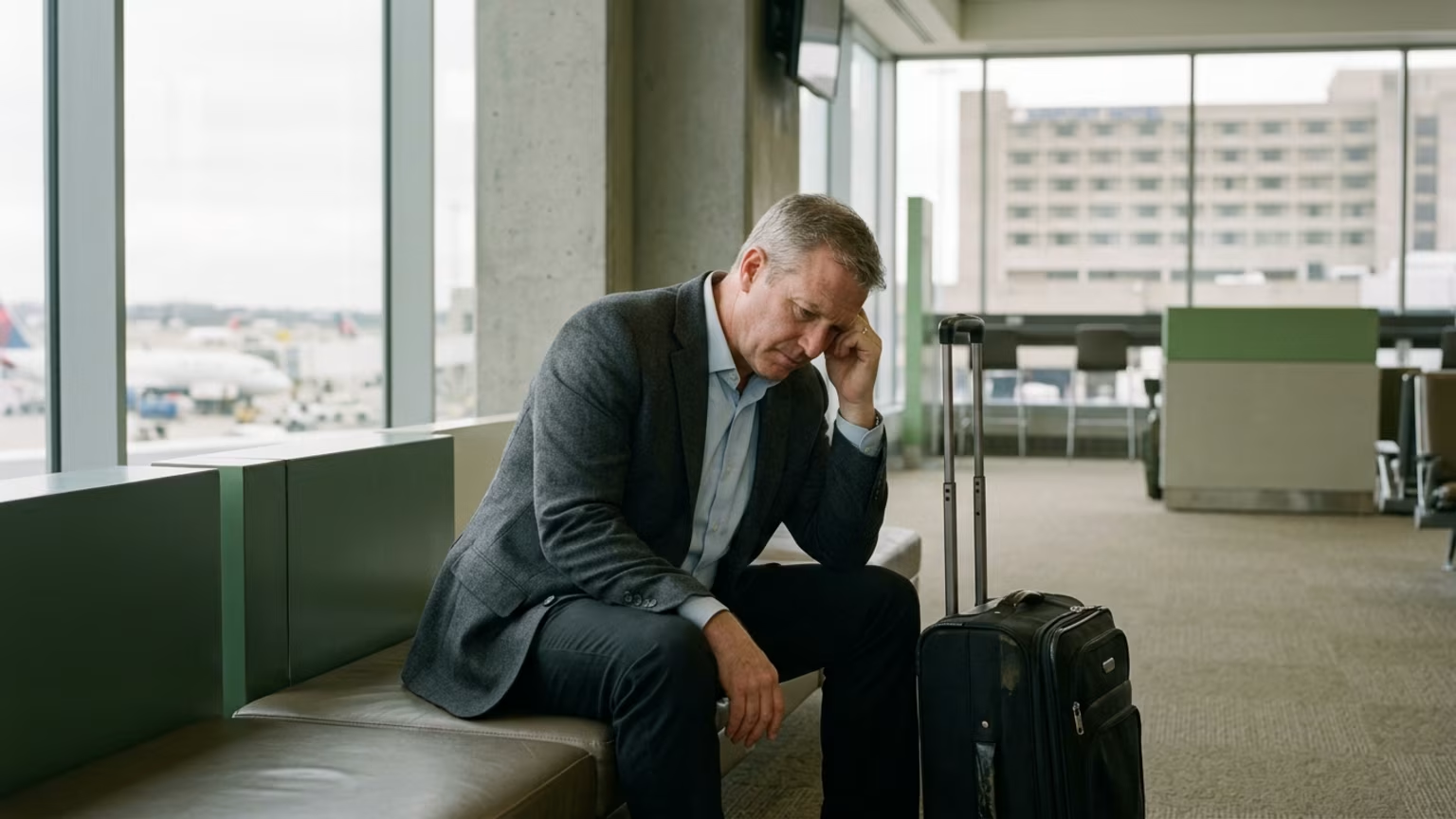
On September 18, 2026, CEO Coaching International published early findings from its upcoming State of the CEO 2026 benchmark report. The briefing provides a clear synthesis of executive wellbeing data across global markets. It notes that 71 percent of chief executives experience burnout at least occasionally. The preview directly links these outcomes to how leaders allocate their professional time.
The CEO Coaching International briefing synthesizes seven distinct studies into a single framework. These underlying reports cover more than 7000 chief executives across 95 countries. The named source organizations include The Conference Board, PwC, KPMG, and EY-Parthenon. This broad aggregation offers a high-level snapshot of current leadership demands.
Understanding these findings requires clear definitions of occupational health. The World Health Organization defines burnout specifically as an occupational phenomenon. It results from chronic workplace stress that has not been successfully managed. The organization describes this state through three primary dimensions. These include energy depletion, increased mental distance from work, and reduced professional efficacy.
The data suggests that organizational design is a central factor in leadership strain. Economic Times HR News recently cited Deloitte research on modern management pressures. This reporting notes that approximately 40 percent of managers saw their mental health decline after entering leadership. Furthermore, nearly 40 percent of their time is consumed by firefighting or administration.
These administrative burdens often crowd out necessary strategic planning and physiological recovery. True executive performance requires sustained focus on high-leverage activities. When a leader spends too much time on administrative duplication, their overall operational effectiveness drops. This dynamic illustrates the type of pressure that accelerates physical and mental fatigue.
High-level leaders often face immense pressure to maintain constant availability. This expectation can easily deplete the resources needed for sustained energy and productivity. Boards and founders must treat the executive calendar as a critical operating system. A well-designed schedule requires protected blocks for complex decisions, proper delegation, and genuine rest.
During the toughest quarter of my career, I noticed that my ability to handle stress was directly tied to my cardiovascular fitness, not my mindset. I was trying to meditate my way out of a physiological deficit. Once we started looking at the data connecting aerobic capacity to emotional regulation and executive function, everything clicked. Physical capacity is the absolute foundation of mental resilience.
Leaders must recognize that relying solely on mental toughness is a flawed strategy. I spent a week at a popular health optimization conference and left completely exhausted by the complexity. Everyone was pushing a new supplement protocol, a complicated gadget, or a rigid daily routine. It struck me that true high performers do not have time to make health a full time job. They need maximum return on minimum viable effort.
That observation became the filter for every piece of research we publish. Executives need to build a reliable morning structure rather than chasing complicated routines. Effective stress and burnout management requires simple, repeatable actions. Removing unnecessary administrative friction is often more effective than adding new recovery tactics.
Boards can support this by establishing regular non-performative wellbeing conversations with their chief executives. Directors should ask whether the leader has protected time for high-value decisions and access to confidential support. They must track organizational causes of overload, including recurring emergencies and unclear decision rights. This proactive approach helps prevent minor operational friction from turning into severe leadership strain.
The preview identifies severe human costs associated with modern executive leadership. The report states that 55 percent of surveyed executives faced a mental-health issue in the previous year. Additionally, 61 percent of leaders say isolation hinders their professional performance. Half of the represented executives report significant loneliness at the top of their organizations.
These strains exist alongside heavy operational and financial pressures. The report notes that 71 percent of executives rank artificial intelligence as their top investment for 2026. However, 56 percent say they have not yet seen significant financial benefit from this technology. The briefing also reports that 86 percent expect artificial intelligence agents to become team members within a year. Only 12 percent report simultaneous gains in both cost and revenue.
Capital allocation plans further highlight the demand for increased output. According to the synthesis, 52 percent of large-company leaders plan to increase capital spending. Meanwhile, only 32 percent plan to increase their total headcount. This combination implies a drive for greater productivity without an equivalent expansion in human resources.
ExecuFuel values intellectual honesty and precise analysis of emerging science. The State of the CEO 2026 preview explicitly states that the full report is still in production. Readers are instructed to consult the underlying studies for exact methodologies. This means independent experts cannot yet audit the samples or reproduce the calculations from the preview alone.
The reported numbers represent a synthesis rather than a single controlled survey. Combining multiple studies can obscure differences in populations, geographies, and survey instruments. A pooled headline percentage often conceals these important methodological variations. The briefing also lacks public breakdowns by company size, industry, gender, or executive tenure.
Furthermore, the definitions used for these statistics remain broad in the public preview. The phrase "at least occasional burnout" should not be equated with a clinical diagnosis. The 55 percent metric for mental-health issues lacks a defined clinical threshold in the published summary. Finally, while the report links calendar structures to isolation, it does not provide objective causal proof.
We must also acknowledge the commercial context of this publication. CEO Coaching International invites readers to join a first-release list and apply for coaching services. The recommendations should be read as practitioner material rather than an independent academic assessment. This context is vital when evaluating broad claims about mental health and resilience.
The conversation surrounding executive wellness is shifting from personal failing to organizational design. The World Health Organization recommends embedding mental health into core operational policies. This includes active leadership commitment, proper resources, and worker mental-health literacy. Boards should view leadership capacity as a crucial governance and business continuity issue.
Future research will likely focus on objective metrics for measuring executive load. We expect to see more rigorous studies tracking calendar architecture against specific performance outcomes. Investors are already beginning to include leadership capacity questions in their standard diligence processes. Evaluating succession depth and executive-team health will soon become standard practice across the industry.
Organizations must move past rewarding visible overwork as a proxy for dedication. Persistent exhaustion requires structural intervention rather than just individual resilience training. Leaders experiencing sustained energy depletion should seek qualified professional support early. Building a robust operating system around the executive team will define successful companies in the coming decade.
Stay connected for research and practical guidance on executive performance, energy, focus, sleep, recovery and longevity. Ideas built for people who want to stay sharp, capable and effective for the long run.




Build habits and systems that support clear thinking, steady energy and long term capacity throughout a demanding career.
explore the Blog